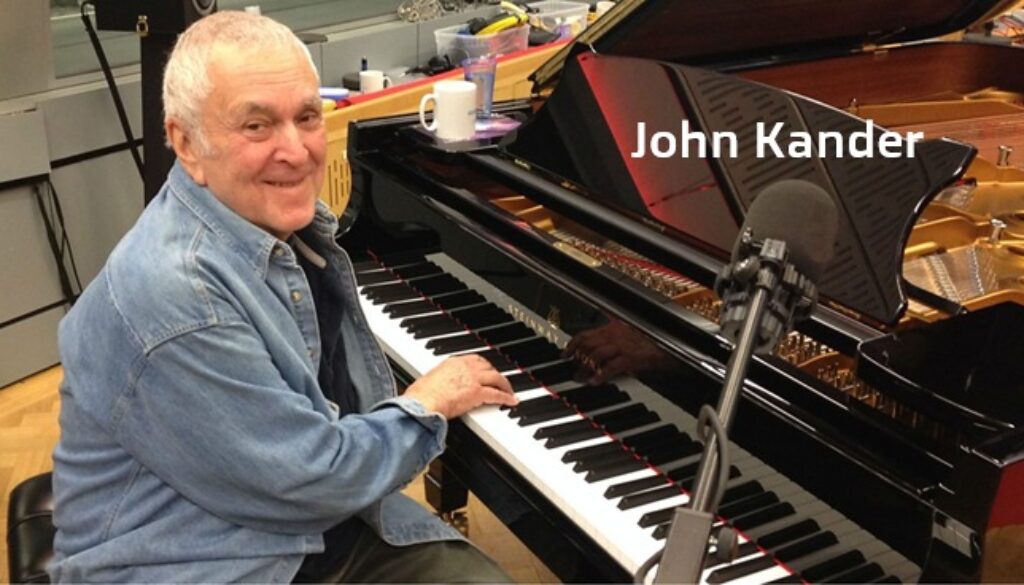
John Kander: Composer of Cabaret, Chicago & Beyond
John Kander - Composer Podcast
Memorabilia Available Here
Broadway’s Master Composer
John Kander Born March 18, 1927 · Kansas City, Missouri
Composer of Cabaret, Chicago, and New York, New York — the architect of Broadway’s most indelible songs for over six decades.
A Kansas City Childhood & the Power of the Piano
John Harold Kander was born on March 18, 1927, in Kansas City, Missouri, the second son of Harold and Bernice (Aaron) Kander. He grew up in what he has described as a loving, middle-class Jewish family, maintaining a lifelong close relationship with his older brother Edward, who went on to become a sales manager at a brokerage house in the city.
Kander traces his earliest musical impulse to a simple domestic habit. His interest in music began at age four, kindled by the family’s love of gathering around the piano to sing. It was not a formal education so much as an atmosphere — music as the natural texture of home life.
My mother took me and we sat in the first row. There were these giants on the stage, and my feet were dangling over my seat. It was overwhelming for me, even though I could see the strings that held the beards on the Egyptian soldiers.
— John Kander, on attending his first opera aged nine, when the San Carlo Opera came to Kansas City with productions of Aida and Madama ButterflyHis first composition arrived during a second-grade mathematics class — a Christmas carol, remarkable in itself given his Jewish faith. His teacher, recognising its quality, discreetly sought permission from Kander’s parents before having the school choir perform it at a holiday assembly. That small, careful act of encouragement planted something lasting.
At age nine, his mother took him to his first opera performances when the San Carlo Opera visited Kansas City with productions of Verdi’s Aida and Puccini’s Madama Butterfly. The experience of those giants on the stage — even with visible beard-strings on the Egyptian soldiers — was, by his own account, the seed of his lifelong conviction that music exists to tell stories.
From Oberlin to Columbia — a Composer Forged
Kander attended Westport High School before transferring to the Pembroke Country-Day School. During World War II, he joined the U.S. Merchant Marine Cadet Corps, completing his training in California and sailing between San Francisco and Asia before leaving the Corps on May 3, 1946.
He enrolled at the Oberlin Conservatory of Music, completing one semester before rule changes governing national service required him to enlist in the Army Reserves in September 1946. During the Korean War he was ordered back into active duty, but a medical examination revealed scars on his lungs, and he remained in New York City for six months of observation. He was officially discharged on July 3, 1957.
Kander graduated with a degree in music from Oberlin College in 1951, then pursued graduate studies at Columbia University — where he became a protégé of the distinguished composer Douglas Moore, and studied composition with Jack Beeson and Otto Luening. He earned his master’s degree from Columbia in 1953.
From the Rehearsal Room
Following his studies, Kander began conducting at summer theaters before taking up a position as rehearsal pianist for West Side Story — the landmark 1957 musical by Leonard Bernstein and Jerome Robbins. Working alongside Robbins proved formative: the choreographer encouraged Kander to compose dance music, a suggestion that shaped the direction of his entire career.
He went on to write dance arrangements for Gypsy (1959) and Irma la Douce (1960) — early credits that placed him at the heart of Broadway’s creative engine before he had composed a single show of his own.
Kander & Ebb — The Greatest Collaboration in Broadway History
Kander met lyricist Fred Ebb in 1962 through their mutual music publisher, Tommy Valando. The first song they wrote together, My Coloring Book, was recorded by Sandy Stewart and became a modest success. Their second collaboration, I Don’t Care Much, was recorded by Barbra Streisand — and in that moment, Kander and Ebb became a permanent creative team.
Together they wrote the scores for 15 Broadway musicals over four decades, creating some of the most recognisable songs in the American theatrical canon. Their work was characterised by what scholar James Leve has described as a “brittle and self-referential brand of musical theater” — sharp, knowing, theatrically aware, and deeply human beneath the glamour.
In 1965, Kander and Ebb wrote their first Broadway show together: Flora the Red Menace, produced by the legendary Hal Prince, directed by George Abbott, and notable as the stage debut of Liza Minnelli. The Minnelli connection proved enduring: Kander and Ebb became the principal creative collaborators of her career, writing material for her stage appearances, television specials (including the Emmy Award-winning Liza with a Z in 1972), and her 1977 film New York, New York.
The team was equally associated with Chita Rivera, composing the scores for several of her landmark Broadway roles including Zorba, Chicago, The Rink, and Kiss of the Spider Woman.
Most famously, at the request of director Martin Scorsese and star Robert De Niro, Kander and Ebb wrote the dramatic title song for the 1977 film New York, New York — a song that became one of the most enduring standards in American popular music.
Fred Ebb died in 2004. Kander has spoken warmly and with great care about his late collaborator in numerous interviews, and has continued to compose in the years since, finding new creative partnerships while honouring the legacy of their work together.
The Two Crowning Masterpieces
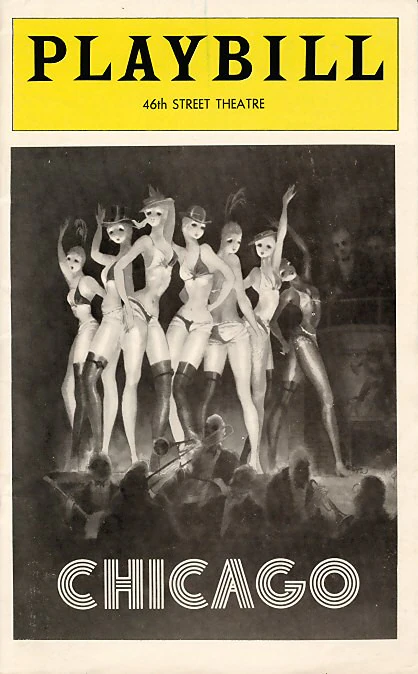
A satirical indictment of celebrity, justice, and showmanship in 1920s Chicago, the musical returned to Broadway in a celebrated 1996 revival and has since become the longest-running American musical in Broadway history. The 2002 film adaptation won the Academy Award for Best Picture, along with awards for film editing, costume design, art direction, and sound — bringing Kander’s score to a global audience of millions.
Academy Award — Best Picture 2002Scholar James Leve examines both works at length in his musicological study of the Kander and Ebb collaboration, devoting chapters titled The Divinely Decadent Lives of Cabaret and Chicago: Broadway to Hollywood to the full creative and production histories of each. His insight that both works share Kander and Ebb’s distinctively self-aware theatrical voice holds throughout: both shows acknowledge the artifice of performance even as they wield it with devastating emotional effect.
The Broadway Catalogue
All lyrics by Fred Ebb unless otherwise noted. Kander’s complete Broadway and Off-Broadway record as composer spans six decades and encompasses 15 Broadway musicals, several Off-Broadway works, and an extensive body of film and television scores.
Beyond the Stage — Screen & Television
Kander and Ebb’s work extended far beyond Broadway, contributing songs and complete scores to feature films, television films, and television specials spanning four decades. Two of their Broadway musicals — Cabaret and Chicago — were adapted into landmark films, the latter winning the Academy Award for Best Picture in 2003.
Songs Written for Film
Film Scores
Television Specials
Kander and Ebb wrote extensively for television, producing material for several celebrated specials including Liza! (1970), Liza with a Z (1972 — Emmy Award winner), Ol’ Blue Eyes Is Back (1973, for Frank Sinatra), Gypsy in My Soul (1976, for Shirley MacLaine), Baryshnikov on Broadway (1980), Liza in London (1986), and Liza Minnelli: Live from Radio City Music Hall (1992).
A Life in the Theatre
The Man Behind the Music
John Kander has lived a life as quietly devoted as his music is dramatically charged. He married dancer and choreographer Albert Stephenson — his partner since 1977 — in Toronto in 2010, a moment that brought formal recognition to a relationship spanning more than three decades.
His grand-nephew, Jason Kander, served as Missouri Secretary of State, carrying a different kind of public service into the family’s next generation.
In interviews, Kander has spoken consistently of the pleasure of collaboration — of music as a conversation rather than a monologue. His partnership with Fred Ebb was, by both their accounts, as close as friendship and as productive as any in the history of the American musical. Both men published their joint memoir, Colored Lights: Forty Years of Words and Music, Show Biz, Collaboration, and All That Jazz (Faber and Faber, 2003), a document of four decades of creative partnership.
Kander’s astonishing creative longevity — still writing musicals in his late nineties — has been the subject of scholarly attention. James Leve’s essay John Kander: the First Ninety-Two Years (published in The Routledge Companion to the Contemporary Musical, 2019) examines his late musical style with the seriousness it deserves.
A Career Recognised — Awards & Distinctions
| Award | Year | Work / Category | Result |
|---|---|---|---|
| Tony Award — Best Musical | 1966 | Cabaret | ✦ Won |
| Tony Award — Best Score | 1967 | Cabaret | Nominated |
| Tony Award — Best Score | 1968 | The Happy Time | Nominated |
| Tony Award — Best Score | 1976 | Chicago | Nominated |
| Tony Award — Best Score | 1978 | The Act | Nominated |
| Tony Award — Best Musical | 1981 | Woman of the Year | ✦ Won |
| Tony Award — Best Score | 1984 | The Rink | Nominated |
| Tony Award — Best Musical | 1993 | Kiss of the Spider Woman | ✦ Won |
| Tony Award — Best Score | 1997 | Steel Pier | Nominated |
| Tony Award — Best Musical | 1999 | Fosse | ✦ Won |
| Tony Award — Best Score | 2007 | Curtains | Nominated |
| Tony Award — Best Score | 2011 | The Scottsboro Boys | Nominated |
| Tony Award — Lifetime Achievement | 2015 | Career Achievement | ✦ Won |
| Tony Award — Best Score | 2023 | New York, New York | Nominated |
| Academy Award — Best Original Song | 1973 | Cabaret (film) | Nominated |
| Academy Award — Best Original Score | 2003 | Chicago (film) | Nominated |
| Kennedy Center Honor | 2010 | Career Achievement | ✦ Won |
| Grammy Awards | Various | Multiple nominations — Cast Recordings | Multiple nominations |
| Emmy Awards | 1973, 1986, 1993 | Television specials | Nominated |
| BAFTA Award | 2003 | Chicago (film) | Nominated |
| Signature Theatre — Stephen Sondheim Award | 2018 | Career Achievement | ✦ Won |
Links
Chess the Musical – Memorabilia
Little Shop of Horrors – Memorabilia
Starlight Express – Memorabilia
Dear Evan Hansen – Memorabilia
How to Succeed in Business Without Really Trying – Memorabilia
Terrence McNally – Memorabilia