Michael Bennett: Broadway’s Greatest Choreographer — A Chorus Line, Dreamgirls & Legacy
Michael Bennett: Broadway’s Greatest Choreographer
Memorabilia Available Here
8 April 1943 • 2 July 1987 • Buffalo, New York
Michael Bennett
Choreographer · Director · Dancer · Visionary
One Singular Sensation
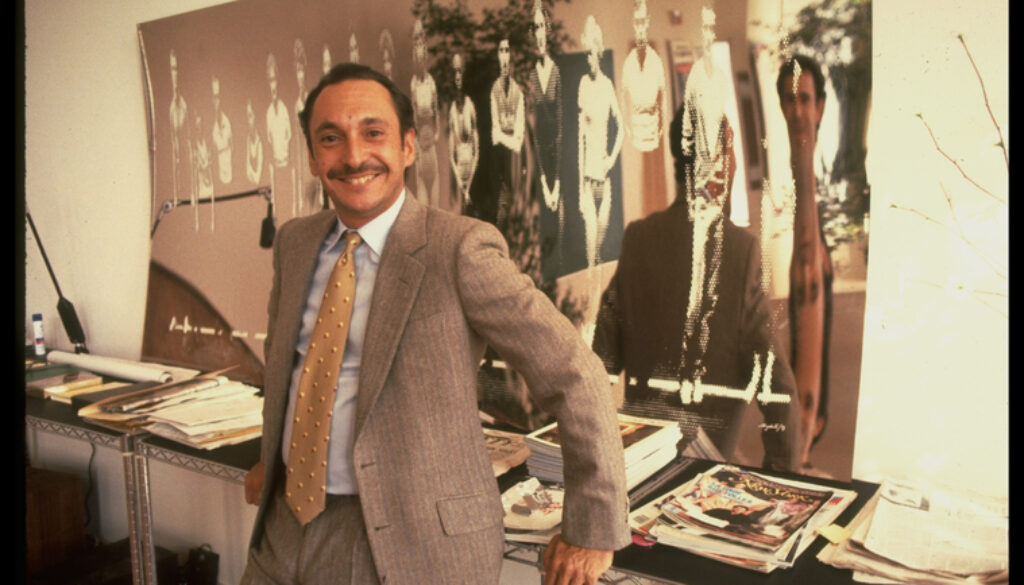
Michael Bennett — born Michael DiFiglia on 8 April 1943 in Buffalo, New York — was an American musical theatre director, choreographer, and dancer whose work transformed Broadway and redefined what a musical could be. He won seven Tony Awards for his choreography and direction of Broadway shows and was nominated for an additional eleven — a record of creative achievement matched by almost no one in theatre history.
His greatest achievement, A Chorus Line (1975), remains the most celebrated musical of its era — winner of nine Tony Awards and the Pulitzer Prize for Drama, the longest-running Broadway show at the time of its closing, and a work that permanently changed the theatrical landscape. His subsequent masterpiece, Dreamgirls (1981), was equally groundbreaking — a show in which, critics noted, he had choreographed not just the cast but the set itself.
Bennett died on 2 July 1987 from AIDS-related lymphoma, aged 44. His loss — at the height of his powers — remains one of the great tragedies of American theatre.
Early Life & Origins
Bennett was born Michael DiFiglia to Helen (née Ternoff), a secretary, and Salvatore Joseph DiFiglia, a factory worker. His father was Italian American; his mother was Jewish. He studied dance and choreography as a teenager and staged productions at Bennett High School in Buffalo — a school whose name he later adopted as his own professional surname, both as homage and as reinvention. He dropped out of school entirely to accept the role of Baby John in the US and European tours of West Side Story — at which point Michael DiFiglia became, permanently, Michael Bennett.
Taking the Stage
Bennett’s Broadway career as a dancer began with the 1961 musical Subways Are for Sleeping (Betty Comden, Adolph Green, Jule Styne), followed by Here’s Love and the short-lived Bajour. In the mid-1960s he became a featured dancer on the NBC pop music series Hullabaloo, where he first met fellow dancer Donna McKechnie — a professional and personal relationship that would shape both their lives.
First Steps as Choreographer
His choreographic debut with A Joyful Noise (1966) lasted only twelve performances. The following year, Henry, Sweet Henry also failed. But in 1968, success arrived: Promises, Promises — with a contemporary pop score by Burt Bacharach and Hal David and a book by Neil Simon — ran for 1,281 performances. Bennett’s production numbers, including the showstopping “Turkey Lurkey Time,” announced a major new choreographic voice on Broadway.
Sondheim & Prince — A Formative Partnership
In the early 1970s, Bennett earned praise for his staging of the straight play Twigs with Sada Thompson and the musical Coco with Katharine Hepburn. These were followed by two landmark Stephen Sondheim productions in collaboration with director-producer Hal Prince: Company (1970) and Follies (1971). In Company, Bennett deliberately stripped the polish from a standard Broadway production number — making the audience aware that the characters had been “flung together to perform” and were in over their heads. It was a radical, knowing gesture that announced his choreographic philosophy: dancing in service of character, not spectacle.
Taking Total Control — Seesaw (1973)
In 1973, Bennett was called in by producers Joseph Kipness and Larry Kasha to rescue the struggling Cy Coleman–Dorothy Fields musical Seesaw. He agreed only on condition of absolute creative control — replacing the existing director and choreographer and receiving credit as having “written, directed, and choreographed” the show. It was a harbinger of his working method: total creative ownership, nothing less.
A Chorus Line — The Revolution
In the early 1970s, Bennett began convening late-night sessions with Broadway gypsies — the chorus dancers who were the backbone of every musical but whose stories were never told. Over the course of these gatherings, he recorded twenty hours of taped conversations with dancers about their lives, their ambitions, their insecurities, and the sacrifices they had made for their art. He was initially invited as an observer. He soon took charge.
The Workshop Method — Inventing a New Process
Under the aegis of producer Joseph Papp at the Public Theater, Bennett developed an entirely new way of creating a musical — the workshop process he pioneered. The show grew organically from the taped sessions, with the dancers’ real stories and voices forming the basis of the libretto. Book writer James Kirkwood and lyricist Edward Kleban shaped the material; composer Marvin Hamlisch wrote the score. Co-choreographer was Bob Avian, Bennett’s lifelong assistant and collaborator. The role of Cassie — the dancer trying to return to the chorus after a failed bid for stardom — was created for Donna McKechnie, and she won the 1976 Tony Award for Best Actress in a Musical for her performance of it.
Off-Broadway to Broadway — The Historic Transfer
A Chorus Line debuted off-Broadway in July 1975 at the Public Theater to ecstatic reviews. It transferred to Broadway’s Shubert Theatre, where it opened on 25 July 1975 and ran for an extraordinary 6,137 performances — the longest run in Broadway history at the time of its closing in 1990. It won nine Tony Awards and the 1976 Pulitzer Prize for Drama. Bennett won Tonys for both Best Direction of a Musical and Best Choreography.
The Weight of Success
Bennett would later confess that the worldwide success of A Chorus Line became something of a hindrance. The many international companies of the musical demanded his constant attention; he found it difficult to move forward creatively. He served as creative consultant for the 1985 film version but ultimately left the project due to creative differences — Hollywood, unlike Broadway, was not willing to give him the absolute creative control he demanded.
Every Little Step — The Documentary Legacy
The 2008 feature-length documentary Every Little Step chronicles the casting process of the musical’s 2006 revival, with re-created choreography by Bennett’s longtime associate Baayork Lee. Through old film clips and new interviews with original collaborators — Lee, Bob Avian, Marvin Hamlisch, and Donna McKechnie — the film tells the full saga of the original production. It remains the definitive document of how A Chorus Line was made and what it cost the people who made it.
Career in Full
Son of Italian American father and Jewish mother. Studies dance and choreography in his teens, stages productions at Bennett High School before dropping out to join the US and European tours of West Side Story as Baby John.
Joins the chorus of the Betty Comden–Adolph Green–Jule Styne musical. Builds his career as a Broadway gypsy through Here’s Love and Bajour, and as a featured dancer on NBC’s pop series Hullabaloo — where he meets Donna McKechnie.
Both shows fail quickly. Two early misses that nevertheless establish Bennett as a choreographer to watch.
Burt Bacharach/Hal David score, Neil Simon book. Bennett’s production numbers — especially “Turkey Lurkey Time” — are widely praised. Donna McKechnie featured. First major Broadway success.
Musical staging on both landmark Sondheim productions directed by Hal Prince. In Company, Bennett deliberately unsophisticates a Broadway production number to reveal character. In Follies, he helps create one of the most ravishing theatrical spectacles of the era.
Brought in to rescue the failing Cy Coleman–Dorothy Fields show. Demands and receives absolute director/choreographer control, receiving credit as having written, directed, and choreographed the production.
Off-Broadway debut at the Public Theater (July 1975), immediate transfer to the Shubert Theatre on Broadway. 6,137 performances. 9 Tony Awards. Pulitzer Prize for Drama. The most celebrated musical of its era. Bennett wins Best Direction and Best Choreography.
His follow-up to A Chorus Line — a project about late-life romance — fails commercially but earns seven Tony nominations, and Bennett wins for Best Choreography. He purchases 890 Broadway and converts it into a rehearsal studio complex for dance and theatre.
Co-choreographed with Michael Peters. A backstage epic about a girl group inspired by The Supremes. Bennett’s revolutionary use of moving plexiglass towers — turning the mechanical set into a dancer — is described as “mesmerizing.” No traditional set-piece dance routines: movement is organic to the entire production.
Abandons the near-completed musical Scandal (music by Jimmy Webb, book by Treva Silverman) after five years of development. Withdraws from directing the West End production of Chess in January 1986 due to failing health. Diagnosed with AIDS in December 1985.
Bennett dies from AIDS-related lymphoma at the University of Arizona Medical Center, Tucson. His memorial service is held at the Shubert Theatre — home of A Chorus Line — on 29 September 1987. A portion of his estate is left to fund AIDS research.
Broadway Credits
Dreamgirls — Choreographing the Set
In 1981, Bennett directed and co-choreographed Dreamgirls — a backstage epic about a girl group like The Supremes and the expropriation of Black music by a white recording industry. With Michael Peters as co-choreographer, Bennett created one of the most visually revolutionary productions in Broadway history.
The Moving Towers
The key innovation was Bennett’s use of massive plexiglass towers that dominated the set — towers that moved continuously throughout the show, creating constantly shifting perspectives and spaces. Critics noted that whereas in A Chorus Line Bennett had choreographed the cast, in Dreamgirls he had choreographed the set. There were no traditional set-piece dance routines in the show — instead, dance and movement were organic to the entire action, driven by the mechanical set which had itself become Bennett’s instrument. The towers moved like an “automated ballet,” wrote one observer, energizing every scene with kinetic purpose. It was described as a “mesmerizing sense of movement” that was entirely unlike anything Broadway had seen before.
The Art of Bennett
Unlike his famous contemporary Bob Fosse, Bennett was not known for a singular, recognisable choreographic style. This was entirely deliberate. Bennett’s choreography was motivated by the specific form of each musical and the distinct characters within it — the dance growing from the drama, not imposed upon it.
Character Over Spectacle
His approach to the hat-and-cane routine in Company is a defining illustration. Rather than polishing the number to Broadway perfection, Bennett deliberately roughed it up — the company stumbled through the steps, revealing the physical limitations of the characters behind it. The number was not about the routine, but about the people performing it: non-dancers pressed into service, in over their heads. It was a radical act of theatrical honesty.
The “One” Principle
In A Chorus Line, the song “One” works in the opposite direction. The show reveals the construction and rehearsal of the number phase by phase — and precisely because the show is about professional dancers, the final performance of the routine has every gloss and polish that Broadway production values demand. But Bennett’s choreography also reveals the cost of that polish to the people behind it — the sacrifice, the competition, the brutal toll of a career lived entirely in the chorus. The shine and the wound are inseparable.
Influenced by Jerome Robbins — Totality
Bennett was profoundly influenced by the work of Jerome Robbins — particularly what he perceived as Robbins’s commitment to totality: the idea that all elements of a theatrical work must add up to a unified whole. Bennett carried this principle further: in his best work, nothing — not a step, not a transition, not the movement of a set piece — exists without serving the larger purpose of the show. This is why his productions feel not like collections of numbers but like single, continuous, breathing organisms.
Personal Life
Bennett was bisexual. In his younger years he had a relationship with choreographer Larry Fuller. His most significant personal and professional bond was with Donna McKechnie — the virtuoso dancer who had performed his work in Promises, Promises and Company, and for whom he created the role of Cassie in A Chorus Line. McKechnie won the 1976 Tony Award for Best Actress in a Musical for that role. They married on 4 December 1976; after only a few months they separated and eventually divorced in 1979.
890 Broadway — A Home for Dance
In 1978, Bennett purchased 890 Broadway and converted it into a sprawling rehearsal studio complex for dance and theatre. The building became one of the most important creative hubs in New York — a home for development, rehearsal, and the kind of experimental workshop process Bennett had pioneered with A Chorus Line. In 1986, forced to sell by stress-induced angina and the financial losses of the property, he sold it for $15 million. Two tenants purchased the building and it remains a rehearsal facility — housing the American Ballet Theatre, Eliot Feld’s Ballet Tech, and Gibney Dance Company.
Addictions & Isolation
Bennett’s addictions to alcohol and drugs — notably cocaine and Quaaludes — severely affected his ability to work and damaged many of his professional and personal relationships. His paranoia grew as his dependency did. Concerned about his celebrity and his father’s Italian background, he became convinced at times that he might fall victim to a Mafia hit. These struggles deepened his isolation even as his professional reputation soared.
Scandal — The Show Left Unmade
In 1985, after nearly five years of development, Bennett abandoned the near-completed musical Scandal — written by Treva Silverman with songs by Jimmy Webb. The show was sexually daring, but the conservative climate and the growing AIDS panic made it seem commercially impossible. The abandonment of Scandal — in which he had invested enormous energy — was a profound creative and personal loss.
AIDS, Concealment & Death
Bennett was diagnosed with AIDS in December 1985. During his adult life, he had taken elaborate pains to ensure the public never suspected he was gay. When his diagnosis came, he carefully disguised that fact as well. He withdrew from directing the West End production of Chess in January 1986, leaving Trevor Nunn to complete the production using Bennett’s already-commissioned sets. He sold 890 Broadway, retreated from public life, and spent the last eight months of his life in Tucson, Arizona, in the care of the University of Arizona Medical Center, accompanied by his last lover Gene Pruit and friend Bob Herr. He died on 2 July 1987, aged 44, from AIDS-related lymphoma.
His memorial service was held at the Shubert Theatre — home of A Chorus Line — on 29 September 1987. He left a portion of his estate to fund AIDS research. At the height of the epidemic, his death and his bequest were both acts of courage: the act of a man who, even in death, gave something back to the fight.
Awards & Nominations
Bennett won seven Tony Awards across his career and received a total of eighteen nominations — one of the most decorated records in Broadway history. His seven-Tony haul places him alongside the most celebrated directors and choreographers the American theatre has produced.
| Year | Award | Category | Show | Result |
|---|---|---|---|---|
| 1972 | Tony Award | Best Choreography | Follies | Won ★ |
| 1974 | Tony Award | Best Choreography | Seesaw | Won ★ |
| 1976 | Tony Award | Best Direction of a Musical | A Chorus Line | Won ★ |
| 1976 | Tony Award | Best Choreography | A Chorus Line | Won ★ |
| 1976 | Pulitzer Prize for Drama | Drama | A Chorus Line | Won ★ |
| 1979 | Tony Award | Best Choreography | Ballroom | Won ★ |
| 1979 | Tony Award | Best Direction of a Musical | Ballroom | Nominated |
| 1982 | Tony Award | Best Direction of a Musical | Dreamgirls | Won ★ |
| 1982 | Tony Award | Best Choreography | Dreamgirls | Nominated |
| 1968 | Tony Award | Best Choreography | Promises, Promises | Nominated |
| 1974 | Tony Award | Best Direction of a Musical | Seesaw | Nominated |
A Class Act — Immortalised on Stage
Bennett’s life and legacy were memorialised in A Class Act — A Musical About Musicals (2001), a partly fictionalised life story of lyricist Ed Kleban — his collaborator on A Chorus Line — using some of Kleban’s unpublished songs. Bennett himself is portrayed as a central character, and the show includes A Chorus Line‘s “One.” The Michael Bennett Papers are preserved at Yale University’s Beinecke Rare Book and Manuscript Library — a permanent archive of one of American theatre’s greatest minds.
The Legacy
Michael Bennett died at 44 having already permanently changed what Broadway could be. He invented a new process for creating musicals — the workshop method, in which the show grows from the collaborative voices of its performers rather than being handed down from writers to players. He created the most celebrated musical of his generation. He directed one of the most visually revolutionary productions Broadway has ever seen. He showed that choreography and staging were not decoration but drama.
The question of what he would have made next — what would have come after A Chorus Line and Dreamgirls — remains one of the great unanswerable questions of American theatre. What is certain is that the shows he did make are enough to secure his place among the very greatest artists the Broadway stage has ever produced.
One Singular Sensation — His Enduring Influence
Every Broadway choreographer-director who followed Michael Bennett works in his shadow. His insistence on the primacy of character over spectacle, his workshop method of developing material collaboratively, his revolutionary integration of movement with set and staging — all of these have become part of the vocabulary of the form. A Chorus Line is still performed around the world. Dreamgirls became a major Hollywood film. The studio complex at 890 Broadway still trains dancers. And the dancers who told their stories to Bennett in those late-night sessions of 1973 and 1974 — those stories are still being heard, every night, in whatever city is hosting A Chorus Line, on whatever stage, in whatever language, fifty years on.