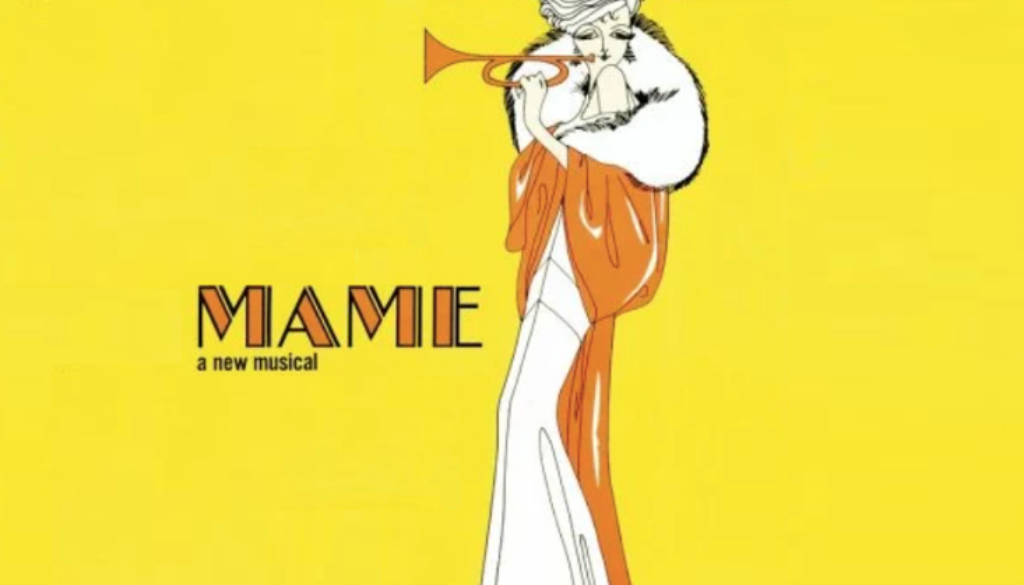
Mame Musical: The Complete Guide – Songs, Cast, Story & Legacy
Memorabilia Available Here
Life is a Banquet
MAME
“And most poor sons of bitches are starving to death.”
The Fabulous Auntie Mame
Mame is a musical with a book by Jerome Lawrence and Robert Edwin Lee and music and lyrics by Jerry Herman. Originally titled My Best Girl, it is based on the 1955 novel Auntie Mame by Patrick Dennis and the 1956 Broadway play of the same name by Lawrence and Lee.
A period piece set in New York City and spanning the Great Depression and World War II, it focuses on eccentric bohemian Mame Dennis, whose famous motto is “Life is a banquet and most poor sons of bitches are starving to death.” Her fabulous life with her wealthy friends is interrupted when the young son of her late brother arrives to live with her. They cope with the Depression in a series of adventures.
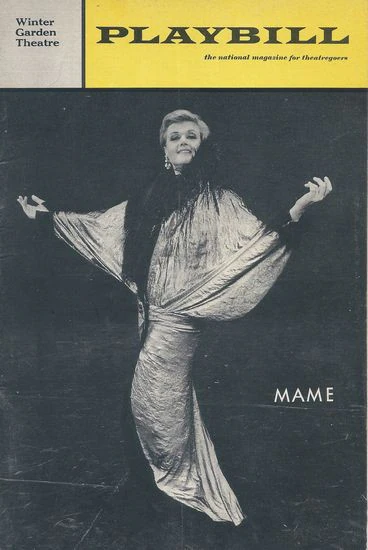
The musical opened on Broadway in 1966, starring Angela Lansbury and Bea Arthur. The production became a hit and spawned a 1974 film version with Lucille Ball in the title role and Arthur reprising her supporting role, as well as a London production, a Broadway revival, and a 40th anniversary revival at the Kennedy Center in 2006.
From Novel to Broadway
The musical was inspired by the success of the 1956 Broadway comedy and subsequent 1958 film version starring Rosalind Russell, as well as the 1955 novel by Patrick Dennis. According to Stephen Citron in Jerry Herman: Poet of the Showtune, the “kudos made all involved immediately think of musicalizing the play.”
Dennis wrote several more comic novels, including a sequel, Around the World with Auntie Mame, and Little Me, which was made into a Broadway musical starring Sid Caesar. The success of that musical may have prompted Lawrence and Lee to turn Mame into a musical.
The Search for Mame
Rosalind Russell didn’t want the role, Mary Martin backed out after her initial acceptance, and Ethel Merman declined. The producers “heard from—or considered” a legendary list of stars:
Eve Arden, Lauren Bacall, Lucille Ball, Kaye Ballard, Constance Bennett, Georgia Brown, Kitty Carlisle, Barbara Cook, Bette Davis, Doris Day, Olivia de Havilland, Phyllis Diller, Irene Dunne, Nanette Fabray, Arlene Francis, Judy Garland, Greer Garson, Mitzi Gaynor, Dolores Gray, Tammy Grimes, Julie Harris, Susan Hayward, Katharine Hepburn, Lena Horne, Lisa Kirk, Margaret Leighton, Beatrice Lillie, Gisele MacKenzie, Jane Morgan, Patrice Munsel, Geraldine Page, Ginger Rogers, Dinah Shore, Simone Signoret, Maggie Smith, Elaine Stritch—and…Angela Lansbury, who was eventually cast.”
The Mame That Got Away
For its second run, Jerry Herman wanted to cast Judy Garland, but that request was denied by the producers of the show, who deemed her a liability. Herman worked with Garland on the numbers, and she adored the show, having seen it three times starring Lansbury during 1967.
When she expressed interest in playing the role, Herman said: “I just about lost my mind. I was the craziest, most ardent Judy Garland fan of all time. I still am. I worshipped that woman. It was a passion that went beyond reason. She sang, and it was a religious experience for me.”
However, after having been recently fired from the film adaptation of Valley of the Dolls, Judy was deemed too much of a liability. The producers told Herman: “We cannot entrust this show to Miss Garland. We have the backers to consider, and we cannot risk a show that is at its peak and has many more years to go.”
Herman still lobbied on her behalf, arguing: “Even a bad performance from Judy Garland would be an event. Just to have Judy Garland in this show for one night would be magical— historical.” Reflecting on the incident, Garland told her daughter Liza Minnelli that “her heart was broken, because she knew how right she was for it.” Garland died two years later. For Herman, she would always be ‘The Mame That Got Away.’
Writing the Score
According to Herman, it took six months to write the score, which was fast for a musical of this scope.
Broadway 1966: The Triumph
The musical opened on Broadway at the Winter Garden Theatre on May 24, 1966. Three years later, it transferred to The Broadway Theatre, where it remained until closing on January 3, 1970. Between the two venues, it ran a total of 1,508 performances and five previews.
The musical was directed by Gene Saks, choreographed by Onna White with scenic design by William and Jean Eckart, costume design by Robert Mackintosh, lighting design by Tharon Musser and orchestrations by Philip J. Lang.
| Role | Original Broadway Cast |
|---|---|
| Mame Dennis | Angela Lansbury |
| Vera Charles | Bea Arthur |
| Young Patrick | Frankie Michaels |
| Agnes Gooch | Jane Connell |
| Beauregard Burnside | Charles Braswell |
| Dwight Babcock | Willard Waterman |
| Director | Gene Saks |
| Choreographer | Onna White |
Lansbury, Arthur and Michaels all won Tony Awards, while Saks, White, the writers, Herman, and set designers William and Jean Eckart all received nominations.
A Revolving Door of Mames
When Lansbury took a two-week vacation in August 1967, Celeste Holm played the title role, prior to heading the National Tour, and “garnered ecstatic reviews” including from The New York Times.
When Lansbury left the Broadway production on March 30, 1968, to take the show on a limited US tour, Janis Paige was the star chosen to be the new Broadway Mame, starting in April 1968. Paige’s run and the show itself continued to be so successful that she was followed by Jane Morgan (December 1968), who was followed by Ann Miller (May 1969).
The Plot: Life’s Adventures
Act One: The Arrival
The recently orphaned Patrick Dennis and his nanny, Agnes Gooch, arrive in Manhattan. Patrick has been placed under the care of his aunt, the eccentric Mame Dennis, with Dwight Babcock as his trustee. The two head to Mame’s residence (“St. Bridget”), where a party is in full swing (“It’s Today”).
Mame introduces Patrick to her collection of kooky friends, such as Vera Charles (a baritone actress and the First Lady of the American Theatre), Ralph Divine (the runner of a progressive school called “The Laboratory of Life”), and M. Lindsay Woolsey (a book publisher).
Open a New Window
Two weeks pass, and Babcock arrives to discuss Patrick’s schooling. Mame wishes for Patrick to go to a co-educational liberal arts school, while Babcock demands that he go to a conservative school. However, Mame decides to instead enroll Patrick into The Laboratory of Life and take him on adventures without Babcock’s knowledge (“Open a New Window”).
Mame and Patrick’s escapades are cut short by Babcock, who has discovered Mame’s deceit and angrily takes Patrick off to boarding school, devastating Mame.
The Wall Street Crash
To make matters worse, Mame loses her fortune in the Wall Street Crash of 1929. Vera proposes Mame join her in a new operetta. However, the operetta goes disastrously, with Mame showing up on stage late and falling during her moment (“The Moon Song”). Mame is fired from the theatre, but Patrick arrives and comforts her (“My Best Girl”).
We Need a Little Christmas
Mame gets a new job at a hairdressers and there she meets Beauregard Jackson Pickett Burnside. While giving him a manicure, she gets flustered and causes him to bleed. She’s fired once more, despite Beau’s protests, and returns to her residence, where Patrick is staying for three days.
To lighten the mood, Mame reveals presents she bought for Patrick, Ito, and Agnes, declaring “We Need a Little Christmas”. The four celebrate as Beau enters and offers to take Mame, and the other three, to dinner. Mame accepts and the five of them exit merrily.
The Fox Hunt
Beau takes Mame and Patrick to his family home in Georgia, to the ire of Beau’s family, especially Sally Cato. Sally calls for a hunt and makes an attempt on Mame’s life by giving her a mad horse. To everyone’s shock, Mame returns with the fox alive (“The Fox Hunt”).
Beau proposes to Mame, she accepts, and everyone sings Mame’s praises (“Mame”). Patrick, Beau, and Mame embrace (“Finale Act 1”).
Act Two: Letters and Loss
Patrick, as he grows up, writes several letters to the now married Mame, and she writes back (“Opening Act Two” (The Letter)). When Mame discovers that Patrick’s roommate is Babcock’s son, she insists to Beau that she must return to Patrick. Mame and Beau’s honeymoon is cut short with Beau’s sudden death. Once again, Patrick comforts Mame (“My Best Girl” (Reprise)).
Bosom Buddies
Vera, Patrick, and Lindsay decide that Mame should write a book on her life, with Agnes as her secretary, which Mame agrees to. Vera and Mame catch up, declaring each other “Bosom Buddies”.
Mame and Vera learn that Agnes is so repressed that she has never dated before and can’t say the word “sex”. Mame declares to Agnes: “Life’s a banquet and most poor sons of bitches are starving to death.” Vera and Mame glam the now excited Agnes up and send her out into the world.
Gooch’s Song
Six months pass, and Patrick reveals that he has a fiancée, Gloria Upson. Agnes returns pregnant and recounts her adventures (“Gooch’s Song”). Mame allows Agnes to stay with her as Patrick invites Mame to go see the Upsons in Connecticut.
The Upsons
Mame arrives at the Upsons estate, or as they call it “Upsons Down”, where Babcock is also visiting. Mame is introduced to the boorish and bigoted Upsons, as well as Junior Babcock. The Upsons and the older Babcock leave momentarily and Mame dances with the party guests (“That’s How Young I Feel”).
The Upsons reveal to Mame their plans for a wedding gift to Patrick and Gloria: an empty plot of land next to the Upson’s estate, hoping that “the wrong people” don’t move in. Mame conceals her disapproval and speaks to Patrick in private and begs him to reconsider. Patrick leaves in a huff and Mame questions where she went wrong in raising him (“If He Walked Into My Life”).
The Resolution
Mame convinces Patrick to invite the Upsons to her newly renovated apartment. Patrick meets the designer, Pegeen Ryan, another student of The Laboratory of Life. The Upsons arrive and Mame introduces them to her kooky friends and lifestyle (“It’s Today” (Reprise)).
Mame reveals that she bought the plot of land to make a home for single mothers. The Upsons storm out and Gloria dumps Patrick. Mame declares that all this was for Patrick, who thanks her (“My Best Girl” (Reprise)).
Years pass, Pegeen and Patrick are now married and have a son, Peter. Mame plans to take Peter to India, to the disapproval of his parents. Peter recites Mame’s mantra, which convinces Pegeen and Patrick to allow Peter to go with Mame. She leaves with Peter as she promises to take him on a myriad of adventures (“Finale Act II”).
The Characters
A National Phenomenon
Las Vegas and Beyond
Susan Hayward appeared in the Las Vegas production, while such stars as Ann Sothern, Janet Blair, Jane Russell, Elaine Stritch, Edie Adams, Patrice Munsel, Kitty Carlisle, Carol Lawrence, Shani Wallis, Jo Anne Worley, and Sheila Smith appeared in stock, regional or touring productions.
International Productions
In 1976, a Mexican production was performed in Mexico City with Silvia Pinal in the title role and Evangelina Elizondo as Vera. In 1985, Pinal reprised the production with the Spanish actress María Rivas as Vera. In 2014/2015, a Mexican new production was performed with Itati Cantoral and Alicia Machado in the title role and Dalilah Polanco as Vera.
Broadway Revival & Beyond
1983 Broadway Revival
Despite the presence of Lansbury, a much-heralded Broadway revival was ultimately unsuccessful. After seven previews, it opened on July 24, 1983, at the George Gershwin Theatre, where it ran for only 41 performances.
The Juliet Prowse Era
Juliet Prowse, who in August 1969 subbed for Ginger Rogers in the original West End production of Mame, would subsequently reprise the title role in a number of US productions:
- 1970 – Dallas Summer Musicals production with Jane Connell as Gooch
- Autumn 1970 – Westgate Las Vegas (then International Hotel) featuring Jane Connell, Ruth Gillette, Anne Francine as Vera, and John McCook as adult Patrick
- 1989-1990 – North American tour with Meghan Duffy as Gooch and Delphi Lawrence as Vera
- Summer 1992 – Harrah’s Lake Tahoe production
- April-May 1994 – Alex Theatre (Glendale) and Spreckels Theater (San Diego) with Franklin Cover as Babcock and Marsha Kramer as Gooch
By 1983, Anne Francine had played Vera some 800 times.
1990s Productions
In July–August 1991, Mariette Hartley headlined the St. Louis Municipal Opera Theatre production whose cast also included Georgia Engel as Gooch, Alan Muraoka as Ito, and Gretchen Wyler as Vera.
In the mid-90s, a concert staging was done for BBC Radio 4. The cast included Julia McKenzie as Mame, Libby Morris as Vera, Claire Moore as Agnes, and Jon Lee as Young Patrick.
In 1999, The Production Company in Melbourne, Australia staged Mame for their very first season, starring Rhonda Burchmore and Pamela Rabe. In 2008, The Production Company staged Mame once more, in celebration for their tenth anniversary, with Burchmore reprising her role.
The Paper Mill Playhouse (Millburn, New Jersey) production in September and October 1999 was headlined by Christine Ebersole and featured Kelly Bishop as Vera and Paul Iacono as Young Patrick.
Kennedy Center 2006
The Kennedy Center production ran from June 1 to July 2, 2006, and starred Christine Baranski as Mame, Harriet Sansom Harris as Vera, and Emily Skinner as Gooch.
Michele Lee headlined a single performance production at the Hollywood Bowl on August 1, 2004, whose star-studded cast included Allyce Beasley as Gooch, Ben Platt as Young Patrick, Christine Ebersole as Vera, Edie McClurg as Mrs. Upson, Robert Picardo as Babcock, Alan Thicke as Mr. Upson, John Schneider as Beauregard, and Fred Willard as Woolsey.
Lee would subsequently headline the Pittsburgh Civic Light Opera production in July 2008, which featured Donna Lynne Champlin as Gooch.
Return to the UK (2019-2020)
The first UK production of Mame in 50 years opened at the Hope Mill Theatre (Manchester) in September 2019, directed by Nick Winston with Tracie Bennett headlining a cast which included Tim Flavin as Beauregard, Harriet Thorpe as Vera, and Pippa Winslow doubling as Sally Cato and Mrs. Upson.
With Darren Day replacing Flavin, the production encored at the Royal & Derngate Theatre (Northampton) and Salisbury Playhouse in respectively January and May 2020. The show received seven WhatsOnStage Award nominations.
The 1974 Film
A 1974 film version of the musical starred Lucille Ball as Mame, Bea Arthur reprising her role as Vera Charles, Jane Connell reprising her role as Agnes Gooch and Robert Preston as Beauregard.
A Box Office Disappointment
The film was both a US box office failure and a critical disappointment with Ball being considered not up to the musical demands of the title role. Despite the star power and faithful adaptation, the film failed to capture the magic of the stage production.
Ball’s age (63 at the time of filming) and limited vocal range were frequently cited by critics as major issues, though her comedic timing remained impeccable. Bea Arthur and Jane Connell were widely praised for recreating their original Broadway performances.
The Jerry Herman Score
Jerry Herman’s score for Mame features some of his most beloved songs, many of which have become standards beyond the show itself.
| Song Title | Description |
|---|---|
| “It’s Today” | Mame’s opening party number celebrating living in the moment |
| “Open a New Window” | Mame’s philosophy song about experiencing life’s adventures |
| “My Best Girl” | Mame and Patrick’s tender relationship song |
| “We Need a Little Christmas” | Holiday classic, now a standard performed worldwide |
| “The Fox Hunt” | Mame’s triumphant return from the Georgia fox hunt |
| “Mame” | The show’s title song praising Auntie Mame |
| “Bosom Buddies” | Mame and Vera’s comic friendship duet |
| “Gooch’s Song” | Agnes’s comic recounting of her adventures |
| “That’s How Young I Feel” | Mame’s ageless spirit anthem |
| “If He Walked Into My Life” | Mame’s introspective ballad questioning her parenting |
Chart Success & Legacy
In 1966, Bobby Darin, Louis Armstrong, and Herb Alpert all charted in the United States and Canada with their cover records of the musical’s title song.
Eydie Gormé had a huge success with her recording of “If He Walked into My Life”, for which she received a 1967 Grammy Award for Best Female Vocal Performance.
“We Need a Little Christmas” is a well-known holiday tune and can be heard in several Disney Christmas parades. It has become one of the most recorded Christmas songs from musical theatre.
Cast Recordings
A cast recording of the Broadway production was released on the Columbia Masterworks label in 1966. A CD version, with five bonus tracks, was released by Legacy Recordings in 1999.
The bonus tracks include demo versions of “St. Bridget”, “It’s Today”, “Open a New Window”, and “Mame”, as well as the song “Camouflage” (intended to be sung between Mame Dennis and Vera Charles prior to the discussion of whether Patrick could stay with Mame), all performed by Jerry Herman and Alice Borden.
Another cut song, “Love is only Love”, was to be sung by Mame to Patrick before “The Fox Hunt”; it was later used in the movie version of Hello, Dolly!
Awards & Recognition
The original 1966 Broadway production received widespread acclaim and numerous awards:
Tony Awards (1966)
- Winner: Best Actress in a Musical – Angela Lansbury
- Winner: Best Featured Actress in a Musical – Bea Arthur
- Winner: Best Featured Actor in a Musical – Frankie Michaels
- Nominated: Best Musical
- Nominated: Best Direction of a Musical – Gene Saks
- Nominated: Best Choreography – Onna White
- Nominated: Best Score – Jerry Herman
- Nominated: Best Book of a Musical – Jerome Lawrence and Robert Edwin Lee
- Nominated: Best Scenic Design – William and Jean Eckart
Grammy Awards
1967 Grammy Award for Best Female Vocal Performance: Eydie Gormé for “If He Walked into My Life”
The Enduring Legacy
Mame stands as one of Jerry Herman’s most beloved musicals, alongside Hello, Dolly! and La Cage aux Folles. Its celebration of individuality, non-conformity, and living life to the fullest has resonated with audiences for over five decades.
Cultural Impact
The character of Mame Dennis has become an icon of independent womanhood, bohemian living, and generous spirit. Her motto — “Life is a banquet” — has entered the cultural lexicon as a call to embrace life’s opportunities rather than playing it safe.
The show’s songs, particularly “We Need a Little Christmas” and “If He Walked Into My Life”, have become standards performed far beyond the context of the musical itself.
Angela Lansbury’s Triumph
For Angela Lansbury, Mame was a career-defining role that showcased her extraordinary range as a performer. Her interpretation of the character — glamorous yet vulnerable, eccentric yet grounded — set the standard for every Mame to follow.
Lansbury and Bea Arthur remained close friends over the years, their “bosom buddies” relationship extending far beyond the stage. Their chemistry in the show created one of musical theatre’s most memorable female friendships.
A Show About Joy
At its heart, Mame is about the power of joy, generosity, and unconventional wisdom. It’s about opening new windows, embracing the unexpected, and teaching the next generation to live fully rather than safely.
Mame Dennis doesn’t just tell Patrick about life — she shows him. She takes him on adventures, introduces him to fascinating people, teaches him to question convention, and above all, demonstrates that the way to live is to feast at life’s banquet rather than starve on the sidelines.
The Show Must Go On
From its 1966 Broadway premiere through countless revivals, tours, and international productions, Mame continues to inspire audiences to embrace life’s banquet. The show’s message — that individuality, generosity, and zest for life are virtues worth celebrating — remains as relevant today as it was in the 1920s and 30s when the story is set.
Whether performed in grand Broadway houses, regional theaters, or community productions, Mame reminds us all to open a new window, celebrate today, and above all, to remember that life is a banquet — and we should all pull up a chair.
So raise your glass to Mame Dennis — the aunt we all wish we had, the friend we all need, and the spirit we should all embrace. ✨⭐
The Mame Musical Q & A
Q: What is the musical Mame about? A: Mame is a 1966 Broadway musical by Jerry Herman about the eccentric, bohemian Mame Dennis, whose lavish New York life is upended when her orphaned nephew Patrick arrives to live with her. The story spans the Great Depression and World War II, following Mame’s adventures, her philosophy that “life is a banquet,” and her unconventional approach to raising Patrick.
Q: Who played Mame in the original Broadway production? A: Angela Lansbury originated the role of Mame Dennis on Broadway when the show opened at the Winter Garden Theatre on May 24, 1966. She won the Tony Award for Best Actress in a Musical for the performance.
Q: How many Tony Awards did Mame win? A: The original 1966 Broadway production of Mame won three Tony Awards: Best Actress in a Musical (Angela Lansbury), Best Featured Actress in a Musical (Bea Arthur), and Best Featured Actor in a Musical (Frankie Michaels, who played Young Patrick).
Q: Did Judy Garland ever play Mame? A: No. Though Jerry Herman desperately wanted Judy Garland to take over the role, producers rejected the idea, considering her a liability following her firing from the film Valley of the Dolls. Garland had seen the show three times and adored it. Herman later referred to her as “The Mame That Got Away.” Garland died in 1969.
Q: Where did the song “We Need a Little Christmas” come from? A: “We Need a Little Christmas” originated in the 1966 Broadway musical Mame, written by Jerry Herman. In the show, the song is sung by Mame to lift spirits during the Great Depression. It has since become one of the most recorded Christmas songs from musical theatre and is heard in Disney Christmas parades.
Q: Who played Mame in the 1974 film? A: Lucille Ball played Mame in the 1974 film adaptation, with Bea Arthur and Jane Connell reprising their original Broadway roles as Vera Charles and Agnes Gooch respectively. Robert Preston played Beauregard. The film was a critical and box office disappointment.
Q: What happened in the 1983 Broadway revival of Mame? A: Despite starring Angela Lansbury, the 1983 Broadway revival at the George Gershwin Theatre was unsuccessful, running for only 41 performances after seven previews.
Q: What is Mame’s famous quote? A: Mame Dennis’s most famous line is: “Life is a banquet and most poor sons of bitches are starving to death.” It serves as her life philosophy and the thematic heart of the entire musical.
Q: Who wrote the music for Mame the musical? A: The music and lyrics for Mame were written by Jerry Herman, who also composed Hello, Dolly! and La Cage aux Folles. The book was written by Jerome Lawrence and Robert Edwin Lee, based on the 1955 novel Auntie Mame by Patrick Dennis.
Q: What songs are in the musical Mame? A: The musical Mame features songs including “It’s Today,” “Open a New Window,” “My Best Girl,” “We Need a Little Christmas,” “The Fox Hunt,” “Mame,” “Bosom Buddies,” “Gooch’s Song,” “That’s How Young I Feel,” and “If He Walked Into My Life.”
Q: Who played Vera Charles in Mame? A: Bea Arthur originated the role of Vera Charles, Mame’s sharp-tongued best friend, in the 1966 Broadway production, winning the Tony Award for Best Featured Actress. She also reprised the role in the 1974 film.
Q: How long did Mame run on Broadway? A: The original Broadway production of Mame ran for a total of 1,508 performances across two venues — the Winter Garden Theatre and the Broadway Theatre — from May 24, 1966 to January 3, 1970.
Q: Was there a London production of Mame? A: Yes. The West End production opened at the Theatre Royal, Drury Lane in February 1969, starring Ginger Rogers as Mame and Margaret Courtenay as Vera. It ran for fourteen months and included a special performance for Queen Elizabeth II.