The Boys in the Band: Character Analysis and LGBTQ History Before Stonewall
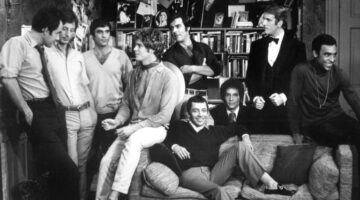
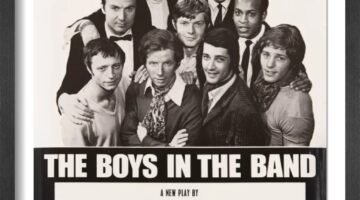
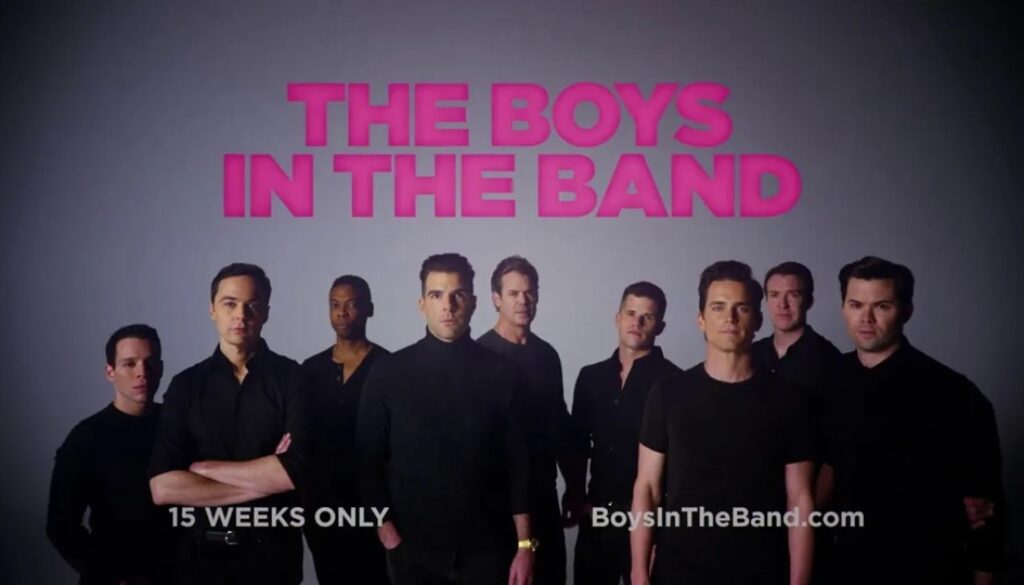
In 1968, a year before the Stonewall Uprising would ignite the modern LGBTQ+ rights movement, Mart Crowley’s The Boys in the Band premiered Off-Broadway. It was a cultural earthquake. For the first time, a mainstream audience was invited into a private, unapologetic, and often brutal space occupied entirely by gay men.
To understand the characters, one must understand the “pre-Stonewall” world of the late 1960s. At this time, homosexuality was still classified as a mental disorder by the American Psychiatric Association. In New York, “solicitation” and “lewdness” laws meant that men could be arrested simply for dancing together or gathering in bars. The characters in Crowley’s play exist in a world where survival depends on a “double life.” Their only sanctuary is the private apartment—a space where they can be “fabulous,” “bitchy,” and “honest,” but also where the accumulated weight of societal hatred often turns inward, manifesting as the “gayngst” and self-loathing that defines the play’s second half.
Here is an analysis of each character, their role in the play, and their embodiment of the 1960s queer experience.
Michael: The Host and the Martyr of Self-Hate
Michael is the gravitational center of the play. A lapsed Catholic and a “displaced Southerner” living in an expensive Manhattan apartment he cannot afford, he represents the quintessential mid-century “troubled” homosexual.
In the 1960s, the Church and the State were the twin pillars of oppression for gay men. Michael is trapped between them. His religious upbringing tells him he is a sinner, while his expensive tastes and “Hermès scarf” lifestyle are a desperate attempt to perform a class-based “superiority” to mask his internal shame. Michael is the architect of the evening’s destruction. When he is sober, he is charming and witty; when he drinks, he becomes “lethal.”
His invention of “The Game”—forcing his guests to call the one person they truly loved—is a manifestation of his own inability to find peace. He cannot stand to see others happy because he feels his own life is a fraud. His famous final line, “Show me a happy homosexual and I’ll show you a gay corpse,” serves as a haunting summary of the pre-Stonewall psyche: the belief that a gay life is inherently tragic.
Harold: The Truth-Teller and the “Jew Fairy”
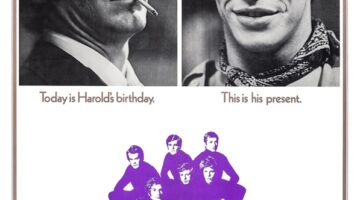
Harold is the “birthday boy” for whom the party is thrown. Describing himself as a “32-year-old, ugly, pockmarked Jew fairy,” Harold is Michael’s “frenemy” and mirror image. While Michael uses alcohol to hide from himself, Harold uses marijuana and a detached, “deadpan” cynicism to observe the world.
Harold represents the intersectional outsider—doubly marginalized by his Jewishness and his sexuality. In the 1960s, the “cult of youth” was already beginning to dominate gay culture, and Harold’s obsession with his fading looks reflects the fear of becoming an “old queen” in a world that offers no long-term stability or family structure for gay men. Harold is the only character who can truly stand up to Michael. He is the “watchful overlord” who recognizes Michael’s cruelty for what it is: a projection of self-hatred. When he tells Michael, “I’m the only one who’s better at ‘the read’ than you are,” he asserts a hard-won self-awareness that Michael lacks.
Donald: The Foil and the Analyst’s Patient
Donald is Michael’s former lover and closest confidant. He has “escaped” the city for the suburbs and is currently in psychoanalysis—a common “remedy” in the 1960s for men trying to “cure” their homosexuality or at least manage the depression it caused.
Donald serves as Michael’s conscience. He is quieter, more reflective, and weary of the “performance” of being gay in New York. His presence highlights the exhaustion of the era. The 1960s were a time of “Butch Assurance” (as he calls it), where men used hairspray and masculine posturing to pass in public. Donald’s struggle with “the icks” (anxiety attacks) reflects the mental health toll of living in a society that tells you that your very existence is a pathology.
Emory: The Unapologetic “Screaming Queen”
Emory is the most radical character in the play, though he is often dismissed as comic relief. An interior decorator who is “flaming” and “nelly,” Emory refuses to “butch it up” even when the “straight” Alan arrives.
In the 1960s, “passing” was the primary survival strategy. Men like Emory, who could not or would not hide their mannerisms, were the most frequent targets of both police harassment and the “internalized homophobia” of other gay men (like Michael). Michael is embarrassed by Emory because Emory is “visible.” Yet, Emory shows the most courage. When Alan attacks him physically and verbally, Emory maintains his dignity, proving that while he may be “nelly,” he is no coward. He represents the “high swish” culture that eventually led the charge at Stonewall—those who had nothing left to lose because they were already outcasts.
Bernard: The Intersection of Race and Sexuality
Bernard is a librarian and the only Black man in the group. His position is uniquely precarious. In 1968, the Civil Rights Movement was in full swing, yet the “gay world” Bernard inhabits is still largely white and Eurocentric.
Bernard’s “Game” phone call is the most heartbreaking. He calls the son of the wealthy white family his mother worked for—a man he loved but could never have, not just because they were both men, but because of the rigid racial and class hierarchies of the time. Bernard endures Michael’s casual racism and Emory’s “sisterly” ribbing with a quiet grace that masks deep pain. He embodies the double-burden of being a minority within a minority, navigating a world where he is never fully “at home” in either the Black community or the white gay community.
Hank and Larry: The Struggle for Monogamy
Hank (a math teacher who left his wife and kids) and Larry (a commercial artist) represent the “modern couple” of 1968. They are at the center of a debate that still exists today: can gay relationships mirror the “heteronormative” model of monogamy?
Hank is “straight-acting” and conservative; he wants a house and a “marriage.” Larry, however, rejects the “shackles” of traditional domesticity, arguing that since society won’t give them a marriage license, why should they play by society’s rules? Their conflict reflects the 1960s “sexual revolution.” For Hank, being gay is a sacrifice he made (leaving his family); for Larry, it is a liberation. Their eventual reconciliation at the end of the play—deciding to try to make it work despite their differences—is one of the few moments of genuine hope in the script.
Alan: The Catalyst and the Closet
Alan is Michael’s “straight” college roommate who crashes the party. He is the “anxious queer” (as Michael calls him) or perhaps truly straight—the play leaves his sexuality ambiguous.
Alan represents the “Old Guard” of 1950s/60s repression. He is a Washington lawyer with a wife and kids, terrified by the “degeneracy” he sees at the party. His visceral reaction to Emory is a classic case of “protesting too much.” Whether Alan is a closeted gay man or just a terrified conservative, he represents the “Straight World” that the boys in the band are forced to hide from every day. His presence forces the men to “butch up” initially, showing how quickly the threat of a “straight observer” can dismantle a queer safe space.
Cowboy: The Objectified Youth
The Cowboy is a “Midnight Cowboy” style hustler bought as a gift for Harold. He is “beautiful but brainless.”
He represents the commodification of youth and beauty in the gay subculture. In a world where gay men were denied legal rights, families, and long-term security, “beauty” became a form of currency. The Cowboy is treated as an object by Michael and Harold, highlighting the cynicism and shallow nature of a community that hasn’t yet found a way to value its members for anything beyond their utility or their looks.
Conclusion: Before the Spark
The Boys in the Band is a time capsule of a world on the brink of change. The self-loathing Michael feels at the end of the night—sobbing in Donald’s arms—was the reality for many men in 1968. They had the “party,” the “wit,” and the “friendship,” but they did not yet have “Pride.”
A year after the play premiered, the patrons of the Stonewall Inn fought back. They stopped “butching it up” for the Alans of the world and stopped believing Michael’s lie that they were destined to be “unhappy.” To look at these characters today is to see the “founding fathers” of the movement—men who suffered in the dark so that the next generation could live in the light.