The Life Musical: The Complete Guide — Cy Coleman’s Broadway Masterpiece
MEMORABILIA AVAILABLE HERE
Cy Coleman’s Final Broadway Musical
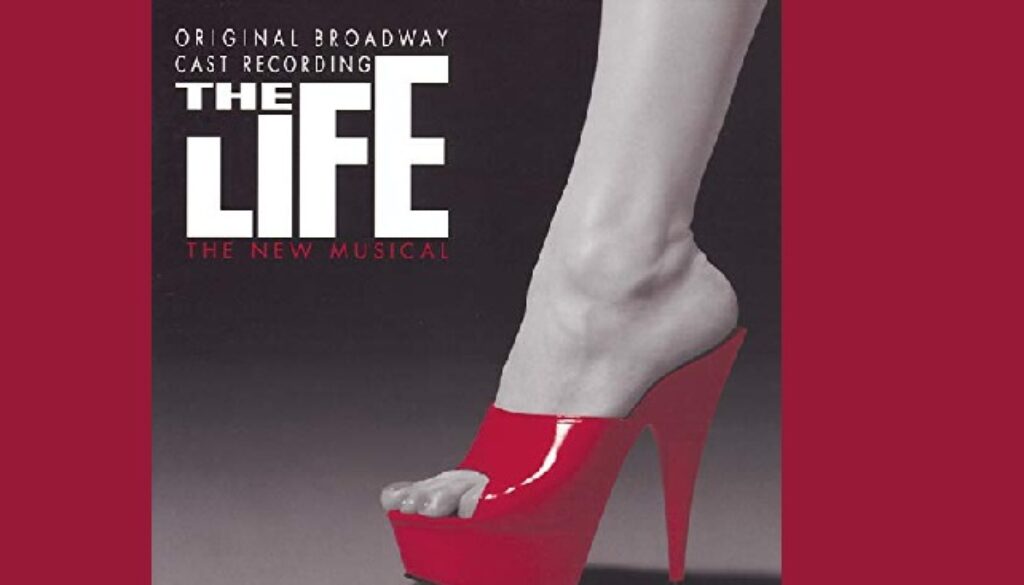
THE LIFE
Music by Cy Coleman • Lyrics by Ira Gasman
Book by David Newman, Ira Gasman & Cy Coleman
Directed by Michael Blakemore • Choreography by Joey McKneely
Ethel Barrymore Theatre, Broadway — April 26, 1997
The World
Nobody Wanted
to See
The Life is a musical with music by Cy Coleman, lyrics by Ira Gasman, and book by David Newman, Ira Gasman and Cy Coleman. Based on Gasman’s original idea, the show explores the raw, neon-lit underbelly of Times Square’s 42nd Street in the 1980s — the world of pimps and prostitutes, drug users and dealers, runaways and street people — in the era just before the neighbourhood’s infamous “Disneyfication” swept it clean of the humanity, however damaged, that had lived there.
It is, in the words of Michael Blakemore — the Australian director who shaped its final Broadway form — a show that walks a tightrope, “careful not to fall into the seediness below, toward a common humanity to which audiences can relate.” The result is one of Broadway’s most underrated musicals: a gritty, compassionate, musically brilliant show about people the world had largely decided not to care about — and the desperate, human need, regardless of circumstance, to be free.
The show first appeared Off-Broadway at the Westbeth Theatre in 1990 before its landmark Broadway production opened at the Ethel Barrymore Theatre on 26 April 1997. It ran for 466 performances, winning Tony Awards for Best Featured Actor (Chuck Cooper) and Best Featured Actress (Lillias White). The cast recording is considered one of the finest of its era.
The Origin — Ira Gasman’s 42nd Street
The spark for The Life came from a moment of pure street theatre. Ira Gasman recalls walking on 42nd Street in New York City and witnessing an arrest: “What theatre, I thought, right there in the street! It got me thinking about this show.” The Off-Broadway production opened at the Westbeth Theatre in July 1990, directed and choreographed by Joe Layton, featuring Chuck Cooper, Lillias White, Lori Fischer and Mamie Duncan-Gibbs. In 1994, Coleman and Gasman brought in David Newman to help substantially rewrite the book — a process that transformed the show from its original workshop form into the more fully realised piece that would reach Broadway three years later. Coleman then brought in director Michael Blakemore to shape it for the Ethel Barrymore.
The Characters
of 42nd Street
The world of The Life is populated by the people who lived and worked on the streets and in the bars of pre-cleanup Times Square — a community with its own hierarchies, loyalties, dreams and codes. They are not saints. They are fully, heartbreakingly human.
The emotional centre of the show. A street worker who has saved her money and is desperate to escape the life — to leave New York with her man Fleetwood and make a fresh start. Proud, determined, and ultimately betrayed. Played on Broadway by Pamela Isaacs (Tony nominated). On UK premiere by T’Shan Williams (Offie Award winner).
A veteran of the streets who has seen everything — and who, despite her cynicism, retains a fierce loyalty to Queen. Their friendship is the moral core of the show, expressed in the heartbreaking duet “My Friend.” Played on Broadway by Lillias White (Tony Award winner). On UK premiere by Sharon D. Clarke.
Self-described as the biggest businessman on the block. A pimp of genuine menace who moves to control Queen after Fleetwood’s attention turns elsewhere. His threat — and his eventual death — drive the show’s brutal climax. Played on Broadway by Chuck Cooper (Tony Award winner). UK premiere by Cornell S. John.
A displaced Vietnam veteran caught in the grip of drug addiction, who exploits Queen’s love while chasing an unrealistic dream of power and money. Weak, charismatic, ultimately tragic. Played on Broadway by Kevin Ramsey. UK premiere by David Albury.
An opportunistic, conniving white hustler who schemes his way through the action, orchestrating Fleetwood’s seduction of Mary and ultimately double-crossing Queen at the show’s most devastating moment. Played on Broadway by Sam Harris (winner of the first Star Search, 1984). UK premiere by John Addison.
A girl who arrives on the bus from Minnesota with the look of an angel — but who, as the show makes clear, is no innocent. She is the catalyst who sets the final act of betrayal in motion, eventually departing for Los Angeles with Lou and his promises of a film career. Played on Broadway by Bellamy Young.
Owner of the bar where the demi-monde gathers. He has seen everything, and has a complex, genuine affection for his clientele. The show’s moral touchstone in many ways. Played on Broadway by Vernel Bagneris.
A gaudy Los Angeles producer of adult films, looking for fresh talent. The vehicle by which Mary escapes (or doesn’t) the streets. Played on Broadway by Rich Hebert.
The Story —
Times Square, 1980s
The musical opens on the pulsating, neon-soaked streets of Times Square in the 1980s. Everything has a price — especially sex. The garish topless bars, the transvestite joints, the street workers who ply the sidewalks at the bidding of their pimps: this is the world of the show, and it announces itself with “Check It Out!” — the rollicking, defiant company number that opens the show with a swagger that belies the tragedy to come.
Act One — Dreams and Betrayals
Jojo, a white hustler, has schemes. Queen and her best friend Sonja celebrate what they hope will be one of their last days on the street — Queen has saved her money and plans to leave with Fleetwood, her man, a Vietnam veteran she loves despite everything. But when she returns to her hotel room she discovers Fleetwood has spent half her savings feeding his drug habit and paying off debts. Meanwhile, Jojo takes Fleetwood to the Port Authority where they spot Mary, fresh off the bus from Minnesota — Jojo grabs her suitcase so Fleetwood can rescue it and become her hero. The trap is set.
The community of sex workers, druggies and hustlers hangs out at Lacy’s bar. Sonja bemoans the wear and tear of the life. Memphis — the self-described “biggest businessman on the block” — eyes the newcomer Mary with professional interest. Queen takes Mary aside and tries to persuade her to go home. The women stand up for themselves. The pimps complain about police harassment. Jojo cajoles Mary into go-go dancing, where she’s a smashing success. Money flows. Lou, the Hollywood producer, appears with promises of a film career.
Queen, in jail again, reflects on her attachment to Fleetwood. He and Jojo spend the night with Mary. As Fleetwood’s attention turns toward Mary, Memphis makes his move — he wants to add Queen to his stable. Queen discovers what’s been happening between Fleetwood and Mary. She has finally had enough. She breaks with Fleetwood and, at The Hookers’ Ball — the community’s grand annual celebration — attaches herself to Memphis as Lou makes off with Mary. The first act ends with the world reorganised and the stakes impossibly high.
Act Two — The Tightening Trap
In Memphis’s spacious apartment, Queen thanks him for getting her out of jail and for the beautiful dress he gave her for the Ball. Memphis makes his price clear: the dress was a $6,000 loan to be repaid with her earnings. He warns her not to leave town: “You’ll be coming back real soon for a funeral — Fleetwood’s; followed shortly by your own.” Queen tells Sonja she must find Fleetwood and warn him. She asks Jojo to arrange a meeting at Lacy’s the next morning. Jojo double-crosses her.
The next morning at Lacy’s, Jojo arrives not with Fleetwood alone but with Memphis, who brutally flogs Queen. When Fleetwood arrives and sees what Memphis has done, Queen reminds him of what they once had together. He returns to his hotel and finds Mary preparing to leave for Los Angeles. Queen, Sonja, and the other women share their stubborn hopes near the Lincoln Tunnel. Sonja hands Queen a bus ticket and a suitcase — a desperate attempt at last-minute escape.
The Climax — Hudson River
Near the Hudson River, at a spot once special to Queen and Fleetwood, he appears and tries to persuade her to make a new start. Queen bitterly rejects him. Jojo leads Memphis onto the scene. Fleetwood pulls a gun on Memphis. Jojo knocks it loose. Memphis mortally stabs Fleetwood. Queen seizes the fallen gun and shoots Memphis. In a final act of profound friendship, Sonja decides to take the rap for killing Memphis — claiming self-defence — so that Queen can go free. They say goodbye in “My Friend” — the show’s most devastating and beautiful moment. Queen walks to the bus. The bus carries her away. Sonja surrenders to the police. The life goes on.
The Music —
Cy Coleman’s Final Score
The Life represents Cy Coleman’s final Broadway musical — and many consider it among his very finest scores. Coleman (1929–2004) had already given Broadway Sweet Charity, City of Angels, Barnum and The Will Rogers Follies. For The Life, working with lyricist Ira Gasman, he created a score that draws on blues, gospel, funk, jazz, and soul — a sound that could only have come from the streets it depicts. The orchestrations, by Harold Wheeler, gave the score the full weight of a big band filtered through gutter glamour.
The show’s standout numbers range from the company opener “Check It Out!” to the tender devastating duet “My Friend” — by near-universal agreement one of the finest songs Coleman ever wrote. The women’s number “My Body” is a defiant feminist anthem decades before the term applied to it; “The Oldest Profession” is Sonja at her most wryly brilliant.
Songs from The Life
Production History
The musical’s world premiere takes place at the Westbeth Theatre in New York City, running from 30 July to 16 August 1990. Directed and choreographed by Joe Layton, the production features Chuck Cooper, Lillias White, Lori Fischer and Mamie Duncan-Gibbs. The workshop form differs substantially from what will eventually reach Broadway. Coleman and Gasman then spend four years reworking the show with playwright David Newman before approaching Broadway.
The Broadway production opens at the Ethel Barrymore Theatre (243 West 47th Street) on 26 April 1997, following previews from 8 April. Directed by Michael Blakemore, choreographed by Joey McKneely. Scenic design by Robin Wagner, costume design by Martin Pakledinaz, lighting by Richard Pilbrow. Stars: Pamela Isaacs (Queen), Lillias White (Sonja), Chuck Cooper (Memphis), Kevin Ramsey (Fleetwood), Sam Harris (Jojo), Bellamy Young (Mary), Vernel Bagneris (Lacy). The show closes 7 June 1998 after 466 performances and 21 previews. A cast recording is released on Sony Classical.
The US regional premiere takes place at The Heights Theatre in Houston, Texas in April 1999. Directed by Ron Jones, choreographed by Jim Williams, with musical direction by Stephen Jones. Cast: Tamara Siler (Queen), Mia Fisher (Sonja), Illich Guardiola (Fleetwood), L. Jay Meyer (Lou), Johanna Beth Harris (Mary), Bob Beare (Lacy), Jonathan McVey (Jojo).
The Los Angeles premiere is produced by Jaxx Theatricals at the Stella Adler Theatre, running 3–21 December 2008. Directed by Joe Greene, choreographed by Paul Romero Jr. Cast includes Willam, Dionne Gipson, Ethan LePhong and David St. Louis. Original cast member Sam Harris attends the production.
To coincide with the show’s 20th Broadway anniversary, the UK premiere is mounted at Southwark Playhouse in London in March 2017 — once again directed by Michael Blakemore. Stars: Sharon D. Clarke (Sonja), Cornell S. John (Memphis), T’Shan Williams (Queen), David Albury (Fleetwood), John Addison (Jojo), Omari Douglas (Slick), Joanna Woodward (Mary). The production receives four Off West End Theatre Awards (Offies) from five nominations — winning Musical Production, Female in a Musical (T’Shan Williams), Supporting Female (Sharon D. Clarke) and Supporting Male (Cornell S. John).
New York City Center Encores! presents a concert adaptation directed by Billy Porter — his directorial debut. The adaptation significantly reworks the show: it is reframed as a flashback narrated by an older Jojo, with rearranged numbers and expanded backstory. Stars: Alexandra Grey (Queen), Antwayn Hopper (Memphis), Mykal Kilgore (Young JoJo), Ledisi (Sonja), Erika Olson (Mary), Destan Owens (Old JoJo), Ken Robinson (Fleetwood). Reviews are largely negative — critics object to “preachy” additions and extended runtime — though Ledisi’s performance is widely praised, and the “funkadelic” rearrangements of Coleman’s score receive mixed notices.
Awards &
Recognition
| Year | Award | Category | Nominee | Result |
|---|---|---|---|---|
| 1997 | Tony Award | Best Musical | The Life | Nominated |
| 1997 | Tony Award | Best Book of a Musical | David Newman, Ira Gasman, Cy Coleman | Nominated |
| 1997 | Tony Award | Best Original Musical Score | Cy Coleman & Ira Gasman | Nominated |
| 1997 | Tony Award ✦ | Best Featured Actor in a Musical | Chuck Cooper (Memphis) | Won ✦ |
| 1997 | Tony Award ✦ | Best Featured Actress in a Musical | Lillias White (Sonja) | Won ✦ |
| 1997 | Tony Award | Best Actress in a Musical | Pamela Isaacs (Queen) | Nominated |
| 1997 | Tony Award | Best Featured Actor in a Musical | Sam Harris (Jojo) | Nominated |
| 1997 | Tony Award | Best Costume Design | Martin Pakledinaz | Nominated |
| 1997 | Tony Award | Best Lighting Design | Richard Pilbrow | Nominated |
| 1997 | Drama Desk Award ✦ | Outstanding New Broadway Musical | The Life | Won ✦ |
| 1997 | Drama Desk Award ✦ | Outstanding Featured Actress | Lillias White | Won ✦ |
| 1997 | Drama Desk Award ✦ | Outstanding Featured Actor | Chuck Cooper | Won ✦ |
| 1997 | Drama Desk Award | Outstanding Actress in a Musical | Pamela Isaacs | Nominated |
| 1997 | Drama Desk Award | Outstanding Actor in a Musical | Sam Harris | Nominated |
| 1997 | Drama Desk Award | Outstanding Director — Musical | Michael Blakemore | Nominated |
| 1997 | Outer Critics Circle ✦ | Outstanding Featured Actress | Lillias White | Won ✦ |
| 1997 | New York Drama Critics’ Circle | Best Musical | The Life | Nominated |
| 2018 | Off West End Awards (Offies) ✦ | Musical Production | UK Premiere — Southwark Playhouse | Won ✦ |
| 2018 | Offies ✦ | Female in a Musical | T’Shan Williams (Queen) | Won ✦ |
| 2018 | Offies ✦ | Supporting Female in a Musical | Sharon D. Clarke (Sonja) | Won ✦ |
| 2018 | Offies ✦ | Supporting Male in a Musical | Cornell S. John (Memphis) | Won ✦ |
Legacy —
The Show They Forgot
The Life occupies a curious position in the Broadway canon: critically celebrated, beloved by those who saw it, winner of multiple awards — and yet somehow absent from the conversation about great American musicals in a way that shows with similar pedigrees are not. Part of this may be its subject matter. A show about Black sex workers and their pimps on pre-gentrification 42nd Street does not lend itself to easy revival, easy touring, or easy licensing. Part may be the era — 1997 was a crowded year, and The Life lost Best Musical to Titanic.
But the score endures. The cast recording — with Lillias White’s Sonja as its centrepiece — is a document of one of Broadway’s great vocal performances. Chuck Cooper’s Memphis is quietly ferocious. Pamela Isaacs’s Queen carries the whole emotional weight of the show on her shoulders with devastating grace.
Cy Coleman — The Composer’s Final Score
Cy Coleman (1929–2004) was one of Broadway’s most consistently brilliant composers. His scores include Wildcat (1960), Little Me (1962), Sweet Charity (1966), Seesaw (1973), Barnum (1980), City of Angels (1989), The Will Rogers Follies (1991), and The Life (1997). The Life was his final complete Broadway score — composed in his late sixties, and arguably his most musically ambitious work in terms of the genres it synthesises: blues, soul, gospel, jazz, funk. Coleman died in November 2004. His legacy is the sound of Broadway at its most human.
42nd Street Before the Cleanup — The World the Show Depicts
The show is set in the 1980s Times Square that many New Yorkers of a certain age remember with complex emotion — seedy, dangerous, and alive with a particular kind of human energy that the post-Disneyfication tourist zone entirely erased. The street workers, hustlers, peep shows, adult cinemas, and neighbourhood bars that The Life depicts were largely gone by the time the show opened in 1997 — swept away by the Giuliani administration’s aggressive policing and real estate redevelopment. In that sense the show is already a period piece, a memorial to a New York that no longer exists. Which is precisely why it matters.
Links & Related
The Life Musical — Memorabilia Cy Coleman — Composer Memorabilia Lillias White — Memorabilia Ethel Barrymore Theatre — Broadway Memorabilia Times Square Broadway — Memorabilia City of Angels — Cy Coleman Musical Guide Company — Musical Guide Hell’s Kitchen — Musical Guide 1997 Tony Awards — Broadway Memorabilia