The Rocky Horror Show: The Complete Guide — Richard O’Brien’s Cult Masterpiece
Rocky Horror Show - Podcast
MEMORABILIA AVAILABLE HERE
Richard O’Brien’s Cult Musical Masterpiece — Since 1973
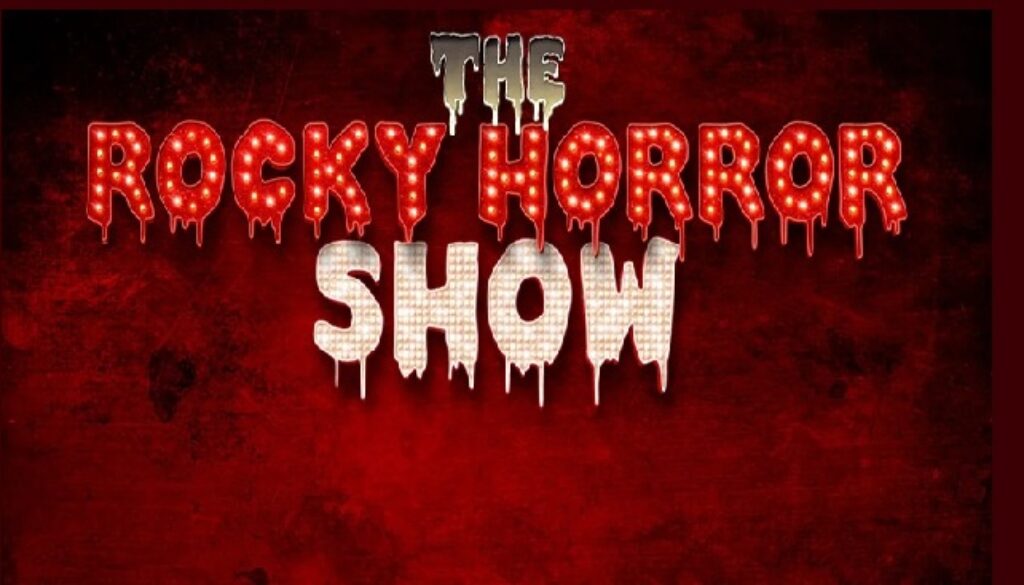
THE Rocky Horror Show
Music, Book & Lyrics by Richard O’Brien
Directed by Jim Sharman • Costumes by Sue Blane
Musical Arrangements by Richard Hartley
Premiered Royal Court Theatre, London — 19 June 1973
A Sweet Transvestite
From Transylvania
The Rocky Horror Show is a musical with music, lyrics, and book by Richard O’Brien. A hilarious, outrageous, and genuinely liberating tribute to the B-movie science fiction and horror films of the 1930s to the early 1960s, it tells the story of Brad Majors and Janet Weiss — a newly engaged, thoroughly square couple who get caught in a storm, suffer a flat tyre, and stumble into the castle of Dr Frank-N-Furter: a pansexual, cross-dressing mad scientist from the planet Transsexual, Transylvania. What follows is a night of sexual liberation, rock ‘n’ roll, murder, an orgy, and one of the most exhilarating finales in musical theatre history.
The show premiered at the 63-seat Royal Court Theatre Upstairs in London on 19 June 1973, directed by Jim Sharman, with Tim Curry as Frank-N-Furter in a performance that made him a star overnight. It transferred to the Chelsea Classic Cinema and then to the King’s Road Theatre — and ran in London for a total of 2,960 performances, closing on 13 September 1980. Along the way it won the 1973 Evening Standard Award for Best Musical, launched a global phenomenon, spawned the most successful cult film in history, and has since been seen by over 30 million people in 20 languages across six continents.
On its 50th anniversary in 2023, The Rocky Horror Show stands not just as a cult classic but as one of the most significant cultural events in post-war British popular culture — one of the first mainstream musicals to depict fluid sexuality and gender liberation, conceived and written as glam rock electrified London and the old certainties of the pre-1960s world finally crumbled away.
Richard O’Brien — Writing to Keep the Winter Out
As an out-of-work actor in London in the early 1970s, Richard O’Brien wrote The Rocky Horror Show to keep himself busy on winter evenings. Since his youth he had developed a passion for science fiction and B-horror movies, and wanted to combine elements of their unintentional humour, Steve Reeves muscle films, schlock-horror dialogue, and 1950s rock and roll into a single, exhilarating piece. He took a small portion of his unfinished script to Australian director Jim Sharman, who had recently directed the first British stage production of Jesus Christ Superstar — during which he had met O’Brien, who played King Herod for just one performance. Sharman wanted to direct it at the experimental Upstairs space at the Royal Court Theatre. The working title was They Came from Denton High — changed to The Rocky Horror Show at Sharman’s suggestion just before previews.
The Inhabitants
of the Castle
A pansexual, cross-dressing scientist from the planet Transsexual who has created the perfect muscle man in his laboratory. Charismatic, extravagant, dangerous, and ultimately tragic. Created and originated by Tim Curry, who conceived him speaking with the posh accent of the Queen of England. One of the defining roles in theatrical history.
A clean-cut, conventional young man who has just proposed to Janet. His experience in the castle demolishes every assumption he has ever held about himself. His is the straightest possible line into the most twisted possible universe. Created by Christopher Malcolm.
Brad’s newly-engaged girlfriend. Initially buttoned-up and proper, Janet undergoes the show’s most dramatic transformation — seducing Rocky and discovering her own capacity for desire. Played in the original by Julie Covington.
Frank’s hunchbacked manservant — and ultimately the one who brings his reign to an end. A villain in servant’s clothes. Originally played by Richard O’Brien himself, who also wrote the show. O’Brien also reprised the role in the 1975 Broadway production and the 1975 film.
Riff Raff’s sister and Frank’s maid. Slyly sensuous, knowing, and ultimately complicit in her brother’s coup. Originated by Patricia Quinn — who also sang the opening lips in the 1975 film version.
A glittery, tap-dancing groupie who is devoted to Frank and had a relationship with Eddie. She is ultimately shot dead by Riff Raff. Originated by Nell Campbell (billed as Little Nell).
Frank’s artificially created, blonde, fully grown, physically perfect muscle man — the result of Frank’s discovery of “the secret to life itself.” He possesses half of Eddie’s brain. His arrival is the show’s centrepiece set piece.
Eddie — Frank and Columbia’s former lover, rendered a zombie, bursting from a Coca-Cola freezer with explosive energy before being hacked to death by Frank. Dr. Everett Scott — Brad and Janet’s paraplegic former science tutor who arrives at the castle in search of his nephew Eddie. Meat Loaf played Eddie/Dr. Scott in the original Los Angeles production.
The Story —
One Night
in the Castle
An Usherette (sometimes called Trixie) working in a derelict cinema introduces tonight’s “film” — a frame device that announces the show’s love affair with B-movies and sets up the knowing, participatory relationship between stage and audience that defines the Rocky Horror experience. She sings “Science Fiction/Double Feature” — a loving roll call of the genre’s icons.
Act One — Arrival
After attending the wedding of Brad’s best friend, Brad Majors proposes to Janet Weiss in the car park of a church (“Dammit Janet”). Driving through the rain to visit their old science tutor Dr Everett Scott, they get a flat tyre and seek help at a nearby castle (“Over at the Frankenstein Place”). They are greeted by Riff Raff, the hunchbacked handyman, and his sister Magenta. The castle’s inhabitants — Riff Raff, Magenta, and the groupie Columbia — perform the show’s immortal signature number (“Time Warp”). Brad and Janet try to leave, but are stopped by the arrival of Dr Frank-N-Furter — a pansexual, cross-dressing mad scientist who introduces himself as “a sweet transvestite from Transsexual, Transylvania” (“Sweet Transvestite”) and invites them up to his laboratory. They are stripped to their underwear.
In the laboratory, Frank announces he has discovered the secret to life itself. He unveils his creation — Rocky, a blond, perfectly built man brought to life. The celebration is interrupted when a Coca-Cola freezer opens to reveal Eddie — Frank’s former lover, now a zombie biker — who storms the lab in a frenzy of chaos and affection (“Hot Patootie – Bless My Soul”). Frank panics and hacks Eddie to death. Brad and Janet, shaken, are ushered to separate bedrooms.
Act Two — Seduction, Revelation, and the Floor Show
In the dark of Janet’s bedroom, she begins to enjoy Brad’s advances — until she realises it is Frank in disguise. He seduces her, convincing her that pleasure is no crime. The same happens to Brad. Riff Raff interrupts to announce Rocky has escaped. Janet, exploring the castle, finds Rocky hiding in the laboratory — and seeing Brad on the television monitor in bed with Frank, she seduces Rocky herself (“Touch-a, Touch-a, Touch-a, Touch Me”). Their arrival is then interrupted by Dr Everett Scott in his wheelchair — Brad and Janet’s paraplegic former science tutor, revealed to be Eddie’s uncle and an FBI contact. Frank uses a device to electronically restrain them all — and announces he has a floor show to put on.
Under Frank’s direction, Columbia, Rocky, Brad and Janet perform song and dance routines in lingerie (“Rose Tint My World”) — followed by the show’s orgiastic centrepiece (“Don’t Dream It – Be It”) and the rousing finale (“Wild and Untamed Thing”). Then Riff Raff and Magenta arrive in spacesuits with ray guns. Riff Raff declares a coup — they are taking Frank’s mission back to their home planet. Frank makes a final, heartbreaking plea (“I’m Going Home”). Riff Raff is unmoved and shoots Columbia, Frank, and Rocky. Brad, Janet, and Dr Scott are ordered out. As the castle blasts off into outer space, the three survivors — confused, changed, and earthbound — are left with nothing but “Super Heroes” and the Narrator’s final words: “lost in time, and lost in space — and meaning.”
The Audience Participation Tradition
Beyond the music and the narrative, The Rocky Horror Show is defined by one of theatre’s most extraordinary participatory traditions. Audience members attend dressed as characters from the show, shout call-back lines at the actors and the Narrator, throw props (toast, rice, toilet paper, playing cards, newspapers), and generally treat the performance as a two-way conversation. This tradition — which began organically in the US with the 1975 film and was absorbed back into stage productions — is an integral part of what Rocky Horror is. It is not just a show to be watched. It is a show to be inhabited.
The Music — Rock ‘n’ Roll
and Glam
The score of The Rocky Horror Show is one of the most infectious in musical theatre history — a riotous collision of 1950s rock and roll, glam rock, pop, and schlock horror conceived and written by O’Brien with musical arrangements by Richard Hartley. The songs are designed to lodge permanently in the brain. They did. The show’s two signature numbers — “Time Warp” and “Sweet Transvestite” — are among the most recognisable songs ever written for the stage, both co-written by O’Brien and Hartley. The score also features one genuinely unexpected emotional gut-punch: “I’m Going Home” — Frank-N-Furter’s final aria — which somehow transforms the show’s central comic villain into a figure of heartbreaking pathos.
Note: in the original London and Los Angeles productions, “Sweet Transvestite” came before “Time Warp”. This was changed for the 1975 film and subsequently updated for the 1990 West End revival. Most modern productions use the revised order.
Production
History
The world premiere takes place at the 63-seat Theatre Upstairs at the Royal Court Theatre, Sloane Square, Chelsea — after two previews on 16 and 18 June. No interval. Cast: Tim Curry (Frank-N-Furter), Richard O’Brien (Riff Raff), Patricia Quinn (Magenta), Nell Campbell (Columbia), Julie Covington (Janet), Christopher Malcolm (Brad). Record producer Jonathan King sees it on the second night and signs the cast for an original cast recording, rushed out on his UK Records label. The Guardian calls it “witty and erotic.” The run lasts until 20 July 1973.
The success at the Royal Court allows a transfer to the 230-seat Chelsea Classic Cinema on Kings Road from 14 August to 20 October 1973. The intimate cinema setting suits the show perfectly, deepening its B-movie aesthetic.
Rocky Horror finds its quasi-permanent home at the 500-seat King’s Road Theatre (formerly the Essoldo Cinema) from 3 November 1973 — the venue depicted on the famous poster uploaded above. It wins the 1973 Evening Standard Award for Best Musical. This is the poster from this era — the show’s creative zenith and cultural explosion. The run continues until 31 March 1979.
Producer Lou Adler secures American rights after seeing the show in London with Britt Ekland. The show premieres at the Roxy Theatre in Los Angeles on 24 March 1974, running for nine months to full houses. Cast: Tim Curry as Frank (the only carryover from London), with Meat Loaf as Eddie/Dr. Scott. Fox executive Gordon Stulberg sees it and agrees to invest $1 million in a film. Meat Loaf recalls meeting Elvis Presley at a performance. A deal is made with 20th Century Fox for the film version.
The original Sydney production opens at the New Arts Cinema in Glebe, produced by Harry M. Miller, starring Reg Livermore as Frank-N-Furter. After an 18-month run, it transfers to Melbourne at the Regent Palace Theatre (24 October 1975–28 May 1977, 458 performances). Productions follow in Adelaide and across Australia, establishing Rocky Horror as a sensation throughout the country — the only exception being Adelaide, where it closed after two months to “savage” reviews, baffling everyone involved.
The Broadway debut opens at the Belasco Theatre, with the same Roxy cast plus O’Brien (replacing Bruce Scott as Riff Raff). Despite earning one Tony nomination and three Drama Desk nominations, and strong LA buzz, it closes after just 45 performances and 3 previews. New York is not ready. Adler had hoped it would be as successful as Jesus Christ Superstar. The 1975 film, released the same year, would do the work Broadway could not.
The King’s Road run ends and the show transfers to the Comedy Theatre (now the Harold Pinter Theatre) in London’s West End — the first proscenium arch venue the show had played. The musical is broken into two acts with an interval for the first time. It closes on 13 September 1980 in what is its 2,960th London performance.
The Australian/New Zealand tour features a then-unknown Russell Crowe as Eddie/Dr. Scott — one of many future stars who passed through Rocky Horror productions in the 1980s and 1990s. Former New Zealand Prime Minister Robert Muldoon appears briefly as the Narrator.
The West End revival at the Piccadilly Theatre receives a 1991 Laurence Olivier Award nomination for Best Musical Revival. From this production, Christopher Malcolm establishes the Rocky Horror Company, which tours the UK continuously from the early 1990s through the 2000s with celebrities in key roles: Anthony Head, Jason Donovan, David Bedella as Frank; Gina Bellman as Janet; Edward Tudor-Pole as Riff Raff; Craig Ferguson and Adrian Edmondson as Brad.
A one-night benefit concert at the Royal Court Theatre (the show’s birthplace) for Amnesty International, hosted by Richard O’Brien. Anthony Head and Michael Ball share the role of Frank; Toyah Willcox as Magenta; original cast member Patricia Quinn as The Usherette; Nell Campbell makes a guest appearance as original Columbia. Narrators include Stephen Fry, Tony Slattery, Robin Cousins and others. Released on DVD 2008.
A year-long 40th anniversary UK tour directed by Christopher Luscombe, starring Oliver Thornton as Frank. In 2015 the tour plays the Playhouse Theatre, London — with Richard O’Brien appearing as Narrator for London dates only, receiving seven standing ovations. Tickets sell out in 72 hours. A charity night features Stephen Fry, Anthony Head, Mel Giedroyc, Adrian Edmondson and former Spice Girl Emma Bunton as Narrators. Broadcast on BBC TV in October 2015.
On the 50th anniversary of the world premiere, BBC News reports that The Rocky Horror Show has been performed in 20 different languages and seen by over 30 million people globally since its 1973 debut. It has played on six continents and in every country with a theatrical tradition. The show’s position as one of the most important cult phenomena in the history of popular culture is beyond question.
The Picture Show
The musical was adapted into the 1975 film The Rocky Horror Picture Show — directed by Jim Sharman, starring Tim Curry reprising his role as Frank-N-Furter, and featuring Richard O’Brien as Riff Raff. The film also stars Susan Sarandon and Barry Bostwick as Janet and Brad, with Meat Loaf reprising Eddie. It was produced by 20th Century Fox with a budget partly secured by Fox executive Gordon Stulberg’s reaction to the LA stage production. The film has the longest-running theatrical release in film history — it has never officially closed in American cinemas since its 1975 release. The midnight movie screening tradition it inspired, in which audiences come dressed as characters and shout back lines at the screen, remains one of the most unique communal cinema experiences in the world.
A television movie adaptation — The Rocky Horror Picture Show: Let’s Do the Time Warp Again — was produced by Fox and broadcast in 2016. In 2011, The Rocky Horror Show was one of eight British musicals featured on a commemorative Royal Mail stamp. In a BBC Radio 2 listener poll, it was ranked eighth in the “Nation’s Number One Essential Musicals.”
Cultural Impact — Sexual Liberation and the Glam Era
Beyond its cult status, The Rocky Horror Show is widely acknowledged as one of the first mainstream popular works to depict fluid sexuality — pansexuality, cross-dressing, and carnal liberation — during a period of generational and cultural division. O’Brien has said that “glam rock allowed me to be myself more” — and the show’s conception within the glam era of early-1970s Britain is inseparable from its meaning. It is a product and a document of a particular moment of liberation, and its continued global success — 50 years on, on six continents, in 20 languages — is testament to how universal that liberation turns out to be. Don’t dream it. Be it.
Awards &
Recognition
| Year | Award | Category | Nominee / Show | Result |
|---|---|---|---|---|
| 1973 | Evening Standard Award ✦ | Best Musical | The Rocky Horror Show | Won ✦ |
| 1975 | Tony Award | Best Lighting Design | Gillian Lynne (credited) | Nominated |
| 1975 | Drama Desk Award | Outstanding Musical | The Rocky Horror Show | Nominated |
| 1975 | Drama Desk Award | Outstanding Actor in a Musical | Tim Curry (Frank-N-Furter) | Nominated |
| 1975 | Drama Desk Award | Outstanding Director | Jim Sharman | Nominated |
| 1991 | Laurence Olivier Award | Best Musical Revival | The Rocky Horror Show — West End Revival | Nominated |
| 2011 | Royal Mail ✦ | Commemorative Stamp | The Rocky Horror Show — one of 8 British musicals | Featured ✦ |
| Ongoing | BBC Radio 2 Poll ✦ | Nation’s Number One Essential Musicals | The Rocky Horror Show | Ranked 8th ✦ |
Links & Related
The Rocky Horror Show — Memorabilia & Collectables Hello Dolly – Memorabilia Hadestown – Memorabilia Little Shop of Horrors – Memorabilia Dear Evan Hansen – Memorabilia Falsettos the Musical The Life Musical — Complete Guide MJ the Musical — Complete Guide Cult Musicals — Memorabilia Glam Rock Musicals — Memorabilia