Half a Sixpence Musical 2016 | Complete History & Revival Guide
Half a Sixpence the Musical
Memorabilia Available Here
A Classic British Musical
HALF A SIXPENCE
Flash, Bang, Wallop! — The Timeless Tale of Kipps
The Classic Musical Comedy
Half a Sixpence is a 1963 musical comedy based on the 1905 novel Kipps by H. G. Wells, with music and lyrics by David Heneker and a book by Beverley Cross. It was written as a vehicle for British pop star Tommy Steele.
The show is based on H. G. Wells’s 1905 novel Kipps: The Story of a Simple Soul. Steele played Arthur Kipps, an orphan who unexpectedly inherits a fortune, and climbs the social ladder before losing everything and realizing that you just can’t buy happiness.
David Heneker (who had also worked on Irma La Douce and Charlie Girl) wrote both music and lyrics. Steele’s importance to the show was made evident by his appearance in twelve of the musical’s fifteen songs. Much of this musical was tailored as a star vehicle for Steele’s particular talents.
The Tale of Arthur Kipps
The musical tells the tale of the changing fortunes of Arthur Kipps, an orphan and draper’s assistant at Shalford’s Bazaar in Folkestone, Kent at the turn of the twentieth century.
The Journey from Rags to Riches… and Back
Kipps is an easy-going working class lad, who is happiest with his banjo. He falls in love with Ann Pornick, who gives him the titular gift of half a sixpence as a token of their love.
However, when he unexpectedly inherits a fortune from an estranged grandfather, he is suddenly propelled into high society. He catches the eye of Helen Walsingham and her money-grabbing family, who are desperate to restore their family fortune.
When he loses his money (thanks to the fraudulent behavior of Helen’s brother, James), Kipps is reminded of his roots and returns to marry Ann.
Themes of Class and Authenticity
At its heart, Half a Sixpence is a story about social class, the corrupting influence of wealth, and the importance of staying true to oneself. Arthur Kipps’s journey from humble draper’s assistant to gentleman and back again mirrors the anxieties of Edwardian England about social mobility and the changing class structure.
Principal Characters
John Cleese’s Early Role
John Cleese of later Monty Python fame had a small role in the initial cast as James Walsingham — one of his earliest professional stage appearances before becoming a comedy legend.
Original West End Production (1963)
Half a Sixpence was first produced in London’s West End at the Cambridge Theatre on 21 March 1963, with Marti Webb, in her first leading role, playing Ann. Anna Barry also appeared as Helen.
| Role | Original West End Cast |
|---|---|
| Arthur Kipps | Tommy Steele |
| Ann Pornick | Marti Webb |
| Helen Walsingham | Anna Barry |
| James Walsingham | John Cleese |
| Director | John Dexter |
| Choreographer | Edmund Balin |
| Set Designer | Loudon Sainthill |
The production was directed by John Dexter, with choreography by Edmund Balin, and the set was designed by Loudon Sainthill. It ran for 677 performances.
A Star Vehicle for Tommy Steele
Much of the musical was tailored as a star vehicle for Steele’s particular talents. This was especially evident in the musical number “Money to Burn”: when Arthur Kipps realizes that he is about to become wealthy, he decides that the first thing he will buy is a banjo.
This is the cue for someone to hand Tommy Steele a banjo so that he can demonstrate his skill on the instrument. In the source material — Wells’s novel — one of the first things that Arthur Kipps purchases with his newfound wealth is a banjo.
Broadway Production (1965)
The musical transferred to Broadway, where Tommy Steele reprised his role as Arthur Kipps. The Broadway production brought the quintessentially British musical to American audiences, introducing them to the charms of Edwardian England and the memorable showstopper “Flash, Bang, Wallop.”
The 1967 Film Adaptation
A 1967 film adaptation starring Steele, along with Julia Foster and Cyril Ritchard, was directed by George Sidney and choreographed by Gillian Lynne.
Film Highlights
Lesley Judd, a future presenter of the BBC children’s TV series Blue Peter, was one of the dancing chorus — one of her earliest professional appearances.
Foster’s singing voice was dubbed by Marti Webb, who had originated the role of Ann in the stage production.
The film brought the exuberance of the stage production to cinema audiences, with spectacular choreography by Gillian Lynne (who would later choreograph Cats and The Phantom of the Opera).
The 2016 Revival: A New Vision
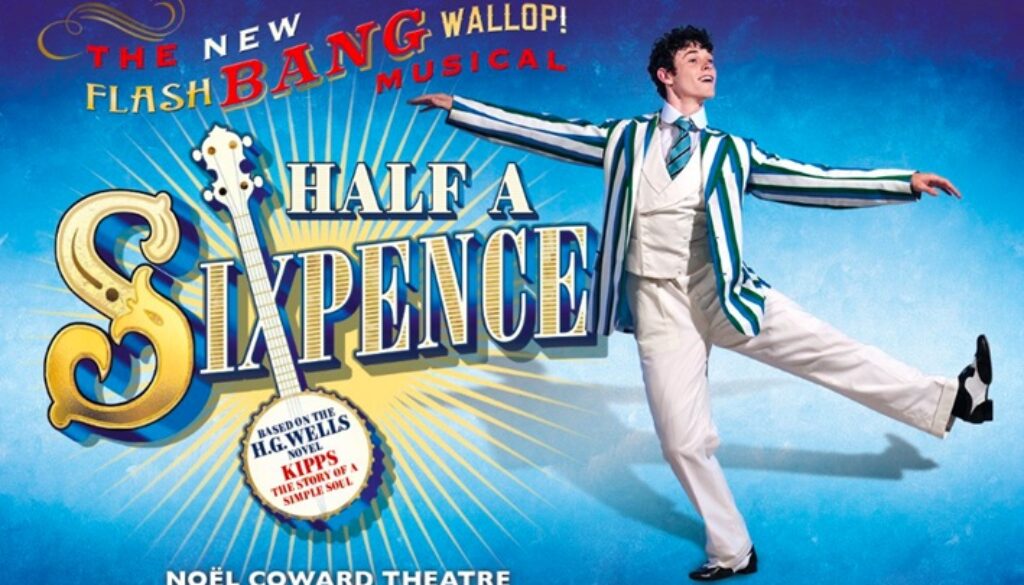
A revised version of the show opened at the Chichester Festival Theatre to rave reviews and standing ovations in July 2016, co-produced by Cameron Mackintosh.
The Mary Poppins Team Reunites
Reuniting Mackintosh’s Mary Poppins collaborators, the show features a new book by Julian Fellowes (creator of Downton Abbey) and new songs by George Stiles and Anthony Drewe alongside revisions of Heneker’s originals.
Chichester to West End
Following the success in Chichester, the production transferred to the Noël Coward Theatre in London’s West End on 17 November 2016 with previews from 29 October 2016.
It initially booked until 11 February 2017. Due to five-star reviews and audience acclaim, the show was extended until 22 April 2017. It was extended once again, until 6 May 2017. It extended again until 2 September 2017, when it closed.
A More Ensemble-Focused Production
The 2016 revival sought to create a more ensemble-focused production that could work without relying on a single star at its center — a deliberate contrast to the original’s star-vehicle structure built around Tommy Steele.
The Unforgettable Score
David Heneker’s Classic Songs
David Heneker’s score captures the exuberance and optimism of both the Edwardian era and the 1960s when the musical was written. The songs range from intimate ballads to spectacular production numbers.
Flash, Bang, Wallop!
The most famous number from the show, “Flash, Bang, Wallop” is an exuberant celebration set in a photography studio, featuring spectacular choreography and infectious energy. This showstopping number has become synonymous with Half a Sixpence and remains one of the most beloved songs in British musical theatre.
Other Notable Numbers
- “Half a Sixpence” — The title song, celebrating the token of love between Arthur and Ann
- “Money to Burn” — Arthur’s celebration of his newfound wealth, featuring the famous banjo moment
- “She’s Too Far Above Me” — Arthur’s lament about the class divide
- “If the Rain’s Got to Fall” — A philosophical number about accepting life’s challenges
Legacy & Impact
Tommy Steele’s Defining Role
For Tommy Steele, Half a Sixpence represented a transition from pop star to legitimate musical theatre performer. He played the role on the West End stage, on Broadway, and in the 1967 film adaptation, making Arthur Kipps inseparable from his own star persona.
H.G. Wells on Stage
Half a Sixpence stands as one of the most successful theatrical adaptations of H.G. Wells’s work. While Wells is best known for his science fiction novels like The Time Machine and The War of the Worlds, Kipps showed his skill at social comedy and class satire.
A Timeless British Classic
More than sixty years after its premiere, Half a Sixpence remains a beloved British musical. The 2016 revival proved that the story of Arthur Kipps — with its themes of class, authenticity, and the true meaning of happiness — resonates with contemporary audiences.
The collaboration between Julian Fellowes, George Stiles, and Anthony Drewe brought fresh perspective while honoring David Heneker’s memorable original score. The show’s availability for licensing ensures that new generations can discover the charms of this classic musical.
Cultural Significance
The musical captures a specifically British sensibility — the anxieties about social class, the humor in pretension, and the triumph of authenticity over artifice. It stands alongside other classic British musicals like Oliver! and Me and My Girl as an enduring portrait of British life and values.
Awards & Recognition
The Enduring Charm
From Draper’s Assistant to Gentleman and Back Again
Half a Sixpence tells a timeless story about staying true to yourself. Arthur Kipps’s journey reminds us that wealth cannot buy happiness, that social climbing often means losing your authentic self, and that true love is found not in the drawing rooms of high society but in the simple connections of genuine affection.
From Tommy Steele’s star-making performance to the Cameron Mackintosh revival, from the Cambridge Theatre to Broadway, from the 1967 film to the 2016 West End production, the musical has entertained generations with its wit, charm, and that unforgettable showstopper:
Flash, Bang, Wallop!