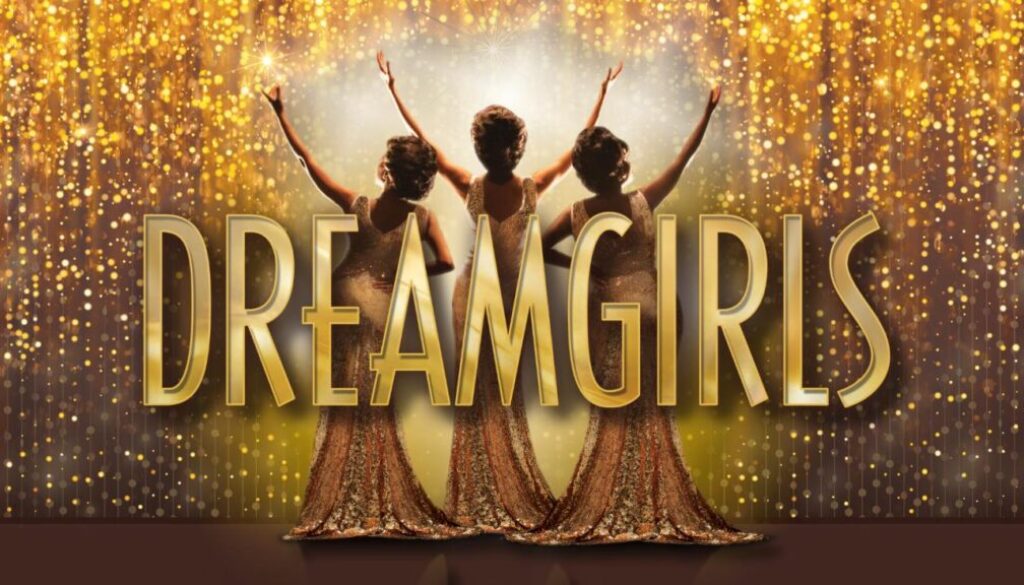
Dreamgirls Broadway: The Original 1981 Show & 2026 Revival
Musical Theatre History & Preview · Broadway
Dreamgirls: The Musical That Made Broadway History in 1981 — and Returns for Its First-Ever Revival in Fall 2026
When Jennifer Holliday unleashed “And I Am Telling You I’m Not Going” at the Imperial Theatre on 20 December 1981, Frank Rich of the New York Times wrote: “When Broadway history is being made, you can feel it.” Forty-five years later, for the first time since that original production, Dreamgirls is coming back to Broadway — reimagined by one of theatre’s most electrifying directors and supported by the woman who won the Oscar playing its most famous role.
|
Original Production
Dreamgirls — Imperial Theatre, 1981
|
2026 Revival — Announced
Dreamgirls — Broadway, Fall 2026
|
The Origins: From Backstage Inspiration to the Imperial Theatre
Dreamgirls has one of the more circuitous paths to Broadway of any major American musical — a journey that wound through failed workshops, star departures, and a director change before emerging as one of the most celebrated productions in the history of the American stage. Its origins lie in the specific world of early 1960s American R&B: the Motown era, when record labels discovered that Black vocal groups could be marketed to mainstream white audiences through a combination of pop-accessible arrangements and carefully managed public images. The tension between authentic artistic expression and manufactured commercial image — between who these women actually were and who their handlers needed them to be — is the musical’s central dramatic engine.
The seeds of the show were planted in the early 1970s, when Tom Eyen — an Off-Off-Broadway playwright — and composer Henry Krieger began developing material about female backup singers and the music industry. The project was initially workshopped by Joseph Papp at the Public Theater, with Nell Carter in the leading role alongside Sheryl Lee Ralph and Loretta Devine. But in 1978, Carter departed the project, and the musical was shelved.
The project was rescued when it caught the attention of Michael Bennett — the director and choreographer who had transformed Broadway with A Chorus Line in 1975. Under Bennett’s guidance, the show was substantially reshaped: the character of Effie was deepened, the theatrical spectacle enlarged, and a relatively unknown singer named Jennifer Holliday was cast in the leading role. The musical opened at the Imperial Theatre on 20 December 1981.
The Story: Effie White, The Dreams, and the Price of Fame
Dreamgirls follows the rise and painful transformations of a young female singing trio from Chicago who become one of the biggest acts in American music — told across roughly two decades of the 1960s and 1970s, from their first amateur talent contest to their eventual individual reckonings with what success has cost them. The show is based on the real-world Motown era, drawing inspiration from The Supremes, The Shirelles, James Brown, and Jackie Wilson.
The three central characters are Effie Melody White — the group’s most powerful voice, raw and gospel-inflected, whose refusal to compromise herself sets the show’s central tragedy in motion; Deena Jones — the beautiful, composed member who becomes the group’s commercial face and the wife of their manager; and Lorrell Robinson — the third member, warm and funny, whose relationship with the charismatic but self-destructive James “Thunder” Early provides the show’s most tragicomic subplot.
When manager Curtis Taylor Jr. begins to sideline Effie in favour of the more commercially palatable Deena, Effie’s refusal to accept her replacement — expressed in the Act One showstopper “And I Am Telling You I’m Not Going” — is the defining theatrical moment of the show. It is one of the most celebrated scenes in the history of Broadway: a song about love, betrayal, and the refusal to be erased that functions simultaneously as character revelation, dramatic climax, and pure musical transcendence.
Key Songs from the Score
| Fake Your Way to the TopThe Dreams & James Thunder Early | Move (You’re Steppin’ on My Heart)The Dreams | One Night OnlyEffie / Deena Jones & the Dreams |
| And I Am Telling You I’m Not GoingEffie White — Act I showstopper | I Am ChangingEffie — Act II | Dreamgirls (Title Song)The Dreams |
| When I First Saw YouDeena & Curtis | FamilyFull Company | Hard to Say GoodbyeFull Company — Finale |
“And I Am Telling You I’m Not Going” is perhaps the single greatest showstopper in the history of Broadway — a torch song that had audiences leaping to their feet mid-performance and demanding encores in the original production. Holliday’s original recording reached #1 on the Billboard R&B charts in 1982 and won a Grammy Award for Best R&B Vocal Performance. “One Night Only”, performed in two competing versions — Effie’s soul ballad and the group’s commercial disco re-recording — is a masterstroke of dramatic writing, using the song itself as the vehicle for the show’s central conflict about artistic integrity versus commercial success.
The Original 1981 Broadway Cast
| Performer | Role | Notes |
|---|---|---|
| Jennifer Holliday | Effie Melody White | ★ Tony Award — Best Leading Actress in a Musical Played Effie Dec 1981–Dec 1982. Grammy win for “And I Am Telling You.” At the time of her casting, a relatively unknown stage performer. The role made her one of the most celebrated voices in American musical theatre history. |
| Sheryl Lee Ralph | Deena Jones | Later won Emmy for Abbott Elementary (2022) and became a major television star. Tony nominated for her Dreamgirls performance. Delivered the original version of the title song. |
| Loretta Devine | Lorrell Robinson | Went on to major career in film and television including Waiting to Exhale, Boston Public, and Grey’s Anatomy. Her warmth and comic timing established her as a distinctive theatrical and screen presence. |
| Ben Harney | Curtis Taylor Jr. | ★ Tony Award — Best Leading Actor in a Musical Played the ambitious, morally compromised manager whose love for Effie is real but whose commercial instincts consistently override it. |
| Cleavant Derricks | James “Thunder” Early | ★ Tony Award — Best Featured Actor in a Musical Played the charismatic, self-destructive R&B star. Later became known to millions as Rembrandt Brown in the TV series Sliders. |
| Obba Babatundé | C.C. White | Tony nominated for Best Featured Actor. Played Effie’s songwriter brother and the moral conscience of the group. |
| Phylicia Rashad | Ensemble | Then credited as Phylicia Ayers-Allen, Rashad was a company member and understudy — an early Broadway credit for the actress who would become famous as Clair Huxtable in The Cosby Show and who later won Tony Awards for A Raisin in the Sun (2004). |
The Tony Awards: 13 Nominations, 6 Wins — and the Controversial Loss
The loss of Best Musical to Nine — Maury Yeston and Arthur Kopit’s stage adaptation of Fellini’s 8½ — remains one of the most contested Tony Award decisions of the modern era. The theatrical community at the time and since has largely regarded Dreamgirls as the stronger work. The loss has never diminished the show’s standing in the theatre community’s estimation — if anything, it has added to the show’s legend.
When Broadway history is being made, you can feel it. In the case of Dreamgirls, the electrical charge that surges through the Imperial Theatre is palpable from the moment the curtain rises — and it reaches its voltage in the extraordinary performance of Jennifer Holliday, the finest and most moving I have seen in years.
Frank Rich, The New York Times — Opening Night Review, 20 December 1981The Original Run, Legacy and the Journey to Film
Dreamgirls ran at the Imperial Theatre from 20 December 1981 to 11 August 1985 — a total of 1,521 performances, making it one of the longest-running musicals of its era. The original cast recording, released on Geffen Records in 1982 and produced by David Foster, won two Grammy Awards: Best Musical Album and Best Rhythm and Blues Vocal Performance for Holliday’s “And I Am Telling You I’m Not Going.”
The show’s cultural impact expanded enormously with the 2006 film adaptation, directed by Bill Condon and starring Beyoncé Knowles as Deena, Jamie Foxx as Curtis, Eddie Murphy as James “Thunder” Early, and — in her film debut, after appearing on American Idol Season 3 — Jennifer Hudson as Effie White. Hudson’s performance was described as one of the finest vocal performances in movie history, winning her the Academy Award for Best Supporting Actress, the Golden Globe, the BAFTA, and the Screen Actors Guild Award. The film won three Golden Globes and two Oscars overall.
A 2016 West End revival at the Savoy Theatre, directed and choreographed by Casey Nicholaw and starring Amber Riley (Glee) as Effie, was warmly received but never made the expected Broadway transfer despite multiple casting calls over several years. A 2001 Actors Fund benefit concert in New York featured an extraordinary cast: Audra McDonald as Deena, Lillias White as Effie, Heather Headley as Lorrell, Billy Porter as James “Thunder” Early, and Norm Lewis as Curtis.
All of this means that the 2026 production directed by Camille A. Brown is the first entirely new Broadway staging since Michael Bennett’s 1981 original — a genuinely historic moment for American musical theatre.
The Director: Camille A. Brown and Why This Revival Is Different
Camille A. Brown is one of the most significant and artistically distinctive theatre-makers working in America today. A five-time Tony Award nominee for both choreography and direction, she has built a reputation for work that centres Black culture, Black movement vocabularies, and Black women’s interiority in ways that are simultaneously aesthetically bold and historically grounded.
Her Broadway credits include choreography for Choir Boy, for colored girls who have considered suicide / when the rainbow is enuf, and Gypsy. She served as director on Hell’s Kitchen — the Alicia Keys jukebox musical that was one of 2024’s most acclaimed productions. She will be the first director to stage a Broadway production of Dreamgirls since Michael Bennett’s original 1981 run.
Her deep fluency in the specific physical vocabulary of R&B performance, gospel, street dance, and African American social dance forms makes her a particularly well-suited interpreter for a show whose dramatic content is inseparable from its specific cultural context. Where Bennett’s staging was brilliant on its own terms, Brown’s vision promises to go deeper into the cultural roots of the material and to find a theatrical language that is fully contemporary without abandoning the show’s historical specificity.
The 2026 Revival: What We Know
✨ Dreamgirls Returns — Fall 2026
| Director / ChoreographerCamille A. Brown (5x Tony nominee) | Executive ProducerJennifer Hudson (EGOT, Oscar for Effie) | Lead ProducersSonia Friedman Productions, Sue Wagner, John Johnson |
| OpeningFall 2026 (official dates TBC) | TheatreTo be announced | CastingWorldwide open call — “women of all shapes and sizes” |
| Book & LyricsTom Eyen (original) | MusicHenry Krieger (original) | TypeFirst-ever newly directed Broadway revival |
Jennifer Hudson announced her involvement as a producer on her television talk show, The Jennifer Hudson Show, in February 2026: “Twenty years ago, my life changed forever because of a film called Dreamgirls. I am beyond honored to join the extraordinary producing team behind this special, newly reimagined Broadway revival, and to help bring Dreamgirls back to the stage through the visionary direction and choreography of Camille A. Brown. This fall cannot come soon enough.”
This is Hudson’s third Broadway producing credit, following her Tony Award as a producer for A Strange Loop in 2022 and her role on Smash in 2025. The worldwide casting call — open to “talented women of all shapes and sizes” — signals that the production will not simply re-create the physical templates of previous stagings. Who will play Effie, Deena, and Lorrell remains the most anticipated casting announcement in Broadway’s fall season. The role of Effie carries the extraordinary weight of both Jennifer Holliday’s original and Jennifer Hudson’s Oscar-winning portrayal — a double inheritance that will require a remarkable performer to navigate on her own terms.
Producer Sonia Friedman — whose recent Broadway credits include Harry Potter and the Cursed Child — brings institutional credibility and producing expertise that gives the revival every chance of achieving what it sets out to do: to give a new generation the experience of Dreamgirls as a live, breathing theatrical event rather than a historical artefact or a film memory.
Why Dreamgirls Still Matters — and Why 2026 Is the Right Moment
The 45-year gap between Dreamgirls‘s original Broadway run and its first-ever revival is itself a cultural statement. The show’s themes — the exploitation of Black female artists by the commercial entertainment machine, the tension between authentic expression and manufactured image, the high personal cost of ambition — are as urgently contemporary in 2026 as they were in 1981. Brown’s artistic sensibility, Hudson’s personal connection to the material, and Friedman’s producing expertise make this the right team at the right moment.
Who will play Effie? What will Brown do with the staging? How will the show speak to 2026 about the music industry’s exploitation of Black female artists? And can any performer make “And I Am Telling You I’m Not Going” stop a Broadway house the way Jennifer Holliday did on opening night forty-five years ago? The answers arrive in fall 2026. In the meantime, the announcement itself is enough: Dreamgirls is coming back. When Broadway history is being made, you can feel it.
Twenty years ago, my life changed forever because of a film called Dreamgirls. Inspired by the iconic stage musical, I was given the opportunity of a lifetime to portray the one and only Effie White — a woman whose story and voice remain an ever-present force in my life. This fall cannot come soon enough.
Jennifer Hudson, announcing her producing role in the 2026 Broadway revival, February 2026