Matthew Bourne’s Swan Lake: The Complete Guide to the Revolutionary Ballet
Memorabilia Available Here
Matthew Bourne’s Swan Lake: The Complete Guide to the Ballet That Changed Everything
In November 1995, a company called Adventures in Motion Pictures walked onto the Sadler’s Wells stage and unleashed something the world had never seen: a Swan Lake danced by men. What followed was a revolution. This is the complete story of the most successful dance theatre production of all time — its origins, its radical vision, its global journey, and its enduring, extraordinary legacy.
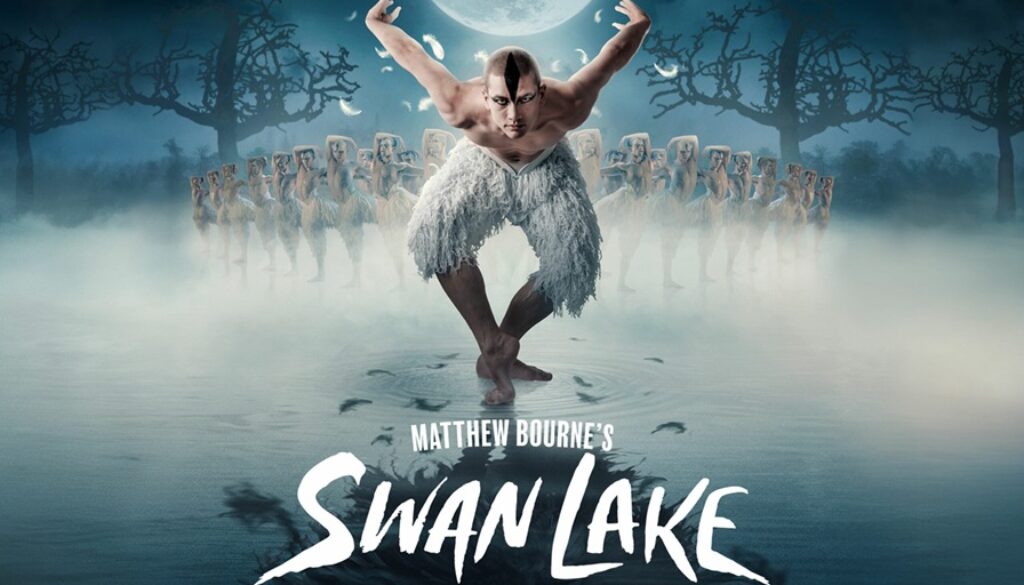
Matthew Bourne’s Swan Lake is a contemporary dance theatre work based on Tchaikovsky’s iconic 1876 romantic ballet, from which it takes both the score and the broad outline of the narrative. Produced by Adventures in Motion Pictures — now known as New Adventures — and directed and choreographed by Matthew Bourne, it is best known for one revolutionary creative decision: replacing the traditionally female corps de ballet of swans with a company of bare-chested, bare-footed male dancers. That single choice transformed a beloved classical ballet into something fierce, feral, erotic, and deeply psychological, and sent shockwaves through the dance world that have never fully subsided.
The production premiered at Sadler’s Wells Theatre in London on 9 November 1995 and has since become, by any measure, the most successful dance theatre production in history. It is the longest-running ballet ever seen in London’s West End and on Broadway. It has been performed in the UK, the USA, Europe, Russia, Australia, South Korea, Japan, Israel, China, and Singapore. It has collected over 30 international awards, including the Olivier Award for Best New Dance Production, three Tony Awards, and multiple Drama Desk and Outer Critics Circle honours. Its 30th anniversary UK tour in 2024–25 introduced an entirely new generation of dancers — and audiences — to a work that shows no signs of fading.
The production also holds a special place in popular culture through its celebrated appearance in Stephen Daldry’s film Billy Elliot (2000), in which the adult Billy — played by the original Swan himself, Adam Cooper — is shown about to perform in this very production, its significance underscored as the pinnacle of what an extraordinary young dancer might one day achieve.
Sadler’s Wells
Awards Won
1999
Touring (2025)
Background
By the mid-1990s, Matthew Bourne had already established himself as one of British dance theatre’s most distinctive voices. His company, Adventures in Motion Pictures, had built a reputation for reimagining classical works with wit, subversion, and a sharp eye for contemporary relevance. His 1992 production Nutcracker! set the story in a Dickensian orphanage and a fantastical sweetshop world; his 1994 Highland Fling transplanted the Romantic ballet La Sylphide to a Glasgow high-rise flat, opening with a scene set in a graffiti-covered urinal. His work was funny, irreverent, and formally audacious — but it was also grounded in a genuine musicality and a deep understanding of the emotional architecture of the works he was transforming.
Swan Lake was his most ambitious project yet, and his most radical. The decision to use male dancers in the roles of the swans was not conceived as a stunt. Bourne has spoken consistently about the logic of the choice: “The idea of a male swan makes complete sense to me,” he has said. “The strength, the beauty, the enormous wingspan of these creatures suggests the musculature of a male dancer more readily than a ballerina in her white tutu.” What Bourne was creating was not a spoof or a camp commentary on gender. The swans in his production are magnificent and terrifying — raw physical presences that are simultaneously bird-like and deeply, unsettlingly human.
The casting of men as swans also unlocked a new psychological dimension to the story. Where the original ballet is rooted in a romanticised, heterosexual love story between a prince and an enchanted princess, Bourne’s version becomes a story about repressed desire, psychological turmoil, and the search for authentic love in a world that insists on conformity. The connection between the Prince and the Swan carries unmistakable homoerotic charge — a reading that resonated powerfully with queer audiences in particular and, in the context of the 1990s, felt politically and culturally urgent.
The production also drew strength from its contemporary context. The world of the Royal court in Bourne’s Swan Lake — formal, emotionally repressed, media-scrutinised, with a distant mother-queen and a lonely, isolated prince — had clear echoes of the British monarchy in the 1990s, a decade in which the House of Windsor was navigating unprecedented public pressure, tabloid intrusion, and questions about the emotional competence of the institution. Audiences understood the subtext intuitively, even if Bourne never laboured the point.
“It would be ridiculous to do a spoof. You won’t dare laugh at the swans. They aren’t funny. They have a very masculine energy.” — Matthew Bourne, The Independent, 1995
Production History
World Premiere: Sadler’s Wells, London (1995)
Matthew Bourne’s Swan Lake premiered at Sadler’s Wells Theatre in London on 9 November 1995, running until 25 November. The original cast featured Adam Cooper in the dual role of The Swan and The Stranger — a performance that made Cooper an overnight star and remains one of the most celebrated dance performances of the modern era. Scott Ambler played The Prince, Emily Piercy played The Prince’s Girlfriend, and Fiona Chadwick played the Queen. The critical reception was divided: some critics were immediately bowled over, while others resisted the reimagining. But audiences were, from the very first night, electrified.
UK Tour and West End Transfer (1996)
From 6 February to 13 April 1996, the production toured venues across the United Kingdom, building a formidable national reputation. On 11 September 1996, Swan Lake transferred to the Piccadilly Theatre in London’s West End, where it ran for 120 performances — the longest run ever known in London for any production of a full-length dance classic. The West End run also won the 1996 Olivier Award for Best New Dance Production and the Time Out Dance Award, formally establishing the production as a landmark work. An excerpt was also performed at The Royal Variety Performance, bringing it to a vast television audience.
Los Angeles and BBC Broadcast (1997)
The production visited the Ahmanson Theatre in Los Angeles on 25 April 1997 to rapturous reception, winning multiple Dramalogue Awards including for Outstanding Performance (Adam Cooper), Outstanding Performance (Scott Ambler), Director (Matthew Bourne), and Set and Costume Design (Lez Brotherston). On Boxing Day 1997, the production was screened in the UK on BBC2, introducing the work to a television audience of millions and cementing its status as a modern classic.
Broadway Premiere: Neil Simon Theatre (1998–1999)
Swan Lake made its Broadway debut at the Neil Simon Theatre on 8 October 1998, produced for American audiences by Cameron Mackintosh and presented through Adventures in Motion Pictures. The Broadway production repeated the success of its London engagements, finding an equally passionate and devoted audience. At the 53rd Tony Awards in 1999, the production won three awards: Best Director of a Musical (Matthew Bourne), Best Choreography (Matthew Bourne), and Best Costume Design (Lez Brotherston). It also won the Astaire Award, multiple Drama Desk Awards and Outer Critics Circle Awards, and was later broadcast on PBS’s Great Performances.
Continued Touring (1999–2007)
The production toured the UK from October to December 1999, and continued touring internationally into the early 2000s, visiting venues across Europe, the USA, Asia, and Australia. In 2002–2003, a world tour brought the production to the Dominion Theatre in London’s West End, as well as Japan and multiple other international markets. The production returned to Sadler’s Wells from 30 November 2004 to 16 January 2005 and continued on a UK tour throughout 2005 and 2006, each revival introducing the work to new audiences while retaining its core creative team and aesthetic.
Filmed Productions (1998, 2012, 2019)
Three filmed stage productions have been made. The first, released in 1998, featured the original cast — with Adam Cooper as the Swan — and remains the definitive filmed document of the original production. In 2012, a new cast featuring Richard Winsor as the Prince and Dominic North as the Swan/The Stranger was filmed in 3D at Sadler’s Wells, directed by Matthew Bourne and Ross MacGibbon. The 3D film premiered in Soho, London, before receiving a nationwide cinema release, and was subsequently released on DVD. A third filmed production, featuring Liam Mower as the Prince and Will Bozier as the Swan, was filmed at Sadler’s Wells in January 2019 and released in UK cinemas in September 2019, later becoming available on DVD and Blu-ray.
2018–2020 World Tour
One of the most extensive tours in the production’s history ran from 2018 to 2020, visiting 34 venues across 7 countries and 4 continents with a company of 58 dancers and crew. The tour included a seven-week Christmas season at the Ahmanson Theatre in Los Angeles, a debut at the Kennedy Center in Washington DC, and a final performance — the 378th and last of that touring production — at New York City Center on 9 February 2020, just weeks before the COVID-19 pandemic brought the performing arts world to a standstill worldwide.
30th Anniversary Tour (2024–2025)
To mark three decades since the premiere, New Adventures mounted a major new 30th anniversary revival in 2024–25, launching on 11 November 2024 at Theatre Royal Plymouth. The tour played 19 venues across 29 weeks, including a substantial Christmas season at Sadler’s Wells from 3 December 2024 to 26 January 2025. The production cast an entirely new generation of dancers, with Harrison Dowzell, Jackson Fisch, and Rory Macleod making their debuts as The Swan/The Stranger, and James Lovell, Leonardo McCorkindale, and Stephen Murray as The Prince. Many of the new dancers were discovered through New Adventures’ own talent development initiative, Swan School, a two-week intensive programme nurturing emerging dance talent. The tour also visited Aberdeen, Sheffield, Dublin, Birmingham, Nottingham, Liverpool, Bristol, Southampton, Norwich, Newcastle, Edinburgh, Milton Keynes, Cardiff, Canterbury, Bradford, and Glasgow.
Plot
Bourne’s Swan Lake relocates the story from its traditional medieval/fairy-tale setting to what feels like a contemporary (but timeless) royal court. The central character is a young Crown Prince — sensitive, isolated, and profoundly lonely — whose emotional world is shaped by the cold, duty-bound distance of his mother, the Queen. The ballet unfolds across four acts.
The ballet opens with a prologue in which the Prince, as a child, awakens from a nightmare in which a great swan appears to him. His mother comes to comfort him but, made uneasy by the intimacy, leaves without properly comforting the boy. This opening image — of a child reaching for love and finding instead a retreating back — sets the emotional key for everything that follows.
Act One shows the adult Prince navigating a relentless schedule of formal royal duties: boat christenings, ribbon cuttings, public appearances. His mother attends to the soldiers around her with far more warmth than she shows her son. The Prince is introduced to the Girlfriend — a cheerful, good-natured young woman who seems genuinely fond of him, but who has been foisted on him by the Private Secretary (the ballet’s von Rothbart figure in its early versions). In his private chambers, the Prince drinks heavily. A pas de deux with the Queen becomes almost violent in its desperation, as the Prince pleads for maternal affection and is rebuffed.
The Prince escapes to the street and into a 1970s-style disco club — the Swank Bar — where the choreography shifts from classical ballet to jazz and modern dance. He gets into a fight with sailors and is thrown out. Outside, he discovers that the Girlfriend has been paid off by the Private Secretary and that her apparent affection for him was purchased. Utterly shattered, the Prince writes a suicide note and goes to a public park lake to drown himself. But as he stands at the water’s edge, he sees a vision of swans.
This is the heart of the ballet, and one of the most celebrated sequences in the history of contemporary dance. The Prince encounters the lead Swan — bare-chested, powerful, magnificent — and a corps of male swans who move with simultaneous animal ferocity and physical beauty. Initially the Swan rejects the Prince, but gradually, through a sensual, tender, and utterly original pas de deux, the two come together. The Prince is accepted and falls in love. Saved from despair, he abandons his suicide and returns to his life transformed.
At a grand palace ball, princesses from across Europe arrive for an official function. The Girlfriend sneaks in uninvited. Into this formal setting arrives a charismatic and sexually dangerous young stranger — also danced by the same performer who plays the Swan — dressed in black leather trousers, exuding animal magnetism. As in the original ballet (where one ballerina traditionally plays both the white swan Odette and the black swan Odile), the same dancer plays both the Swan and this dark figure, the Stranger, creating a mirror image that disturbs the Prince profoundly. The Stranger flirts with every woman in the room, including the Queen, who is powerfully attracted to him. The Prince, recognising something of his beloved Swan in the stranger, is drawn to him but horrified by his behaviour. The evening degenerates into chaos, culminating in a confrontation between the Prince and his mother, a pistol fired, the Girlfriend shot and falling, and the Prince dragged away.
The final act takes place in a psychiatric institution, where the Prince has been confined, regarded as having lost his mind. He is tended by nurses whose masks resemble the faces of the Queen — an image of surpassing psychological power. The Queen visits but remains unable to express love. The Prince crawls into bed. In his final dream, the troupe of swans emerges from beneath and behind the bed, dancing around him in a scene of terrifying beauty. The lead Swan then appears from within the Prince’s bed and dances with him, assuring him of his love. But the rest of the swans turn on the lead Swan when he makes clear he values the Prince above them. They attack both figures. The Swan, trying to protect the Prince, is dismembered and disappears. The Prince collapses and dies. The Queen finds her dead son’s body and breaks down. But in death, Prince and Swan are reunited — the final tableau shows the Swan holding the young Prince tenderly in his arms, as he first appeared to the child at the start of the ballet.
Music
Bourne’s production retains Tchaikovsky’s original score in its entirety in terms of the music itself, but reorders and restructures it substantially to serve the new dramatic scenario. Musical arrangements, adaptations, and orchestrations have been overseen across various productions by Rowland Lee, who serves as musical associate, with Brett Morris as conductor for more recent productions.
Among the key alterations Bourne made to the structure of the score: No. 5 (the Pas d’Action) has been moved in its entirety from Act One to Act Three, where it follows the reordered national dances. Act Three has been trimmed by leaving out most of No. 19 and all of the traditional pas de deux that follows it. These changes serve Bourne’s dramatic architecture, allowing him to build toward the ballet’s devastating fourth act with maximum emotional momentum.
Tchaikovsky’s score for Swan Lake is considered one of the supreme achievements of Romantic orchestral music, and its use in Bourne’s production remains one of the most successful and artistically coherent marriages of existing classical music to new choreography in the history of dance theatre. The score’s famous leitmotif — the Swan Theme — is used with as much psychological acuity by Bourne as by any other choreographer in the ballet’s long history.
Notable Casts
Original Cast — Sadler’s Wells, London (1995)
| Role | Performer | Alternate |
|---|---|---|
| The Swan / The Stranger | Adam Cooper | David Hughes |
| The Prince | Scott Ambler | Ben Wright |
| The Prince’s Girlfriend | Emily Piercy | Vicky Evans |
| The Queen | Fiona Chadwick | Isabel Mortimer |
| The Young Prince | Andrew Walkinshaw | Sid Mitchell |
| The Private Secretary | Barry Atkinson | — |
| Pop Idol / Big Swan | Will Kemp | — |
Broadway Cast — Neil Simon Theatre (1998)
| Role | Performer |
|---|---|
| The Swan / The Stranger | Adam Cooper |
| The Prince | Scott Ambler |
| The Prince’s Girlfriend | Emily Piercy |
| The Queen | Fiona Chadwick |
2012 Filmed Production — Sadler’s Wells (3D)
| Role | Performer |
|---|---|
| The Swan / The Stranger | Dominic North |
| The Prince | Richard Winsor |
| The Queen | Nina Goldman |
| The Girlfriend | Madelaine Brennan |
2019 Filmed Production — Sadler’s Wells
| Role | Performer |
|---|---|
| The Swan / The Stranger | Will Bozier |
| The Prince | Liam Mower |
| The Queen | Nicole Kabera |
30th Anniversary Tour Cast (2024–2025)
| Role | Performers |
|---|---|
| The Swan / The Stranger | Harrison Dowzell, Jackson Fisch, Rory Macleod |
| The Prince | James Lovell, Leonardo McCorkindale, Stephen Murray |
| The Queen | Nicole Kabera, Ashley Shaw |
| The Queen / The Girlfriend | Katrina Lyndon |
| The Girlfriend | Bryony Wood |
Creative Team
| Role | Name |
|---|---|
| Director & Choreographer | Matthew Bourne |
| Set & Costume Design | Lez Brotherston |
| Lighting Design | Paule Constable |
| Sound Design | Ken Hampton |
| Video & Projection (recent productions) | Duncan McLean |
| Musical Arrangements & Orchestrations | Rowland Lee |
| Conductor (recent productions) | Brett Morris |
| Associate Director | Various (Etta Murfitt, Lez Brotherston) |
| Producer (original) | Katherine Doré / Adventures in Motion Pictures |
| Company | New Adventures (formerly Adventures in Motion Pictures) |
Critical Reception
Critical reception to Matthew Bourne’s Swan Lake upon its 1995 premiere was broadly enthusiastic, though some critics were initially resistant. The work has since achieved unanimous recognition as one of the landmark productions in the history of dance theatre — a work that not only redefined what ballet could be, but opened new audiences to dance on an unprecedented scale.
Former ballet dancers wrote to Bourne in significant numbers after the premiere, praising the production’s musicality and intelligence. One letter, widely quoted in subsequent production programmes, declared simply: “Tchaikovsky must be happy in heaven.” The quote captures the paradox at the heart of the work’s reception: despite its radical departures, Bourne’s production feels not like a desecration of Tchaikovsky’s masterpiece, but a deepening of it.
GLAAD and LGBT+ organisations have consistently celebrated the production as a landmark in queer representation in the performing arts — a mainstream, widely-seen, commercially successful work in which same-sex love is portrayed as the most pure and tragic emotion available to a human being. In this respect, Swan Lake did something political that no polemic could have achieved: it moved audiences to tears for a love that the world at large had barely begun to acknowledge.
“Countless letters from former ballet dancers arrived praising the show’s musicality and intelligence. One simply read: ‘Tchaikovsky must be happy in heaven.'” — Matthew Bourne’s Swan Lake 30th Anniversary Programme, 2025
Awards and Nominations
Matthew Bourne’s Swan Lake has won more than 30 international awards across its 30-year history — a record for any dance theatre production. Below is a comprehensive list of the major honours it has received.
| Year | Award | Category | Recipient | Result |
|---|---|---|---|---|
| 1996 | Laurence Olivier Awards | Best New Dance Production | Swan Lake | Won |
| 1996 | Time Out Dance Award | Best Dance Production | Swan Lake | Won |
| 1997 | Time Out Dance Award | Best Dance Production | Swan Lake | Won |
| 1997 | Dramalogue Awards (Los Angeles) | Outstanding Performance | Adam Cooper | Won |
| 1997 | Dramalogue Awards (Los Angeles) | Outstanding Performance | Scott Ambler | Won |
| 1997 | Dramalogue Awards (Los Angeles) | Director | Matthew Bourne | Won |
| 1997 | Dramalogue Awards (Los Angeles) | Set and Costume Design | Lez Brotherston | Won |
| 1997 | LA Drama Critics Circle | Best Choreography | Matthew Bourne | Won |
| 1999 | Tony Awards (53rd) | Best Director of a Musical | Matthew Bourne | Won |
| 1999 | Tony Awards (53rd) | Best Choreography | Matthew Bourne | Won |
| 1999 | Tony Awards (53rd) | Best Costume Design of a Musical | Lez Brotherston | Won |
| 1999 | Astaire Awards | Special Award — Direction, Choreography & Concept | Matthew Bourne | Won |
| 1999 | Astaire Awards | Outstanding Male Dancer | Adam Cooper | Won |
| 1999 | Drama Desk Awards | Outstanding Director of a Musical | Matthew Bourne | Won |
| 1999 | Drama Desk Awards | Outstanding Choreography | Matthew Bourne | Won |
| 1999 | Drama Desk Awards | Outstanding Set Design of a Musical | Lez Brotherston | Won |
| 1999 | Drama Desk Awards | Outstanding Costume Design | Lez Brotherston | Won |
| 1999 | Drama Desk Awards | Unique Theatrical Experience | Swan Lake | Won |
| 1999 | Outer Critics Circle Awards | Outstanding Director of a Musical | Matthew Bourne | Won |
| 1999 | Outer Critics Circle Awards | Outstanding Choreography | Matthew Bourne | Won |
| 1999 | Outer Critics Circle Awards | Outstanding Costume Design | Lez Brotherston | Won |
| 2019 | Olivier Awards | Special Award — Extraordinary Achievement in Dance | Matthew Bourne | Won |
Legacy & Cultural Impact
It is difficult, thirty years on, to fully convey how radical Matthew Bourne’s Swan Lake was in 1995. Ballet — classical, full-length ballet — was not supposed to do this. It was not supposed to play to sold-out pop concert crowds at the Piccadilly Theatre. It was not supposed to win Tony Awards on Broadway, a stage that had never previously honoured a dance-theatre work in those categories. It was not supposed to make people weep for a love between two men at a time when queer love was still rarely seen on mainstream stages.
And yet it did all of those things, and more. The production created entirely new audiences for dance — people who had never seen a ballet and would never have attended one in conventional circumstances, but who were drawn to this by word of mouth, by the electricity of its reputation, by the sheer fact of it. It inspired generations of young dancers, many of whom cite it as the reason they chose dance as a profession. The Prince’s journey — from loneliness and repression to love, loss, and transcendence — spoke to audiences far beyond the ballet world, finding resonance with anyone who had ever felt imprisoned by expectation or longed for a love they were not supposed to have.
The connection to Billy Elliot (2000) added another layer of cultural reach. In Stephen Daldry’s beloved film, the final image — of the grown Billy, played by Adam Cooper, about to take the stage in this very production — was a moment of profound symbolic weight: a working-class boy from a Durham mining town who discovered dance against all expectation, arriving at the pinnacle of his art in the most celebrated production of its era. The image made Matthew Bourne’s Swan Lake not merely a show, but a symbol of what art can mean in a life.
At the 2019 Olivier Awards, Matthew Bourne received the Special Award in recognition of his extraordinary achievements in dance — a rare honour for a choreographer who had worked primarily in commercial dance theatre rather than classical ballet. An excerpt featuring the Prince and Swan duet was performed at the ceremony. The audience gave a standing ovation.
Thirty years after its premiere, Matthew Bourne’s Swan Lake takes flight again with every new cast, every new city, every new generation of audiences who encounter for the first time the sight of bare-chested male dancers moving with the power and ferocity of wild things. It remains what it has always been: a work of art that changed the world it lived in, and keeps on changing it still.
🎭 More Dance & Ballet Coverage at TheatreGold
For in-depth features on dance theatre, ballet, Broadway, and the West End — bookmark TheatreGold. We cover the full world of performance, from the grandest stages to the most intimate studio spaces.
Links
Matthen Bourne Swan Lake – Memorabilia
Phantom of the Opera – Memorabilia
Phantom of the Opera – Musical
Sunset Boulevard – Memorabilia
La Cage Aux Follies – Memorabilia
Chess the Musical – Memorabilia
Little Shop of Horrors – Memorabilia
Starlight Express – Memorabilia
Dear Evan Hansen – Memorabilia
How to Succeed in Business Without Really Trying – Memorabilia
Terrence McNally – Memorabilia