Operation Mincemeat Musical Broadway Guide: Cast, Plot & History
Operation Mincemeat Musical Broadway Guide: Cast, Plot, and Production History
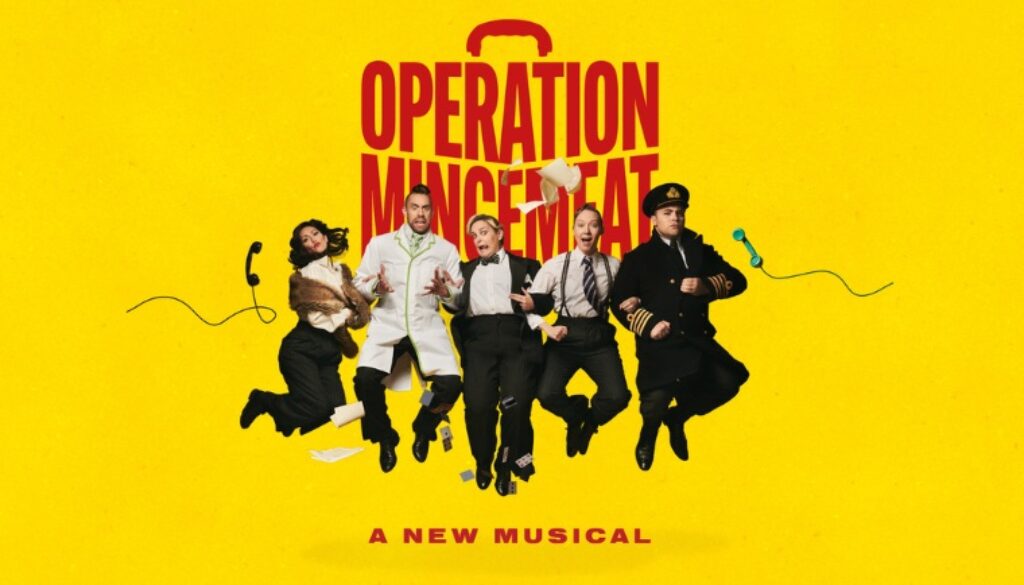
Few theatrical success stories match the sheer, improbable trajectory of Operation Mincemeat. What began as a tiny, fringe production in a sixty-seat London basement has transformed into a multi-Olivier Award-winning juggernaut. It has captured the hearts of the West End and set its sights firmly on a Broadway transfer (Lovelock, 2024; Milburn, 2023). Created by the innovative five-person theater collective known as SpitLip, this fast-paced, genre-bending musical comedy tackles one of the strangest deception operations in military history (Milburn, 2023).
<
While traditional wartime dramas lean heavily into somber tones or patriotic grandiosity, Operation Mincemeat subverts the entire genre. It blends high-energy pop, hip-hop, classic musical theater pastiche, and razor-sharp satire (Stevenson, 2024). The result is an extraordinarily funny yet surprisingly poignant exploration of class, bureaucracy, and human vulnerability. This comprehensive guide details the real history behind the deception, the musical’s phenomenal production history, its complex plot structure, its unique casting conventions, and what audiences can expect as this British sensation arrives on Broadway.
The Real History Behind the Musical
To fully appreciate the layered satire of the musical, one must first understand the historical reality of the operation itself. In 1943, Allied forces faced an immense tactical dilemma: they needed to launch an all-out assault on Nazi-held Europe, with the obvious target being Sicily (Macqueen, 2025). Because the target was so predictable, German forces heavily fortified the island’s coastline. The British Intelligence service was tasked with engineering a massive disinformation hoax to convince the Axis powers that the actual targets were Greece and Sardinia (Brown, 2019).
The solution was Operation Mincemeat—a plan so bizarre it read like cheap fiction (Brown, 2019). British intelligence officers obtained the body of a deceased homeless man, dressed him as an officer of the Royal Marines, and equipped him with carefully fabricated personal documents, love letters from a fictional fiancée named “Pam,” and highly confidential, misleading military correspondence. The body was then dropped by a submarine off the coast of Spain, where fascist-leaning local authorities would intercept it and pass the false documents directly to German intelligence (Brown, 2019).
Did You Know? The initial spark for this deceptive strategy was pulled from the “Trout Memo” written in 1939. This document, issued under Admiral John Godfrey’s name, compared tricking enemy forces to fly-fishing. It is widely believed to have been authored by his assistant, Ian Fleming—the man who would later create James Bond (Brown, 2019).
The deception worked flawlessly. Adolf Hitler was completely misled by the false papers, ordering massive troop movements away from Sicily to defend Greece. When the Allies finally invaded Sicily, they encountered far less resistance than anticipated, saving thousands of lives and shifting the entire momentum of World War II (Brown, 2019).
From the Basement to Broadway: Production History
The creative journey of the Operation Mincemeat musical mirrors the scrappy, chaotic energy of the intelligence operation it depicts. The piece was entirely written, composed, and initially performed by the members of SpitLip: David Cumming, Felix Hagan, Natasha Hodgson, and Zoë Roberts. They collaborated with director Donnacadh O’Briain and choreographer Jenny Arnold to establish a signature fast-paced physical style.
The Developmental Timeline
The musical’s rise from a fringe workshop to a mainstream cultural phenomenon occurred over several distinct phases, illustrating how word-of-mouth acclaim can elevate modern musical theater (Woolford, 2019):
To highlight how the show grew from a tiny room into an international sensation, here is the chronological evolution of its staging:
May 2019: The New Diorama Theatre
The musical officially premiered at the New Diorama Theatre, an off-West End studio space. Playing to a room of just dozens of people a night, the tiny budget forced the company to adopt a highly inventive aesthetic. Actors played dozens of characters using minimal props, phone blocks, and rapid costume changes.
2020–2022: Southwark Playhouse & Riverside Studios
Driven by enthusiastic word-of-mouth and glowing underground reviews, the show transferred to the Southwark Playhouse for multiple sold-out extended runs, followed by a larger development stint at the Riverside Studios. It was during this period that the production refined its musical arrangements and deepened its emotional core.
April 2023: The West End Debut at the Fortune Theatre
In the spring of 2023, the show made its official West End debut at the historic Fortune Theatre, replacing the long-running thriller The Woman in Black (Stevenson, 2024). Despite launching with zero traditional star power or massive marketing budgets, the show became an instant critical darling, breaking box office records for the venue.
2024: The Olivier Awards Triumph
At the 2024 Laurence Olivier Awards, Operation Mincemeat cemented its status in British theatrical history. It earned multiple nominations and walked away with the highly coveted award for Best New Musical, alongside a Best Actor in a Supporting Role in a Musical win for cast member Jak Malone.
2025–2026: The Broadway Transfer
Following its unparalleled success in London, producers greenlit an official Broadway transfer. Bringing its uniquely British humor, biting class commentary, and deeply moving narrative across the Atlantic, the show has positioned itself as one of the most anticipated international musical imports of the decade (Lovelock, 2024).
Act-by-Act Plot Synopsis
The brilliance of the Operation Mincemeat script lies in its ability to transform a cold bureaucratic process into a high-stakes, clock-ticking race against time. The show features five actors playing over thirty different roles, fluidly jumping between British commanders, regular citizens, and even high-ranking Nazi officers.
Act I: The Submarine and the Scribblers
The musical opens in a bleak, underground bunker in London, 1943. The war is going poorly, and the British military hierarchy is desperate for a miracle. We are introduced to the core intelligence team: Charles Cholmondeley, an eccentric, socially awkward scientist with a penchant for bizarre ideas, and Ewen Montagu, a wealthy, supremely confident aristocratic lawyer. Together, they pitch the concept of “Operation Mincemeat” to Vice-Admiral John Godfrey, who treats the plan with immense skepticism.
The first half of Act I focuses heavily on the logistical absurdities of executing the plan. The team needs a corpse, which they locate in a local morgue—the body of Glyndwr Michael, a destitute Welshman who died from ingesting rat poison. They then begin the delicate process of crafting a completely fictional life for this body, renaming him “Captain William Martin.”
The emotional pivot of the first act occurs in the song “Dear Bill,” sung by Hester Leggatt, the head of the administrative typing pool. tasking her team with writing the fictional love letters found on the corpse, Hester draws upon her own real, lived experiences of wartime grief and unrequited love to draft a devastatingly realistic letter. This grounds the comedy in the actual human cost of the conflict. The act ends with the body loaded onto a submarine, setting sail for the coast of Spain while the team panics over the variables they cannot control.
Act II: The Deception Unfolds
Act II shifts focus to international espionage and the agonizing wait for news. The body washes ashore in Huelva, Spain, activating a multi-layered game of telephone between local Spanish officials, British diplomats, and German spies. The musical brilliantly shifts styles here, featuring a show-stopping, glitzy Euro-pop pastiche number performed by Nazi officers celebrating their supposed intellectual superiority over the British.
Back in London, the tension mounts as the team tries to track whether the documents have actually reached Hitler’s desk. Subplots wrap around the personal dynamics of the office: Charles struggles with being overshadowed by Ewen’s booming charisma, while Jean Leslie, a sharp young clerk who provided her own photograph to serve as the fictional “Pam,” demands to be treated as an equal partner in the room rather than a prop.
When confirmation finally arrives that the German military has diverted its divisions away from Sicily, the bunker erupts in celebration. However, the musical concludes on a profoundly reflective note. Rather than a standard flag-waving finale, the cast steps out of character to honor Glyndwr Michael—the forgotten man whose quiet, tragic death accidentally reshaped the map of Europe. It is a powerful reminder that history is often made by those who never intended to be heroes.
The Broadway Cast and Character Breakdown
One of the most notable aspects of Operation Mincemeat is its commitment to gender-blind, character-fluid casting. The original SpitLip style dictates that roles are distributed based on comic chemistry and vocal flexibility rather than traditional casting conventions. The five-person ensemble maintains an incredibly grueling pace throughout the two-and-a-half-hour performance.
The primary characters and their functions within the narrative include:
- Ewen Montagu: A swaggering, upper-class officer who masks his deep personal insecurities and family strains with unshakeable entitlement. His musical styling leans toward traditional, confident Broadway showtunes.
- Charles Cholmondeley: The anxious mastermind of the operation. He lives in the shadow of his brother, a fallen war hero, and finds solace in his pet newts. His character provides both physical comedy and profound vulnerability.
- Jean Leslie: A forward-thinking woman stuck working in a highly patriarchal system. Jean represents the changing role of women in wartime Britain, demanding agency and delivering sharp, fast-paced vocal tracks.
- Hester Leggatt: The strict, formidable overseer of the typing pool. Hester serves as the anchor of the show’s emotional realism. Her performance of “Dear Bill” is widely regarded by critics as the artistic heart of the entire musical.
- Vice-Admiral John Godfrey / Others: The gruff, traditional military leader who acts as the primary internal obstacle to the plan. The actor playing Godfrey also famously doubles as a variety of supporting characters, including an energetic nightclub singer.
For the Broadway production, producers opted to maintain the core ensemble structure that made the London staging a hit. This preserves the tight-knit, collaborative chemistry required to execute the show’s complex physical comedy and rapid-fire vocal arrangements.
The Genius of the Score
The musical score of Operation Mincemeat, composed by SpitLip, is an eclectic, hyper-modern masterclass in narrative songwriting. Rather than sticking to a single musical era, the show uses different genres to define the perspectives and worldviews of its characters:
| Song Title | Character(s) | Musical Style | Narrative Purpose |
|---|---|---|---|
| “Born to Lead” | Ewen Montagu & Ensemble | Classic Broadway Pastiche | Satirizes the unearned confidence of the British upper class. |
| “The Mission” | The Core Team | 90s Hip-Hop / Hamilton-esque | Establishes the frantic, high-stakes timeline of the operation. |
| “Dear Bill” | Hester Leggatt | Contemporary Theater Ballad | Grounds the show’s comedy in real, heartbreaking wartime grief. |
| “Das Übermensch” | German Officers | Euro-pop / Techno | A satirical, high-energy villain song showcasing Nazi arrogance. |
| “A Little Taste of War” | The Ensemble | Satirical Pop | Exposes the detachment of high-ranking officials from the front lines. |
Critical Reception and Cultural Impact
When the show transitioned to the West End, it achieved a rare critical milestone, securing dozens of five-star reviews from major publications like The Guardian, The Times, and Time Out London (Stevenson, 2024). Critics universally praised the production for its relentless pacing, its clever lyrical construction, and its ability to balance irreverent comedy with deep respect for historical tragedy.
The main praise centered on how the show manages to feel incredibly massive despite its small scale. By using simple props—such as modern office chairs on casters to simulate cars, submarines, and desks—the production highlights the power of pure, imaginative theatricality over expensive, automated set pieces. It proves that a compelling narrative and stellar performances can easily compete with multi-million-dollar mega-musicals (Woolford, 2019).
Furthermore, the show has cultivated an incredibly passionate, dedicated fanbase affectionately known as the “Mincemeaters.” This community has driven repeat viewings and sustained the show’s lengthy West End run entirely through grassroots devotion, a phenomenon that producers are eager to replicate with American audiences on Broadway.
Why You Cannot Miss It on Broadway
As Operation Mincemeat makes its highly anticipated leap to New York, it stands as a testament to the enduring power of original, ensemble-driven musical theater (Lovelock, 2024). It is a production that avoids the safe predictability of movie adaptations and jukebox catalog musicals, offering instead an entirely fresh, wildly unpredictable night at the theater.
Whether you are a dedicated history buff fascinated by the intricate details of World War II espionage, or simply a theater lover searching for the next great musical score, Operation Mincemeat delivers on every conceivable front. It is a brilliant, hilarious, and deeply moving experience that honors a forgotten piece of human history while keeping you laughing, cheering, and thinking long after the final curtain call.
References
Brown, R. (2019). Cold War Fictions. The Cambridge Companion to Ian McEwan, 75-90. https://doi.org/10.1017/9781108648516.006
Cited by: 9
Lovelock, J. (2024). Contemporary British Musicals: ‘Out of the Darkness’, Clare Chandler and Gus Gowland (eds) (2024). Sheffield Hallam University Research Archive.
Macqueen, H. (2025). Supernova – The Bureau Pressnotes. The Bureau Films.
Milburn, R. (2023). Carbon Warriors: Enhancing NATO’s Response to Climate Change. The RUSI Journal, 168(3), 30-39. https://doi.org/10.1080/03071847.2023.2235152
Cited by: 10
Stevenson, T. (2024). The Wonders of the West End. SAV Literary Review.
Woolford, J. (2019). ‘Attend the Tale’: Adaptation, Structure and Storytelling in Musical Theatre. Surrey Open Research Repository.