The Fantasticks: History, Synopsis, and Legacy of Broadway’s Longest-Running Musical
“Try to Remember”: The Enduring Magic of The Fantasticks
The Complete Guide to the World’s Longest-Running Musical Classic
Introduction: The World’s Most Resilient Musical
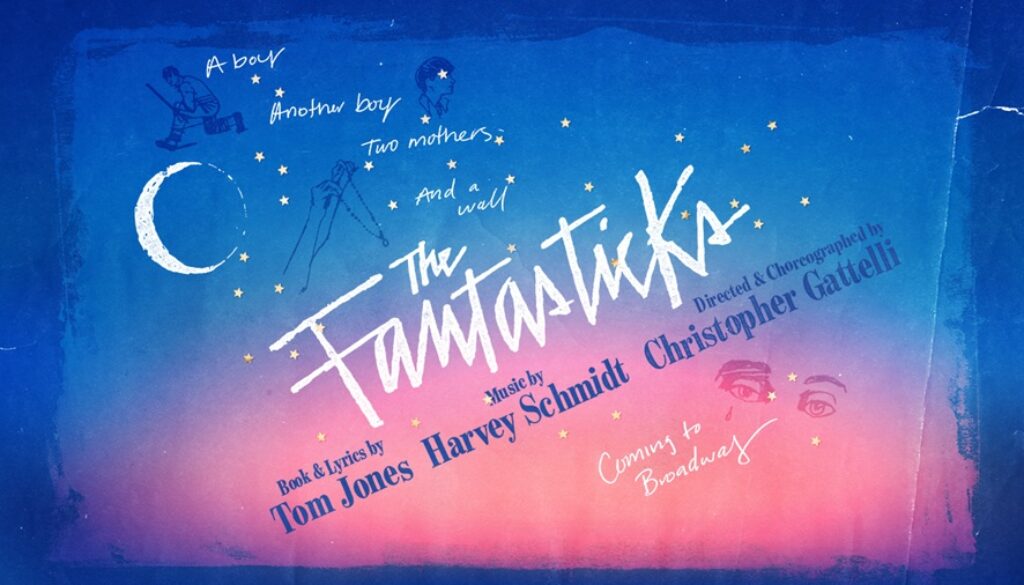
In the vast landscape of American musical theatre, few works possess the mythical charm, artistic audacity, and sheer longevity of The Fantasticks. With music by Harvey Schmidt and book and lyrics by Tom Jones, this deceptively simple, allegorical musical about love, illusion, heartbreak, and maturity holds the unquestioned title of the world’s longest-running musical production.
When The Fantasticks opened on May 3, 1960, at the intimate, 153-seat Sullivan Street Playhouse in New York’s Greenwich Village, few theatrical critics could have anticipated that a small, minimalist show with an initial budget of less than $1,000 would outlast every giant of mid-century Broadway. By the time its original Off-Broadway run drew to a close on January 13, 2002, the show had completed an extraordinary 17,162 performances, outlasting ten U.S. presidential administrations and becoming a immortal cornerstone of global theatrical history.
Origins & Development: From Edmond Rostand to Greenwich Village
The origin of The Fantasticks traces back to the late 1950s when composer Harvey Schmidt and lyricist Tom Jones, former college classmates at the University of Texas at Austin, sought to adapt French playwright Edmond Rostand’s 1894 play Les Romanesques (itself a satiric homage to Shakespeare’s Romeo and Juliet).
Initially, Jones and Schmidt attempted to craft a grand, traditional Broadway musical titled Joy Comes to Dead Horse, setting the plot in the American West with feuding cattle ranchers. However, realizing the heavy melodrama stifled the delicate charm of Rostand’s fable, the creators pivoted back to theatrical minimalism. Drawing inspiration from Thornton Wilder’s Our Town, commedia dell’arte traditions, and classical Asian theatrical conventions, they streamlined the narrative into a universal allegorical fable hosted by an enigmatic narrator: El Gallo.
— El Gallo, The Fantasticks
Production History: Major Runs & Milestone Statistics
From its humble trial runs at Barnard College to its legendary 42-year run in Greenwich Village and its subsequent 11-year NYC revival, The Fantasticks has enjoyed a production trajectory unparalleled in theatrical history.
| Production / Venue | Opening Date | Closing Date | Performance Count |
|---|---|---|---|
| Original Off-Broadway (Sullivan Street Playhouse) |
May 3, 1960 | January 13, 2002 | 17,162 performances |
| Broadway Premiere (Hayes Theater) |
Oct 22, 2026 | Feb 7, 2027 | 11 Previews |
| Off-Broadway Revival (Snapple / Jerry Orbach Theater) |
August 23, 2006 | June 4, 2017 | 4,390 performances |
| Original West End Run (Apollo Theatre, London) |
September 7, 1961 | Late 1961 | Limited Run |
| West End Revival (Duchess Theatre, London) |
May 24, 2010 | June 26, 2010 | 5 weeks |
| U.S. National Tour | 1962 | 1965 | Multi-city tour |
The Legendary Original 1960 Cast
The original May 1960 production helped launch the careers of several iconic figures in American entertainment:
- Jerry Orbach as El Gallo (The Narrator / Bandit) – Orbach’s legendary baritone launched “Try to Remember” into the American songbook before his fame in Chicago, 42nd Street, and TV’s Law & Order.
- Rita Gardner as Luisa (The Girl) – Gardner originated the role of the romantic young heroine.
- Kenneth Nelson as Matt (The Boy) – Nelson brought youthful enthusiasm to the role before starring in The Boys in the Band.
- William Larsen as Hucklebee (The Boy’s Father).
- Hugh Thomas as Bellomy (The Girl’s Father).
- Thomas Bruce (Tom Jones) as Henry (The Old Actor) – Lyricist Tom Jones performed under a pseudonym to save budget money!
- George Curley as Mortimer (The Man Who Dies).
- Richard Stroud as The Mute.
Complete Act-by-Act Plot Synopsis
Act I: Innocence, Romance, and Mock Tragedy
The musical opens on a bare stage. The enigmatic narrator, El Gallo, introduces the audience to a poetic landscape of memory and romance (“Try to Remember”). Two young neighbors, Luisa (a starry-eyed 16-year-old girl) and Matt (an idealistic 20-year-old boy), are passionately in love. However, their feud-driven fathers, Hucklebee and Bellomy, have built a tall wooden wall between their properties, strictly forbidding the young lovers from seeing one another.
In secret, the fathers reveal the truth in “Never Say No”: the feud is a complete sham! Knowing that young people always do the exact opposite of what their parents demand, the fathers staged the feud to trick their children into falling in love and getting married. To bring the romance to a thrilling conclusion, the fathers plot a fake abduction (“It Depends on What You Pay”). They hire El Gallo to stage a heroic rescue where Matt can save Luisa, break the wall, and unite the families forever.
El Gallo enlists two eccentric washed-up actors: Henry Alba, a grand Shakespearean ham, and Mortimer, an actor specializing in dramatic death scenes. Under the moonlight, the grand “abduction” takes place. Matt bravely “fights” off the bandits, saves Luisa, and the scene ends in a glorious tableau of triumph, unity, and blissful love.
Act II: Reality, Disillusionment, and True Maturity
Act II opens in the stark light of day. The moonlight of romance is replaced by the harsh glare of reality. The wall has been torn down, and the fathers are living together, but familiarity breeds irritation. Matt and Luisa begin to argue, realizing that their picture-perfect romance feels artificial and dull without the danger of the wall.
Frustrated, Matt longs to experience the wider world (“I Can See It”), leaving Luisa behind. Meanwhile, El Gallo returns to seduce Luisa with promises of glamour, passion, and exotic adventures (“Round and Round”). In reality, Matt travels the world only to suffer robbery, physical abuse, and harsh disappointment, while Luisa’s romantic fantasies are exposed as empty illusions.
Broken and wiser, Matt returns home. He and Luisa reunite on the bare stage, no longer romantic children playing roles, but mature adults who have experienced pain and loss. They fall in love anew—not out of illusion, but through true understanding. El Gallo quietly steps back, reminding the audience that love requires suffering to grow strong (“Without a hurt, the heart is hollow”). The fathers prepare to rebuild the wall just a little bit, keeping a touch of mystery alive.
Musical Score Breakdown
The score of The Fantasticks is renowned for its elegant arrangement featuring only two instruments: a piano and a harp. Below is the complete song list:
| Act | Song Title | Featured Characters |
|---|---|---|
| Act I | “Try to Remember” | El Gallo, Company |
| Act I | “Much More” | Luisa |
| Act I | “Metaphor” | Matt, Luisa |
| Act I | “Never Say No” | Hucklebee, Bellomy |
| Act I | “It Depends on What You Pay” | El Gallo, Hucklebee, Bellomy |
| Act I | “Soon It’s Gonna Rain” | Matt, Luisa |
| Act I | “Happy Ending” | Company |
| Act II | “This Plum Is Too Ripe” | Matt, Luisa, Hucklebee, Bellomy |
| Act II | “I Can See It” | Matt, El Gallo |
| Act II | “Plant a Radish” | Hucklebee, Bellomy |
| Act II | “Round and Round” | El Gallo, Luisa, Company |
| Act II | “They Were You” | Matt, Luisa |
| Act II | “Try to Remember (Reprise)” | El Gallo, Company |
Film Adaptation & Cultural Legacy
In 1995, a feature film adaptation of The Fantasticks was directed by Michael Ritchie, starring Jonathon Morris as El Gallo, Jean Louisa Kelly as Luisa, Joe McIntyre (of New Kids on the Block fame) as Matt, alongside Joel Grey and Brad Sullivan as the fathers. Though delayed until 2000 for release, the film captured the beautiful outdoor theatricality of the story.
Beyond screen adaptations, The Fantasticks has been performed in over 80 countries, translated into more than 20 languages, and produced over 11,000 times by regional, community, and educational theatres worldwide, generating an astonishing investment return of over 240,000% for its original backers!
Conclusion: Why ‘The Fantasticks’ Endures
Ultimately, The Fantasticks remains a masterpiece of American musical storytelling because it speaks directly to an unalterable truth of the human condition: innocence must pass through hardship to become true wisdom. Through Tom Jones’ timeless lyrics, Harvey Schmidt’s enchanting melodies, and the eternal invocation to “Try to Remember,” this legendary show will continue to touch hearts for generations to come.
Explore More Theatre Memorabilia & Musicals
Browse authentic memorabilia and further reading from TheatreGold’s archive: