The 25 Best Broadway Musicals of All Time, Ranked
Ranking the “best” Broadway musicals of all time is a fight nobody wins — ask ten theatre fans and you’ll get ten different lists. But some shows keep showing up near the top no matter who’s counting: the ones that reshaped what a musical could sound like, ran for decades, swept the Tonys, or changed the entire economics of Times Square. We pulled together critical consensus, Tony Award history, longevity, and cultural impact to rank the 25 musicals that, together, tell the story of what Broadway has been at its best.
What makes this exercise so contentious is that “best” can mean wildly different things depending on who’s asking. A theatre historian might weigh structural innovation and influence on the art form above all else, pointing to shows that changed how musicals were written rather than simply how many tickets they sold. A box-office analyst would lean toward longevity and gross revenue, crowning whichever production kept selling out decade after decade. A critic might prioritize the marriage of book, score, and staging in a single unified vision, regardless of commercial performance. And a longtime fan might simply point to the show that changed how they personally think about theatre. This list tries to hold all of those lenses at once, which is part of why some beloved cult favorites and long-running commercial giants sit side by side with shows that were once considered risky, experimental, or even outright flops in their original runs.
How We Ranked These
No single metric captures “greatness” in musical theatre, so this list weighs four factors together: critical and historical acclaim, Tony Award recognition, longevity and box-office impact, and lasting cultural influence on the art form itself. A show doesn’t need to lead in every category to rank highly — a genre-redefining flop can matter as much as a long-running commercial giant.
Quick Reference: The Top 25 at a Glance
| Rank | Musical | Broadway Opened |
|---|---|---|
| 1 | Hamilton | 2015 |
| 2 | The Phantom of the Opera | 1988 |
| 3 | Les Misérables | 1987 |
| 4 | Wicked | 2003 |
| 5 | The Lion King | 1997 |
| 6 | West Side Story | 1957 |
| 7 | Chicago | 1975 / revival 1996 |
| 8 | Rent | 1996 |
| 9 | A Chorus Line | 1975 |
| 10 | Fiddler on the Roof | 1964 |
| 11 | My Fair Lady | 1956 |
| 12 | The Sound of Music | 1959 |
| 13 | Cats | 1982 |
| 14 | Hairspray | 2002 |
| 15 | The Book of Mormon | 2011 |
| 16 | Dear Evan Hansen | 2016 |
| 17 | Sweeney Todd | 1979 |
| 18 | Into the Woods | 1987 |
| 19 | Guys and Dolls | 1950 |
| 20 | South Pacific | 1949 |
| 21 | Oklahoma! | 1943 |
| 22 | Cabaret | 1966 |
| 23 | Company | 1970 |
| 24 | Jersey Boys | 2005 |
| 25 | Mamma Mia! | 2001 |
1. Hamilton (2015)
Lin-Manuel Miranda’s hip-hop retelling of Alexander Hamilton’s life didn’t just win over audiences — it rewrote the rules of what a Broadway musical could sound like and who it could be about. Blending rap, R&B, and traditional show-tune structure with a cast that deliberately cast performers of color as America’s founding fathers, Hamilton received a record-setting 16 Tony nominations across 13 categories, winning 11. Its influence is still rippling through the genre a decade later, from soundtrack sales to a generation of writers chasing its genre-blending ambition.
Beyond its awards haul, Hamilton fundamentally changed the economics and marketing of a Broadway show, becoming one of the hardest tickets in theatre history and popularizing a new model of pairing a cast album with mixtape remixes to reach audiences who might never set foot in a theatre. Its “Ham4Ham” pre-show performances and lottery ticket culture also helped make the show feel accessible even amid soaring resale prices, a tension that itself became part of its cultural story.
2. The Phantom of the Opera (1988)
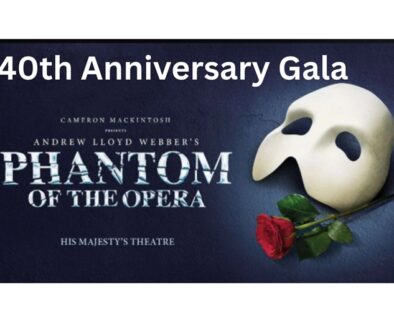
Andrew Lloyd Webber’s gothic romance, based on Gaston Leroux’s novel, became the single longest-running show in Broadway history before finally closing in 2023. Over its 35-year run, the production notched 13,981 performances, cementing its chandelier drop, sweeping score, and masked antihero as some of the most recognizable images in musical theatre. Few shows have matched its combination of spectacle and staying power.
The show’s success also reshaped how Broadway approached mega-musicals in general, proving that a lavish, effects-driven spectacle with a through-composed score could sustain a decades-long commercial run rather than fading after a few strong seasons. “The Music of the Night” and the title song remain among the most performed pieces of musical theatre repertoire at auditions and concerts worldwide.
3. Les Misérables (1987)
Claude-Michel Schönberg and Alain Boublil’s sung-through adaptation of Victor Hugo’s novel turned 19th-century French revolutionary struggle into one of the most emotionally overwhelming nights in musical theatre. Its anthemic score — “I Dreamed a Dream,” “One Day More,” “Do You Hear the People Sing?” — has become so ingrained in popular culture that even people who’ve never seen the show can hum the melodies. Multiple Broadway runs and a hit 2012 film adaptation have kept it in the cultural conversation for nearly four decades.
Few musicals have inspired the kind of devoted global fan community that Les Misérables has, with productions running continuously somewhere in the world since its original French concept album in 1980. Its sung-through structure, with barely a spoken line across nearly three hours, demands enormous vocal stamina from its cast and remains one of the most physically demanding scores in the mainstream musical theatre canon.
4. Wicked (2003)
Stephen Schwartz and Winnie Holzman’s prequel to The Wizard of Oz, told from the perspective of the future Wicked Witch of the West, turned Gregory Maguire’s revisionist novel into a Broadway phenomenon that’s now grossed billions worldwide. “Defying Gravity” alone has become a rite-of-passage audition song for a generation of aspiring performers, and the show’s exploration of friendship, prejudice, and power has only grown more resonant with age — helped further by its blockbuster two-part film adaptation.
What sets Wicked apart from many of its blockbuster peers is how thoroughly it recontextualizes a story audiences already thought they knew, turning a familiar villain into a sympathetic, complicated protagonist without undermining the source material she springs from. That narrative sleight of hand, paired with Schwartz’s soaring pop-influenced score, has made it one of the most reliably sold-out tickets on Broadway for over two decades running.
5. The Lion King (1997)
Julie Taymor’s staging of Disney’s animated classic remains one of the most artistically daring blockbusters ever produced, using puppetry, mask work, and African-inspired choreography to transform a family film into avant-garde theatre without sacrificing mainstream appeal. The production is the highest-grossing Broadway show in history, with worldwide grosses around $1.8 billion, proof that experimental staging and commercial dominance aren’t mutually exclusive.
6. West Side Story (1957)
Leonard Bernstein’s score, Stephen Sondheim’s lyrics, Arthur Laurents’ book, and Jerome Robbins’ choreography combined to relocate Shakespeare’s Romeo and Juliet to the streets of 1950s Manhattan, told through rival gangs the Jets and the Sharks. Its integration of ballet-trained dance into a story about gang violence and racial tension was radical for its time, and its influence on musical staging — using movement to tell story rather than simply decorate it — is still felt today.
7. Chicago (1975 / 1996 Revival)
Bob Fosse, Fred Ebb, and John Kander’s satire of celebrity, crime, and the justice system flopped somewhat on its original 1975 run, overshadowed by A Chorus Line. Its 1996 revival, however, became a cultural juggernaut, still running on Broadway decades later and spawning an Oscar-winning film. Fosse’s angular, sharply sexualized choreography style has become one of the most imitated in musical theatre history.
8. Rent (1996)
Jonathan Larson’s rock musical, loosely based on Puccini’s La Bohème, followed a group of struggling artists in New York’s East Village during the height of the AIDS crisis. Larson died suddenly the night before the show’s first Off-Broadway preview, adding a devastating real-world layer to its themes of mortality and living without regret. Rent brought a rock sensibility and unflinching honesty about sexuality, addiction, and illness to Broadway that hadn’t been seen at that scale before.
9. A Chorus Line (1975)
Michael Bennett’s meta-musical about dancers auditioning for a Broadway chorus line turned the unglamorous grind of showbiz itself into the subject of one of the genre’s most acclaimed works. Built from real interviews with working Broadway dancers, its raw, confessional structure and use of a single unbroken audition-day setting were groundbreaking, and its concluding number, “One,” remains one of musical theatre’s most iconic closers.
10. Fiddler on the Roof (1964)
Jerry Bock, Sheldon Harnick, and Joseph Stein’s musical about a Jewish milkman navigating tradition, family, and persecution in Tsarist Russia became one of the most produced musicals in the world, resonating across cultures far beyond its specific setting. “Tradition,” “If I Were a Rich Man,” and “Sunrise, Sunset” are among the most enduring songs in the American songbook, and the show’s themes of cultural upheaval remain strikingly relevant.
11. My Fair Lady (1956)
Alan Jay Lerner and Frederick Loewe’s adaptation of George Bernard Shaw’s Pygmalion is considered by many critics to be the pinnacle of the Golden Age musical — a near-perfect marriage of wit, romance, and social commentary about class and language in Edwardian England. “I Could Have Danced All Night” and “Wouldn’t It Be Loverly” remain standards, and the show’s original run and multiple revivals have kept it a fixture of the Broadway canon for nearly seventy years.
12. The Sound of Music (1959)
Rodgers and Hammerstein’s final collaboration, following the Von Trapp family’s flight from Nazi-occupied Austria, is one of the most beloved musicals ever written, thanks in no small part to its 1965 film adaptation. “Do-Re-Mi,” “My Favorite Things,” and the title song have become so embedded in popular culture that they transcend the show itself, and its blend of warmth, humor, and wartime stakes remains a model for family-friendly musical storytelling.
13. Cats (1982)
Andrew Lloyd Webber’s setting of T.S. Eliot’s Old Possum’s Book of Practical Cats is either beloved or baffling depending who you ask, but there’s no denying its cultural footprint. Built around a loosely structured storyline in which a tribe of cats vies for rebirth, the show ran for 18 years on Broadway on the strength of its ambitious choreography, elaborate costuming, and one enormously famous ballad, “Memory.”
14. Hairspray (2002)
Marc Shaiman and Scott Wittman’s adaptation of John Waters’ 1988 film brought infectious ’60s-inspired pop songs and a genuinely progressive message about racial integration and body positivity to a mainstream Broadway audience, all wrapped in a joyful, high-energy package. Its lead character Tracy Turnblad, an unapologetically confident plus-size teenager, remains one of the more quietly radical protagonists in modern musical theatre.
15. The Book of Mormon (2011)
Trey Parker, Matt Stone, and Robert Lopez’s satirical musical about two Mormon missionaries in Uganda combined South Park-style irreverence with genuinely traditional, old-fashioned musical theatre craftsmanship. Its willingness to skewer religion, colonialism, and Broadway conventions alike, paired with a score that lovingly parodies the very genre it’s mocking, made it one of the most acclaimed and commercially successful musical comedies of the 2010s.
16. Dear Evan Hansen (2016)
Benj Pasek and Justin Paul’s musical about a socially anxious teenager who becomes entangled in a lie following a classmate’s suicide struck a nerve with a generation raised on social media and its distortions of grief and connection. “Waving Through a Window” and “You Will Be Found” became genuine pop hits far outside the theatre world, and the show’s frank handling of mental health made it one of the more culturally significant new musicals of the past decade, even amid debate over its subject matter.
17. Sweeney Todd (1979)
Stephen Sondheim and Hugh Wheeler’s “musical thriller” about a vengeful, murderous barber in Victorian London pushed the boundaries of what a Broadway musical could tackle tonally, blending horror, dark comedy, and one of Sondheim’s most complex, operatic scores. Its influence on darker, more musically ambitious theatre in the decades since is hard to overstate, and it remains a benchmark for vocal and dramatic difficulty among performers.
18. Into the Woods (1987)
Stephen Sondheim and James Lapine’s mashup of classic fairy tales — Cinderella, Little Red Riding Hood, Jack and the Beanstalk, Rapunzel — spends its first act as a clever, witty fantasy before its second act interrogates the actual consequences of “happily ever after.” Its structural ingenuity and thematic depth about parenthood, morality, and storytelling itself have made it one of Sondheim’s most enduringly popular and frequently revived works.
19. Guys and Dolls (1950)
Frank Loesser’s musical comedy, based on Damon Runyon’s short stories about New York gamblers and gangsters, is frequently cited by critics as one of the most perfectly constructed musical comedies ever written. Its blend of sharp, colorful dialogue, memorable characters like Sky Masterson and Nathan Detroit, and a score packed with standards including “Luck Be a Lady” has kept it in constant rotation on stages worldwide for over seventy years.
20. South Pacific (1949)
Rodgers and Hammerstein’s adaptation of James Michener’s stories about American servicemen and women stationed in the South Pacific during World War II tackled interracial romance and prejudice head-on at a moment when doing so was genuinely controversial. “Some Enchanted Evening” and “You’ve Got to Be Carefully Taught” remain among the most powerful examples of a musical using popular song to deliver pointed social commentary.
21. Oklahoma! (1943)
Rodgers and Hammerstein’s first collaboration is widely credited with inventing the modern “integrated” musical, in which songs and dance actually advance plot and character rather than existing as standalone entertainment breaks. Its influence on every musical that followed is foundational — without Oklahoma!, the structural DNA of nearly everything else on this list looks very different.
22. Cabaret (1966)
John Kander and Fred Ebb’s musical, set in a Berlin nightclub as the Nazi party rises to power, used the sleazy glamour of the Kit Kat Klub as a chilling metaphor for a society choosing to look away from encroaching fascism. Its central figure, the Emcee, has become one of theatre’s most iconic and frequently reinterpreted roles, and the show’s political bite has only sharpened with each successive revival.
23. Company (1970)
Stephen Sondheim and George Furth’s “concept musical” abandoned traditional linear plot in favor of a series of vignettes examining marriage and commitment through the eyes of a single, ambivalent New Yorker turning 35. Its sophisticated, jazz-inflected score and unflinching look at adult relationships helped push the American musical toward more mature, psychologically complex territory.
24. Jersey Boys (2005)
Marshall Brickman and Rick Elice’s jukebox musical about Frankie Valli and the Four Seasons set a new bar for the genre by grounding its hit-song catalog in a genuinely compelling, warts-and-all account of the band’s rise, internal conflict, and mob entanglements. Its commercial success helped cement the jukebox musical as a durable Broadway category rather than a passing trend.
25. Mamma Mia! (2001)
Catherine Johnson’s jukebox musical, built around the songbook of ABBA, wraps a lighthearted story about a bride searching for her biological father around some of pop music’s most joyfully unshakeable hooks. Critics were divided, but audiences weren’t: the show became a worldwide commercial phenomenon and, alongside Jersey Boys, helped prove that jukebox musicals could be more than a novelty.
Honorable Mentions
Any list this size leaves worthy contenders on the cutting-room floor. Shows like Gypsy, Show Boat, Kinky Boots, Avenue Q, Spring Awakening, The Producers, Funny Girl, and Six could each make a strong case for inclusion on any given day, and each has left its own mark on the art form. Consider this the start of a conversation, not the final word — Broadway is still writing its greatest-of-all-time list one opening night at a time.
Show Boat, often credited alongside Oklahoma! as a foundational text of the modern integrated musical, tackled race and marriage in 1920s America decades before most of Broadway was willing to go there. Gypsy, frequently cited by critics as one of the greatest books ever written for a musical, gave the genre one of its most complex, unforgettable stage mothers in Mama Rose. More recently, Six reimagined the wives of Henry VIII as a pop-concert girl group, proving that formal experimentation and mainstream commercial appeal can still coexist on Broadway today, much as Hamilton did a few years earlier.
The Bottom Line
What ties all 25 of these shows together isn’t a single formula — it’s that each one, in its own moment, did something that hadn’t quite been done before, or did something familiar so well that it became the standard everyone else got measured against. Some are beloved by critics and audiences alike; others split opinion sharply while still leaving an outsized mark on the art form. That tension is part of what makes Broadway worth arguing about in the first place. Whether your personal top five looks anything like this one, that’s exactly the point: the conversation about what makes a musical truly great never really closes, any more than the best shows ever fully do.