Annie: The Musical | Tomorrow, Hard Knock Life & Broadway History
Annie the Musical - Podcast
Memorabilia Available Here
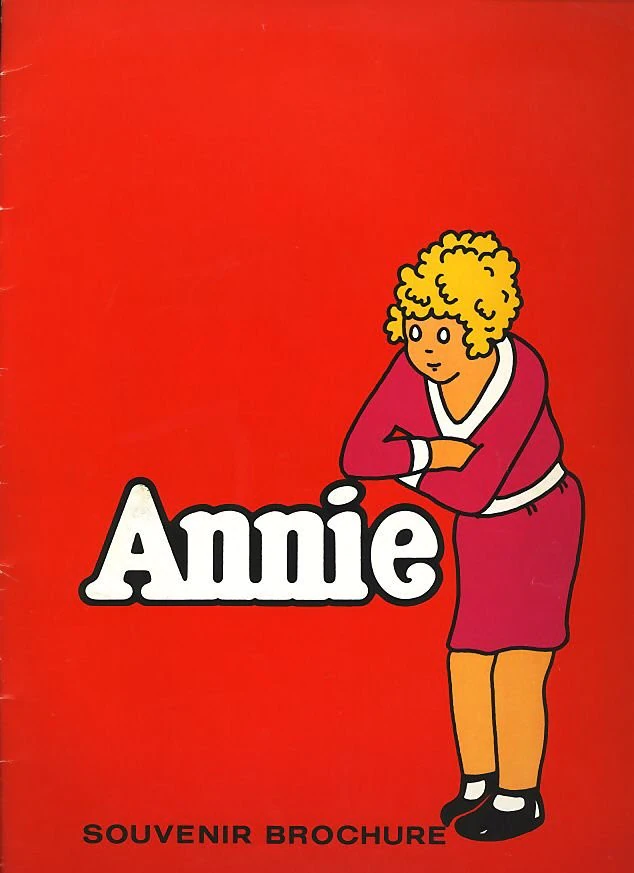
America’s Favorite Little Orphan
ANNIE
MUSIC BY CHARLES STROUSE • LYRICS BY MARTIN CHARNIN • BOOK BY THOMAS MEEHAN
The Sun’ll Come Out
Annie is a musical with music by Charles Strouse, lyrics by Martin Charnin, and a book by Thomas Meehan. It is based on the 1924 comic strip Little Orphan Annie by Harold Gray (which in turn was inspired from the poem Little Orphant Annie by James Whitcomb Riley).
The original Broadway production opened in 1977 and ran for nearly six years, setting a record for the Alvin Theatre (now the Neil Simon Theatre). It spawned numerous productions in many countries, as well as national tours, and won seven Tony Awards, including for Best Musical.
According to The New York Times, Annie is performed 700 to 900 times each year in the United States alone, making it one of the most frequently produced musicals in American theatre.
Creating Little Orphan Annie
The Vision
Martin Charnin first approached Thomas Meehan to write the book of a musical about Little Orphan Annie in 1972. Meehan researched by rereading prints of the comic strip, but he was unable to find any satisfactory material for a musical, other than the characters of Annie, Oliver Warbucks, and Sandy, so he decided to write his own story.
Setting the Stage: The Great Depression
As Meehan, Charnin, and Charles Strouse were all from New York, and given what he saw as the downbeat mood of the then-current Nixon era and Vietnam War, Meehan set his story in New York during the similarly downbeat Great Depression of 1933.
Meehan saw the character of Annie as a 20th-century American female version of the main orphan characters created by Charles Dickens in works such as Oliver Twist and David Copperfield, with the mystery of Annie’s abandonment and unknown parenthood as consistent with a strand of mysteries in Dickens’ tales.
From Page to Stage
Meehan’s book was accepted by Charnin and Strouse, but considerable material had to be trimmed out — material which Meehan would later restore for his novelization.
Annie had its world premiere on August 10, 1976, at the Goodspeed Opera House in East Haddam, Connecticut, under the direction of Michael P. Price. Kristen Vigard was the first actress to play the title role. However, the producers soon decided that Vigard’s genuinely sweet interpretation was not tough enough for the street-smart orphan.
Finding Annie: The Casting Story
After a week of performances, Vigard was replaced by Andrea McArdle, who had been playing one of the other orphans, Pepper. Vigard went on to become McArdle’s Broadway alternate.
After the Goodspeed run ended, the role of Miss Hannigan was also recast, as original actor Maggie Task’s performance was considered too mean. Producer Mike Nichols suggested comedy actress Dorothy Loudon to bring the humour out of the role; in rehearsals, Loudon reportedly improvised numerous elements, including the lines “Do I hear happiness in here?” and “Why any kid would want to be an orphan, I’ll never know.”
The Story: Tomorrow Awaits
Act One: The Orphanage
In 1933 New York City, eleven-year-old Annie sleeps in an orphanage with many other girls her age. When six-year-old Molly wakes up from a bad dream, Annie comforts her by singing about her own parents; even though they abandoned her at the orphanage as a baby, she holds on to the hope that they will come back for her (“Maybe”).
Annie decides to escape to find her parents, but is caught by Miss Hannigan, the cruel keeper of the orphanage. To punish Annie’s behavior, she forces all the girls to clean, and they lament the terrible conditions of the orphanage (“It’s the Hard Knock Life”).
Sandy and the Streets
Annie escapes in the laundry truck and runs into a friendly stray dog. She tells him of better days to come (“Tomorrow”). She fools a police officer into believing he is her dog, named Sandy.
Later, Annie and Sandy stumble upon a Hooverville, a shanty town full of formerly well-off people suddenly rendered homeless by the Great Depression. They sarcastically toast the former president (“We’d Like to Thank You, Herbert Hoover”). The shanty town is broken up by the cops, who take Annie back to the orphanage, where Miss Hannigan punishes her with extra chores.
Enter Oliver Warbucks
At the orphanage, Miss Hannigan vents her frustration at being surrounded by children (“Little Girls”). Grace Farrell, the assistant to the billionaire Oliver Warbucks, comes to the orphanage, asking for an orphan to spend Christmas at his mansion. Seeing how poorly Miss Hannigan treats Annie, Grace insists on taking her.
At Warbucks’s mansion, Grace introduces Annie to the staff and explains that she will have every luxury available (“I Think I’m Gonna Like It Here”). Oliver Warbucks returns and is not happy to have Annie in his mansion, having assumed all orphans were boys. When he realizes that Annie has never seen New York, he decides to take her there himself, walking the 45 blocks to the Roxy and seeing New York City in all of its glory (“N.Y.C.”).
The Plot Thickens
Grace pays Miss Hannigan a visit to tell her that Warbucks wants to officially adopt Annie. Hannigan becomes furiously envious that the orphan she hated so much will suddenly have everything. Her ne’er-do-well brother Rooster and his girlfriend, Lily, drop by, in hopes of a handout. When Miss Hannigan mentions that Annie is going to be adopted by Warbucks, Rooster realizes they can use this situation to their advantage (“Easy Street”).
Annie’s Locket
Having noticed a broken locket around Annie’s neck, Warbucks buys her a new, more expensive one from Tiffany’s. When he offers Annie the locket and attempts to take off the old one, Annie bursts into tears, as the locket was the only thing left to her by her parents, and she still holds out hope that they will return for her.
Warbucks pledges to find her parents, no matter what it takes, calling J. Edgar Hoover to get the Federal Bureau of Investigation on the job (“You Won’t Be an Orphan for Long”).
The Radio Show
Annie appears on Bert Healy’s radio show (“Maybe (Reprise)”), where Warbucks announces that he is offering $50,000 to the couple who can prove they are her parents. Healy sings a song with the Boylan Sisters (“You’re Never Fully Dressed Without a Smile”).
The Imposters
A couple claiming to be Annie’s parents, Ralph and Shirley Mudge, arrive at the orphanage. In fact, they are Rooster and Lily in disguise. They believe they can pass themselves off as Annie’s parents, with Hannigan’s help, for which she demands half of the money (“Easy Street (Reprise)”).
Meeting the President
Warbucks brings Annie to Washington, D.C., where she meets President Franklin D. Roosevelt. Roosevelt and his Cabinet are inspired by her optimism and decide to make it a cornerstone of their administration (“Tomorrow (Reprise)”).
Once back home, Warbucks tells Annie how much he loves her (“Something Was Missing”). Because all the people claiming to be her parents were frauds, he offers to adopt her, and Annie gleefully accepts. The delighted staff get Annie dressed for the formal adoption proceedings (“Annie”). As Judge Louis Brandeis shows up to begin the adoption proceedings, Warbucks and Annie dance together (“I Don’t Need Anything But You”).
The Truth Revealed
They are interrupted by Rooster and Lily in disguise. The two present forged documents, as well as the other half of Annie’s locket, seemingly confirming their story. Warbucks requests that she be allowed to stay one more night, and they can take her away on Christmas morning.
The Resolution
Warbucks receives a surprise visit from Roosevelt and his Secret Service. The FBI has learned that Annie’s parents are actually David and Margaret Bennett, who died long ago in a fire when Annie was a baby. Mr. and Mrs. “Mudge” show up to take Annie along with the money but are quickly revealed to be none other than Rooster and Lily; the Secret Service arrests them, along with Miss Hannigan, for their crimes.
Annie is officially adopted by Warbucks, who notes that this Christmas is the beginning of a new life for them, for the orphans (all of whom are adopted by wealthy friends of Warbucks) and for the rest of the country, thanks to Roosevelt’s New Deal (“A New Deal for Christmas”).
The Characters
Broadway Triumph (1977-1983)
The original Broadway production opened at the Alvin Theatre on April 21, 1977, and starred Andrea McArdle as Annie, Reid Shelton as Warbucks, Dorothy Loudon as Miss Hannigan, and Sandy Faison as Grace Farrell, with Danielle Brisebois as Molly, the youngest and smallest orphan.
Tony Awards Sweep
It was nominated for eleven Tony Awards and won seven, including:
- Best Musical
- Best Score (Charles Strouse and Martin Charnin)
- Best Book (Thomas Meehan)
- Best Actress in a Musical (Dorothy Loudon as Miss Hannigan)
- Best Scenic Design
- Best Choreography
- Best Costume Design
The Broadway Run
Replacements in the title role on Broadway included Shelley Bruce, Sarah Jessica Parker, Allison Smith and Alyson Kirk. Replacements in the role of Miss Hannigan included Alice Ghostley, Dolores Wilson, Betty Hutton, Marcia Lewis, and June Havoc.
Annie was evicted from the Alvin Theatre in September 1981 to make way for Merrily We Roll Along, beginning its months-long journey to finding a new permanent home. On September 16, the show moved to ANTA (now the August Wilson Theatre), then on October 29 to the Eugene O’Neill Theatre, and finally moved to its final home at the Uris (now the Gershwin Theatre) on December 12.
Record-Breaking Success
The show closed on January 2, 1983, after a total of 2,377 performances, setting a record for the longest running show at the Alvin Theatre (now the Neil Simon Theatre), until it was surpassed by Hairspray in 2009.
Original Broadway Cast
| Role | Actor |
|---|---|
| Annie | Andrea McArdle |
| Oliver Warbucks | Reid Shelton |
| Miss Hannigan | Dorothy Loudon |
| Grace Farrell | Sandy Faison |
| Molly | Danielle Brisebois |
| Rooster Hannigan | Robert Fitch |
| Lily St. Regis | Barbara Erwin |
National Tours
During the Broadway run of Annie, there were four touring companies that were launched from the original production to tour to major North American cities.
Opened in Toronto with Kathy Jo Kelly as Annie, Norwood Smith as Daddy Warbucks, Jane Connell and Ruth Kobart as Miss Hannigan, and Gary Beach as Rooster. Played Miami, Chicago (32 weeks), and numerous other cities. Notable Annies included Mary K. Lombardi, Theda Stemler, Louanne Sirota, and Becky Snyder.
Opened in San Francisco with Patricia Ann Patts as Annie, featuring Jennifer Cihi as Pepper and the then-unknown Molly Ringwald as one of the orphans. Landed in Los Angeles for an open-ended run. Nine-year-old Louanne Sirota took over the role in 1979. Alyssa Milano played orphan Kate in 1981.
Opened in Dallas with Rosanne Sorrentino (who later portrayed Pepper in the 1982 film) in the title role. Toured to 23 cities, playing mostly shorter runs of a month or less.
Opened with Mollie Hall playing Annie. A “bus and truck” tour with a slightly reduced cast that traveled the country and often played in two cities a week. Still touring when the original Broadway production closed in January 1983, making Kathleen Sisk the final performer to play Annie from the original production team.
West End & International
London Premiere (1978-1981)
The musical premiered in the West End at the Victoria Palace Theatre on May 3, 1978. Andrea McArdle, the original Broadway Annie, played the title role for 40 performances. British 12-year-old Ann Marie Gwatkin was also cast in the title role and appeared on the original London cast recording.
British Employment Laws
Because of strict British employment laws for juvenile actors, a succession of actresses took on the lead role every four months. One of the last girls to perform the role at the Victoria Palace before the show went on tour was 10-year-old Claudia Bradley from Leeds, who was featured on a 1981 BBC program called Fame.
Miss Hannigan was originally played by Sheila Hancock, and later by Maria Charles and Stella Moray; Warbucks was played by Stratford Johns and later by Charles West. Annie closed on November 28, 1981, after 1,485 performances.
Global Phenomenon
Annie has been produced professionally in countries around the world, including:
- Japan — 1979, 1986–present (ongoing productions with annual new Annies)
- Australia — 1978, 2000, 2011, 2012, 2025
- Netherlands — 1997–1999, 2005–2007, 2012–2013
- South Korea — 1984, 1996, 2006–2007, 2010–2011, 2018–2019, 2024
- Greece — Multiple productions from 1981–2026
- Spain — 1982, 2000, 2010, 2019
- Mexico — 1979, 1991, 2010, 2015
- Israel — 2001, 2010, 2018, 2025
- Brazil — 2018–2019
- And dozens more countries worldwide
Broadway Revivals
1997 Revival: Controversy Strikes
A 20th anniversary Broadway revival played at the Martin Beck Theatre (now the Al Hirschfeld Theatre) in 1997, entitled Annie, the 20th Anniversary. It starred Nell Carter as Miss Hannigan, but controversy surrounded the casting of the titular character.
The Joanna Pacitti Controversy
The original actress cast in the role, Joanna Pacitti, was fired and replaced by Brittny Kissinger (who had been playing orphan July) just two weeks before her Broadway debut, while battling bronchitis in Boston. Kissinger, then 8, became the youngest actress to ever play Annie on Broadway.
Public sentiment seemed to side with Pacitti as she was the winner of a highly publicized contest to find a new Annie, sponsored by the department store Macy’s. This incident, coupled with the mixed reviews the new staging garnered, doomed it to a short run.
More controversy surrounded Nell Carter when commercials promoting the show used a different actress (Marcia Lewis, a white actress) as Miss Hannigan. The producers claimed that the commercials were made during an earlier production and were too costly to reshoot. The revival closed on October 19, 1997, after 14 previews and 239 performances.
2012 Revival: 35th Anniversary
A 35th Anniversary production opened on Broadway in 2012. Thomas Meehan revised the musical, with James Lapine directing. Lilla Crawford starred as Annie with Katie Finneran as Miss Hannigan, and Anthony Warlow making his long-awaited Broadway debut as Warbucks.
Notable Replacements
Notable replacements include Jane Lynch and Faith Prince as Miss Hannigan. On July 30, 2013, Taylor Richardson and Sadie Sink both began alternating the role of Annie, replacing Crawford.
The revival started previews at the Palace Theatre on October 3, 2012, and officially opened on November 8, 2012, receiving mixed reviews. This production closed on January 5, 2014, after 38 previews and 487 regular performances.
Recent Tours & Productions
A 40th anniversary traveling production launched in September 2014 by TROIKA Entertainment. For the third and final year of the tour, Tori Bates played Annie and became the first biracial Annie in a professional production. The tour came to a close in Boston on May 21, 2017, after 745 performances.
Another tour directed by Jenn Thompson began October 4, 2022. Whoopi Goldberg joined the cast as Miss Hannigan from December 11, 2024 to January 5, 2025 while at Madison Square Garden.
The Iconic Score
The Songs That Changed Musical Theatre
“Tomorrow”
The show’s signature song and one of the most recognizable songs in musical theatre history. Annie’s optimistic anthem about hope for a better future has become a cultural touchstone, sung everywhere from elementary school performances to presidential inaugurations.
The lyrics express Annie’s unwavering belief that no matter how difficult today might be, tomorrow will bring sunshine and happiness. The song appears multiple times throughout the show in various reprises.
“It’s the Hard Knock Life”
The orphans’ lament about their difficult existence under Miss Hannigan’s cruelty. A driving, percussive number where the girls use mops, brooms, and buckets as instruments while scrubbing the orphanage floors.
The song gained renewed fame in 1998 when rapper Jay-Z heavily sampled it for his hit single “Hard Knock Life (Ghetto Anthem),” introducing the musical to a new generation.
Complete Song List
- “Maybe” — Annie’s wistful ballad about her parents possibly returning for her
- “It’s the Hard Knock Life” — The orphans’ work song
- “Tomorrow” — Annie’s signature optimistic anthem
- “We’d Like to Thank You, Herbert Hoover” — The Hooverville residents’ sarcastic tribute
- “Little Girls” — Miss Hannigan’s comic complaint about children
- “I Think I’m Gonna Like It Here” — The Warbucks staff welcome Annie
- “N.Y.C.” — Warbucks, Annie, and Grace celebrate New York City
- “Easy Street” — Rooster, Lily, and Miss Hannigan’s scheming trio
- “You Won’t Be an Orphan for Long” — Warbucks pledges to find Annie’s parents
- “You’re Never Fully Dressed Without a Smile” — Bert Healy’s radio show number
- “Something Was Missing” — Warbucks realizes Annie has filled the void in his life
- “I Don’t Need Anything But You” — Annie and Warbucks’s joyful duet
- “Annie” — The staff celebrates the upcoming adoption
- “A New Deal for Christmas” — The finale celebrating new beginnings
Additional Songs
“Why Should I Change a Thing?” was added for Anthony Warlow in a 2000 Australian production and has since become an optional part of the show. It’s performed by Warbucks after “You Won’t Be an Orphan for Long” as he questions whether he’s ready for such a big change in his life.
Film & Television
1982 Film
Columbia Pictures acquired the film rights in 1977 for $9.5 million, the most expensive at the time for a stage musical. The film was released in 1982 directed by John Huston, starring:
| Role | Actor |
|---|---|
| Annie | Aileen Quinn |
| Warbucks | Albert Finney |
| Miss Hannigan | Carol Burnett |
| Grace Farrell | Ann Reinking |
| Rooster | Tim Curry |
| Lily | Bernadette Peters |
1999 TV Movie
A made-for-TV Wonderful World of Disney movie version, produced by The Walt Disney Company and directed by Rob Marshall, was broadcast in 1999. It starred Victor Garber as Daddy Warbucks, Kathy Bates as Miss Hannigan, Audra McDonald as Grace Farrell, Alan Cumming as Rooster, Kristin Chenoweth as Lily, and newcomer Alicia Morton as Annie.
2014 Modern Remake
In January 2011, Will Smith announced plans for a remake of Annie set in the present day, produced with his wife Jada Pinkett Smith and rapper Jay-Z. Directed by Will Gluck and released in 2014, this version starred:
- Quvenzhané Wallis as Annie
- Jamie Foxx as Will Stacks (an update of Warbucks)
- Rose Byrne as Grace Farrell
- Cameron Diaz as Miss Hannigan
Annie Live! (2021)
NBC aired a live television production of Annie as a “holiday event” on December 2, 2021. Directed by Lear deBessonet, it starred:
- Celina Smith as Annie
- Taraji P. Henson as Miss Hannigan
- Harry Connick Jr. as Oliver Warbucks
- Nicole Scherzinger as Grace Farrell
- Tituss Burgess as Rooster Hannigan
- Megan Hilty as Lily St. Regis
Cultural Impact & Legacy
Annie Jr. & School Productions
Annie Jr. is a musical licensed by Music Theatre International’s Broadway Junior collection, specially edited to be performed by children in a shortened form. It is performed internationally every year by acting academies, programs, schools, and theatre camps.
MTI also licenses Annie KIDS, a 30-minute length version meant for elementary-aged performers.
Pop Culture References
Annie‘s popularity is reflected in its numerous mentions in popular media:
- Jay-Z’s “Hard Knock Life (Ghetto Anthem)” (1998) — Producer The 45 King heavily sampled “It’s the Hard-Knock Life” from the original Broadway cast recording
- Austin Powers in Goldmember — Dr. Evil and Mini-Me perform Jay-Z’s version
- NFL Super Bowl ads (2004, 2005) — Football celebrities sang “Tomorrow” with the caption “Tomorrow, we’re all undefeated again”
- Glee — Sarah Jessica Parker, Chris Colfer, and Lea Michele sang “You’re Never Fully Dressed Without A Smile”
- The Lego Ninjago Movie — Features “It’s the Hard-Knock Life”
- Saturday Night Live — Zach Galifianakis lip-synced to “Tomorrow” while dressed as Annie
The Novelization
In 1980, Macmillan Books published Meehan’s novelization of his script for the musical, later reprinted by Puffin Books in 2014. The novel goes into greater depth regarding the backgrounds of many of the characters, and particularly about hardship at the orphanage.
Unlike the high camp portrayal of Miss Hannigan in most productions of the musical, the novelization emphatically depicts her as a truly sinister and malevolent villainess in the tradition of Dickens’ Oliver Twist.
Documentary: Life After Tomorrow
A documentary film, Life After Tomorrow, was directed and produced by one of the original Broadway and national tour orphans, Julie Stevens and partner, Gil Cates Jr. It reunites more than 40 women who played orphans in the show and reveals the highs and lows of their experiences as child actresses in a cultural phenomenon. The film premiered on Showtime and was released on DVD in 2008.
Failed Sequels
The first attempt at a sequel, Annie 2: Miss Hannigan’s Revenge, opened at the John F. Kennedy Center for the Performing Arts in Washington, D.C., in December 1989 to universally disastrous reviews. Extensive reworking of the script and score proved futile, and the project was abandoned.
In 1993, a second attempt, with a different plot and score, titled Annie Warbucks was developed at the Goodspeed Opera House under the direction of Michael P. Price. It subsequently opened Off Broadway at the Variety Arts Theatre, where it ran for 200 performances.
The Sun Will Come Out
A TIMELESS MESSAGE OF HOPE
From its 1977 Broadway premiere to productions around the world today, Annie has touched millions of hearts with its message that tomorrow holds promise, no matter how hard today might be.
The little red-headed orphan with the broken locket and the big heart showed America — and the world — that optimism isn’t naïve; it’s revolutionary. In the depths of the Great Depression, Annie’s unwavering belief in a better tomorrow inspired a billionaire, a president, and a nation.
700 to 900 productions each year. Countless children discovering theatre. Millions singing “Tomorrow” in the face of adversity.
Charles Strouse’s soaring melodies, Martin Charnin’s hopeful lyrics, and Thomas Meehan’s heartfelt book created something more than a musical — they created an anthem for anyone who’s ever had to believe that the sun will come out tomorrow.
Because it will. It always does.
Tomorrow. Tomorrow. I love ya, Tomorrow.
You’re always a day away.