Spring Awakening the Musical: The Complete Guide to the Tony Award-Winning Rock Musical
Memorabilia Available Here
Spring Awakening: The Complete Guide to Broadway’s Revolutionary Rock Musical
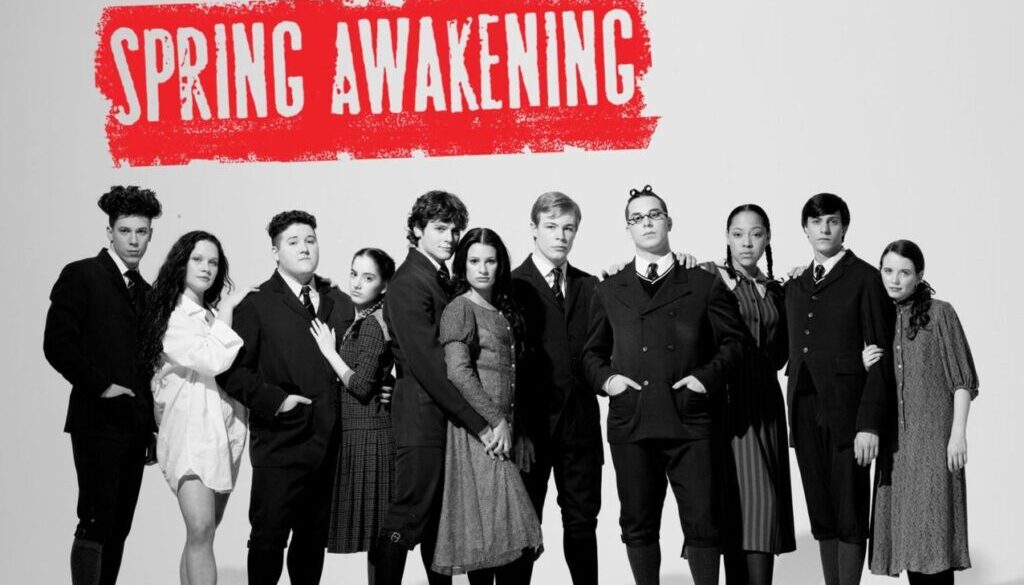
A nineteenth-century German schoolroom. A cast of teenagers discovering sexuality, repression, love, and grief. And a rock score that split the air like a lightning bolt through the Broadway establishment. Spring Awakening arrived at the Eugene O’Neill Theatre in December 2006 and changed musical theatre forever. This is its complete story — from Frank Wedekind’s original play to eight Tony Awards, a Grammy, four Olivier Awards, and one of the most celebrated Broadway revivals of the modern era.
Spring Awakening is a coming-of-age rock musical with music by Duncan Sheik and a book and lyrics by Steven Sater, based on the explosive 1891 German play of the same name by Frank Wedekind. Set in late nineteenth-century Germany, the musical follows a group of teenagers as they navigate the twin forces of adolescent awakening and institutional repression — a world in which adults systematically withhold the knowledge that might save the young from destruction, and in which the emotional lives of children are treated as either irrelevant or dangerous.
The production employs an alternative rock score — folk-infused, emotionally raw, and deliberately anachronistic — alongside period-appropriate dialogue and costumes, creating a theatrical collision between past and present that gives the show its unique, electrically charged atmosphere. Characters reach for microphones that have no place in nineteenth-century Germany and sing directly to the audience in rock idioms that feel entirely contemporary; the effect is not dissonance but revelation, as if the inner lives of these repressed teenagers can only find expression in a musical language that their world does not yet have words for.
Following seven years of workshops, concerts, and rewrites, Spring Awakening premiered Off-Broadway at the Atlantic Theater Company in May 2006 before opening at the Eugene O’Neill Theatre on Broadway on 10 December 2006. Directed by Michael Mayer with choreography by Bill T. Jones, the Broadway production starred Jonathan Groff as Melchior, Lea Michele as Wendla, and John Gallagher Jr. as Moritz — launching the careers of all three performers into the stratosphere. The production won eight Tony Awards, including Best Musical, Best Direction, Best Book, and Best Score, as well as four Drama Desk Awards and a Grammy Award for Best Musical Theater Album. It ran for 859 performances before closing on 18 January 2009.
A landmark Broadway revival in 2015, produced by Deaf West Theatre and directed by Michael Arden, cast both deaf and hearing actors performing simultaneously in American Sign Language and English, making theatrical and cultural history. The revival earned three Tony Award nominations and introduced the first wheelchair-using performer — Ali Stroker — to appear on a Broadway stage.
Won 2007
Performances
Won 2010
Best Musical Album
Background
Frank Wedekind’s original play Frühlings Erwachen (Spring Awakening) was written in 1891 and described by its author as “a children’s tragedy.” The play was considered so scandalous for its frank depictions of teenage sexuality, abortion, suicide, and child abuse that it was banned in Germany for many years and not performed until 1906. It is now considered one of the most important works in the history of European theatre — a forerunner of Expressionism and a devastating indictment of the repressive educational and religious institutions of nineteenth-century German bourgeois society.
Steven Sater first encountered the play in the early 1990s and was immediately struck by its emotional force and its continued relevance to the experience of young people. He began work on an adaptation with composer Duncan Sheik — known primarily at that point as a pop singer-songwriter whose 1996 single “Barely Breathing” had been a significant international hit — in the late 1990s. Their central creative decision was as radical as it was simple: the dialogue would remain rooted in the period, but the songs would be contemporary alternative rock. The effect was to literalise the sense that these young characters’ emotions exceed the capacity of their world to express them.
Sater and Sheik spent seven years developing the material through workshops and rewrites. Significant developmental productions were mounted at La Jolla Playhouse in San Diego and at the Roundabout Theatre Company in New York. A concert presentation at Lincoln Center in February 2005, produced under the auspices of actor and producer Tom Hulce, was a pivotal moment: it demonstrated the material’s power to a wider industry audience and accelerated the path to a full Off-Broadway production. During the development period, several songs were written and discarded. “All That’s Known” replaced an earlier number called “All Numb.” “The Bitch of Living” replaced “A Comet on Its Way.” “Those You’ve Known” replaced “The Clouds Will Drift Away.” The show that emerged from this long gestation was, in the words of many who saw it, unlike anything Broadway had ever seen.
“In the theatre, very occasionally, something happens that you know immediately is a landmark. Spring Awakening was one of those times.” — Ben Brantley, The New York Times (Broadway opening, 2006)
Production History
Off-Broadway: Atlantic Theater Company (2006)
Spring Awakening received its Off-Broadway world premiere at the Atlantic Theater Company in New York City on 19 May 2006, running through 5 August 2006. The production was directed by Michael Mayer, with the same core cast who would subsequently transfer to Broadway — including Jonathan Groff, Lea Michele, John Gallagher Jr., Lauren Pritchard, Jonathan B. Wright, Lilli Cooper, and Skylar Astin. The Off-Broadway run generated intense critical excitement and industry word of mouth, making the Broadway transfer feel inevitable from very early in the run. One significant change was made for Broadway: the hayloft scene between Melchior and Wendla, in which consent had been deliberately ambiguous in the Off-Broadway staging, was revised so that Wendla gives explicit consent — though still without full understanding of what she is agreeing to.
Broadway: Eugene O’Neill Theatre (2006–2009)
The Broadway production of Spring Awakening opened at the Eugene O’Neill Theatre on 10 December 2006, following a preview period. The creative team comprised director Michael Mayer, choreographer Bill T. Jones — the renowned modern dancer and choreographer making his Broadway debut — set designer Christine Jones, costume designer Susan Hilferty, and lighting designer Kevin Adams, whose work with the rock concert-style illumination became one of the production’s most celebrated visual elements. The orchestration was built around a seven-piece pit band featuring guitar heavily throughout, giving the score a live rock concert immediacy that was entirely new to Broadway.
The show received nearly unanimous critical acclaim. At the 61st Tony Awards in June 2007, it won eight awards from eleven nominations — including Best Musical, Best Direction of a Musical, Best Book of a Musical, Best Original Score, Best Featured Actor (John Gallagher Jr.), Best Lighting Design, Best Choreography, and Best Scenic Design. The original cast recording, released on Decca Broadway on 12 December 2006, won the Grammy Award for Best Musical Theater Album in 2008. The production recouped its initial $6 million capitalisation on 27 August 2007, and ran for 859 performances, closing on 18 January 2009.
First US National Tour (2008–2010)
The first national tour of Spring Awakening opened on 15 August 2008 at the Balboa Theatre in San Diego, California. Kyle Riabko took over the role of Melchior from Jonathan Groff, with Christy Altomare as Wendla and Blake Bashoff as Moritz. The tour visited cities across the United States and Canada, with a stop in Toronto, Ontario, before concluding on 23 May 2010 in Orlando, Florida. A subsequent non-equity US tour began on 14 October 2010 at Shryock Auditorium in Carbondale, Illinois, and ran until 15 May 2011.
West End Production (2009)
The British premiere of Spring Awakening opened at the Lyric Hammersmith in London on 23 January 2009, before transferring to the Novello Theatre in the West End on 21 March 2009, where it ran until 30 May 2009. The UK production starred Aneurin Barnard as Melchior, Charlotte Wakefield as Wendla, Iwan Rheon as Moritz, and Lucy May Barker as Ilse — a remarkable set of young British performers, several of whom would go on to significant screen careers. At the 2010 Laurence Olivier Awards, the production won four awards: Best New Musical, Best Actor in a Musical (Aneurin Barnard), Best Actress in a Musical (Charlotte Wakefield), and Best Supporting Actor in a Musical (Iwan Rheon).
Deaf West Theatre Broadway Revival (2015–2016)
The most celebrated revival of Spring Awakening was produced by Deaf West Theatre of Los Angeles and directed by Michael Arden — based on a concept developed by Arden and his then-husband, first national tour cast member Andy Mientus. The production originated in Los Angeles at the Rosenthal Theater in autumn 2014 before transferring to the Wallis Annenberg Center for the Performing Arts in Beverly Hills in May–June 2015, where Mientus and original Broadway swing Krysta Rodriguez joined the company as Hänschen and Ilse respectively.
The Broadway transfer, produced by Ken Davenport and Cody Lassen, opened at the Brooks Atkinson Theatre on 27 September 2015, following previews from 8 September. The production cast deaf and hard-of-hearing actors in the leading roles, each paired with a hearing actor who simultaneously voiced their lines — and, in most cases, played an instrument as part of the onstage band. The result was a deeply moving theatrical experience that drew on the show’s existing themes of miscommunication and denied voice to create new layers of meaning. Marlee Matlin and Camryn Manheim played the Adult Women roles; Patrick Page and Russell Harvard played the Adult Men. Ali Stroker played Anna — becoming the first performer who uses a wheelchair to appear on a Broadway stage, a landmark in the history of disability representation in the American theatre. The revival closed on 24 January 2016 after receiving Tony Award nominations for Best Revival of a Musical, Best Direction of a Musical, and Best Costume Design.
London Revival: Almeida Theatre (2021–2022)
A highly praised London revival opened at the Almeida Theatre in Islington on 14 December 2021, directed by Rupert Goold and featuring a new generation of British performers including Laurie Kynaston as Melchior, Amara Okereke as Wendla, Stuart Thompson as Moritz, and Carly-Sophia Davies as Ilse. The production re-introduced the Off-Broadway song “There Once Was a Pirate” in place of “The Guilty Ones,” offering a slightly different structural arc to the show. The Almeida revival received critical acclaim and drew strong audiences, extending the production’s extraordinary international reach into a third decade.
Plot
The story is set in late nineteenth-century Germany, in a small provincial town where rigid morality and institutional authority govern every aspect of life. The adult world is represented throughout by just two actors — one man, one woman — who play all the parental and authority figures, emphasising the monolithic and interchangeable nature of adult repression.
Wendla Bergmann, a fourteen-year-old girl on the cusp of adolescence, confronts her mother about where babies come from. Her mother, too embarrassed to explain the truth, tells her only that a woman must love her husband with all her heart. Wendla is left bewildered and unequipped for what is coming. At school, the boys — including the brilliant, rebellious Melchior Gabor and his anxious best friend Moritz Stiefel — endure harsh discipline from their teachers. Moritz is tormented by erotic dreams he believes signal insanity; Melchior, who has educated himself through books, reassures him that this is normal and promises to write him an essay explaining the facts of sexuality.
Martha reveals to her friends that her father abuses her, physically and sexually. The girls are horrified but swear to keep her secret. Wendla encounters Melchior in the woods and, in a confused attempt to understand Martha’s experience, asks him to hit her with a switch. He does so, getting carried away before running off in self-disgust. Moritz, failed by his examiners despite achieving a passing grade, is rejected by his father, who is concerned only about what the neighbours will think. Moritz writes to Melchior’s mother asking for money to flee to America; she refuses gently but firmly. Feeling he has nowhere left to turn, Moritz begins to contemplate ending his life.
Melchior and Wendla meet again during a storm, in a hayloft. What begins as an apology becomes something more: the two teenagers, drawn together by desire and confusion, have sex — Wendla consenting, but without any real understanding of what she is agreeing to. The act is rendered with a combination of tenderness, fear, and inevitable consequence.
Moritz, wandering alone at dusk with a gun, encounters Ilse — a childhood friend now living in an artists’ colony after being driven from her abusive home. She invites him to come with her. He refuses, watching his last chance at escape walk away, and shoots himself. His death triggers a schoolroom witch-hunt: the teachers, desperate to deflect attention from their own failures, discover Melchior’s sex education essay in Moritz’s belongings and use it to expel Melchior, blaming him for his friend’s death.
Wendla becomes ill, and her mother takes her to a doctor, who tells her privately that Wendla is pregnant. When Wendla’s mother confronts her daughter with the news, Wendla is completely shocked — she still does not fully understand how it happened. She eventually reveals that Melchior is the father. Meanwhile, Melchior’s parents send him to reform school without telling him about the pregnancy.
At reform school, Melchior discovers the truth — a letter from Wendla is stolen and read aloud by other boys. He escapes. Hänschen and Ernst, meanwhile, discover their love for each other in a tender, quietly joyful scene that stands apart from the surrounding darkness. Melchior returns to town to find Wendla — but Wendla has died from a botched illegal abortion, arranged by her own mother. Standing at her grave, overwhelmed by grief, he is on the verge of ending his own life when the spirits of Moritz and Wendla rise from their graves to offer him strength. They remind him that his life, and their memory, still matters. Melchior resolves to carry their stories forward and to live. The entire company gathers to sing of a future generation that will know more, understand more, and suffer less — the seeds of something better already planted.
Musical Numbers
The score of Spring Awakening is an original rock and folk-rock score by Duncan Sheik, with lyrics by Steven Sater. Music direction for the original Broadway production was by Kimberly Grigsby, with orchestrations by Duncan Sheik and AnnMarie Milazzo. The score is performed by an onstage band whose instruments are visible throughout, reinforcing the raw, live quality of the music.
Act One
- “Mama Who Bore Me”Wendla — the show’s opening statement; a daughter’s longing for truth her mother won’t give her
- “Mama Who Bore Me (Reprise)”Girls — Wendla’s friends share in her bewilderment and lack of knowledge
- “All That’s Known”Melchior — his declaration of rebellion against the intellectual shallowness of school and society
- “The Bitch of Living”Moritz and Boys — the boys’ shared frustration at adolescent desire and its social impossibility
- “My Junk”Boys and Girls — alternating fantasies about each other; Melchior is at the top of every girl’s list
- “Touch Me”Boys and Girls — a shared expression of longing for physical intimacy
- “The Word of Your Body”Wendla and Melchior — their first tentative mutual attraction in the woods
- “The Dark I Know Well”Martha and Ilse — Martha’s revelation of her father’s abuse; one of the show’s most devastating numbers
- “And Then There Were None”Moritz — his desperation after being refused money by Frau Gabor; the beginning of his darkest thoughts
- “The Mirror-Blue Night”Melchior — alone in the hayloft, caught between childhood and adulthood
- “I Believe”Melchior and Wendla — the hayloft scene; the two teenagers consummate their relationship
Act Two
- “The Guilty Ones”Melchior and Wendla — they reflect on what has happened between them (replaced “There Once Was a Pirate” from Off-Broadway)
- “Don’t Do Sadness / Blue Wind”Moritz and Ilse — their final meeting; Moritz refuses Ilse’s invitation to escape with her
- “Left Behind”Melchior and Company — a lament at Moritz’s funeral; among the most emotionally devastating numbers in the score
- “Totally Fucked”Melchior and Company — his explosion of fury at being expelled and blamed for Moritz’s death
- “The Word of Your Body (Reprise)”Hänschen and Ernst — the show’s most tender, hopeful scene; their mutual love and first kiss
- “Whispering”Wendla — discovering she is pregnant; her sombre reckoning with what her ignorance has led to
- “Those You’ve Known”Melchior, Wendla, and Moritz — the spirits of the dead rise to offer Melchior strength; a moment of extraordinary emotional power
- “The Song of Purple Summer”Full Company — a closing vision of a more open, compassionate future; the show’s final, luminous image
Original Broadway Cast (2006)
The Broadway production opened at the Eugene O’Neill Theatre on 10 December 2006. The casting of young, relatively unknown performers in the leading roles — several of whom were still teenagers — proved to be one of the production’s greatest strengths, lending the show an authenticity of youth that could not have been manufactured.
| Character | Actor | Notes |
|---|---|---|
| Melchior Gabor | Jonathan Groff | Broadway debut. Later starred in Hamilton, Glee, Mindhunter, and Bobby Deerfield. Tony-nominated for this role. |
| Wendla Bergmann | Lea Michele | Broadway debut as adult. Later starred in Glee (TV). Tony-nominated for this role. |
| Moritz Stiefel | John Gallagher Jr. | Tony Award winner, Best Featured Actor in a Musical 2007. Later starred in The Newsroom (TV). |
| Ilse Neumann | Lauren Pritchard | Broadway debut. Later pursued a solo music career as LOLO. |
| Hänschen Rilow | Jonathan B. Wright | Broadway debut. His “My Junk” and “Word of Your Body (Reprise)” were audience favourites. |
| Martha Bessell | Lilli Cooper | Broadway debut. Later Tony-nominated for Tootsie (2019). |
| Ernst Röbel | Gideon Glick | Broadway debut. Later starred in To Kill a Mockingbird on Broadway. |
| Georg Zirschnitz | Skylar Astin | Broadway debut. Later starred in Pitch Perfect film series. |
| Anna | Phoebe Strole | Broadway debut. Later appeared in American Horror Story (TV). |
| Thea | Remy Zaken | Ensemble and swing roles across production. |
| Adult Men | Frank Wood | All adult male roles played by one performer — a deliberate directorial choice to emphasise the monolithic nature of adult authority. |
| Adult Women | Mary McCann | All adult female roles played by one performer. |
Cast Across Major Productions
| Character | Off-Broadway 2006 | Broadway 2006 | West End 2009 | Revival 2015 | Almeida 2021 |
|---|---|---|---|---|---|
| Melchior | Jonathan Groff | Jonathan Groff | Aneurin Barnard | Austin P. McKenzie | Laurie Kynaston |
| Wendla | Lea Michele | Lea Michele | Charlotte Wakefield | Sandra Mae Frank | Amara Okereke |
| Moritz | John Gallagher Jr. | John Gallagher Jr. | Iwan Rheon | Daniel N. Durant | Stuart Thompson |
| Ilse | Lauren Pritchard | Lauren Pritchard | Lucy May Barker | Krysta Rodriguez | Carly-Sophia Davies |
| Hänschen | Jonathan B. Wright | Jonathan B. Wright | Jamie Blackley | Andy Mientus | Nathan Armarkwei-Laryea |
| Martha | Lilli Cooper | Lilli Cooper | Hayley Gallivan | Treshelle Edmond | Bella Maclean |
| Ernst | Gideon Glick | Gideon Glick | Harry McEntire | Joshua Castille | Zheng Xi Yong |
| Georg | Skylar Astin | Skylar Astin | Jos Slovick | Alex Wyse | Joe Pitts |
| Anna | Phoebe Strole | Phoebe Strole | Natasha Barnes | Ali Stroker | Maia Tamrakar |
Notable Replacements
Given the show’s 859-performance Broadway run, a number of notable cast replacements occurred across the production’s life, particularly in the central roles of Melchior and Moritz. The role of Melchior in particular attracted exceptional young talent as replacements.
Broadway Replacements
| Role | Replacement(s) |
|---|---|
| Melchior Gabor | Kyle Riabko, Hunter Parrish, Matt Doyle |
| Wendla Bergmann | Alexandra Socha |
| Moritz Stiefel | Blake Bashoff, Gerard Canonico |
| Hänschen Rilow | Drew Tyler Bell, Matt Doyle |
| Ernst Röbel | Blake Daniel |
| Anna | Emily Kinney |
| Thea | Caitlin Kinnunen |
| Adult Women | Kate Burton |
| Ensemble / Swing | Jenna Ushkowitz, Jennifer Damiano, Krysta Rodriguez, Robert Ariza |
Tour Replacements (First National Tour)
| Role | Replacement(s) |
|---|---|
| Melchior | Matt Doyle, Jake Epstein, Christopher Wood |
| Moritz | Taylor Trensch |
Creative Team (Original Broadway)
| Role | Name |
|---|---|
| Director | Michael Mayer |
| Choreography | Bill T. Jones |
| Set Design | Christine Jones |
| Costume Design | Susan Hilferty |
| Lighting Design | Kevin Adams |
| Sound Design | Brian Ronan |
| Music Direction | Kimberly Grigsby |
| Orchestrations | Duncan Sheik & AnnMarie Milazzo |
| General Management | Joey Parnes |
| Producers | Tom Hulce & Ira Pittelman (lead); Jeffrey Richards, Jerry Frankel, Latitude Link et al. |
Critical Reception
The critical reception to Spring Awakening on Broadway was extraordinary — among the most uniformly enthusiastic responses any Broadway musical has received in the modern era. Critics who had grown accustomed to labelling Broadway as moribund found in the show exactly the kind of urgent, original, dangerous work they had been longing for. The production’s frank treatment of teenage sexuality, abuse, and institutional cruelty — delivered through a rock score of shattering emotional power — was recognised immediately as something genuinely new.
The Deaf West revival also received unanimous critical praise, with reviewers noting that the production’s use of American Sign Language did not merely accommodate the show’s themes but deepened them fundamentally. The Associated Press called it “a sheer triumph.” The decision to make Ali Stroker the first wheelchair-using performer on a Broadway stage was widely celebrated as an overdue step toward disability representation in mainstream commercial theatre.
“Spring Awakening does not belong only to teenagers. It belongs to every age — to everyone who has ever felt that the world was refusing to let them be who they are.” — Ben Brantley, The New York Times
Awards and Nominations
Tony Awards (2007 — 61st Annual)
| Category | Nominee | Result |
|---|---|---|
| Best Musical | Spring Awakening | Won |
| Best Book of a Musical | Steven Sater | Won |
| Best Original Score | Duncan Sheik & Steven Sater | Won |
| Best Direction of a Musical | Michael Mayer | Won |
| Best Choreography | Bill T. Jones | Won |
| Best Leading Actor in a Musical | Jonathan Groff | Nominated |
| Best Leading Actress in a Musical | Lea Michele | Nominated |
| Best Featured Actor in a Musical | John Gallagher Jr. | Won |
| Best Scenic Design of a Musical | Christine Jones | Won |
| Best Lighting Design of a Musical | Kevin Adams | Won |
| Best Costume Design of a Musical | Susan Hilferty | Nominated |
Drama Desk Awards (2007)
| Category | Nominee | Result |
|---|---|---|
| Outstanding Musical | Spring Awakening | Won |
| Outstanding Actor in a Musical | Jonathan Groff | Nominated |
| Outstanding Actress in a Musical | Lea Michele | Nominated |
| Outstanding Featured Actor in a Musical | John Gallagher Jr. | Won |
| Outstanding Director of a Musical | Michael Mayer | Won |
| Outstanding Choreography | Bill T. Jones | Won |
| Outstanding Music in a Musical | Duncan Sheik | Nominated |
| Outstanding Lyrics | Steven Sater | Nominated |
| Outstanding Lighting Design | Kevin Adams | Nominated |
Laurence Olivier Awards (2010 — West End)
| Category | Nominee | Result |
|---|---|---|
| Best New Musical | Spring Awakening | Won |
| Best Actor in a Musical | Aneurin Barnard | Won |
| Best Actress in a Musical | Charlotte Wakefield | Won |
| Best Supporting Actor in a Musical | Iwan Rheon | Won |
Tony Awards (2016 — Broadway Revival)
| Category | Nominee | Result |
|---|---|---|
| Best Revival of a Musical | Spring Awakening | Nominated |
| Best Direction of a Musical | Michael Arden | Nominated |
| Best Costume Design of a Musical | Costume designer | Nominated |
Other Major Honours
| Year | Award | Category | Result |
|---|---|---|---|
| 2008 | Grammy Awards (50th) | Best Musical Theater Album | Won |
| 2007 | Outer Critics Circle | Outstanding New Broadway Musical | Won |
| 2007 | Outer Critics Circle | Outstanding Director of a Musical | Won |
| 2007 | Drama League Awards | Outstanding Production of a Musical | Won |
| 2007 | Drama League Awards | Distinguished Performance (John Gallagher Jr.) | Won |
Legacy & Cultural Impact
Spring Awakening belongs to a very small group of Broadway musicals that genuinely changed what Broadway was capable of. In December 2006, the conventional wisdom about what commercial Broadway would tolerate — in terms of content, in terms of musical idiom, in terms of casting — was overthrown in one extraordinary evening at the Eugene O’Neill Theatre. The show proved that a rock score, a cast of largely unknown young performers, a nineteenth-century German tragedy, and an unflinching engagement with teenage sexuality, abuse, and death could not only find an audience on Broadway but could earn eight Tony Awards and a Grammy.
The careers launched by the original production constitute one of the most extraordinary alumni lists in Broadway history. Jonathan Groff went on to play King George III in Hamilton and star in the Netflix series Mindhunter and Glee. Lea Michele became one of the most recognisable faces in American television through Glee. John Gallagher Jr. starred in Aaron Sorkin’s The Newsroom. Skylar Astin became the lead of the Pitch Perfect film franchise. Lilli Cooper earned a Tony nomination for Tootsie. Gideon Glick appeared in the Broadway revival of To Kill a Mockingbird. Emily Kinney, who replaced Phoebe Strole as Anna, went on to star in The Walking Dead. Caitlin Kinnunen (replacement Thea) later starred in The Prom on Broadway. The list goes on.
The 2015 Deaf West revival added another dimension to the show’s legacy: a landmark contribution to the representation of disabled performers and audiences in mainstream American theatre. Ali Stroker’s historic appearance as the first Broadway performer using a wheelchair opened a conversation — still ongoing — about access and representation in the theatre industry that she has continued to advance through her subsequent career, including her Tony Award-winning performance in Oklahoma! in 2019. The production also pioneered interpretation for deaf-blind theatergoers — a first for Broadway.
In 2022, the documentary film Spring Awakening: Those You’ve Known was released on HBO, chronicling the fifteen-year reunion of the original Broadway company. The film captures both the nostalgia of the reunion and the enduring significance of what they all made together — a show that, two decades on, continues to be produced by high schools, regional theatres, and international companies around the world, introducing new generations to Wedekind’s story and Sheik and Sater’s extraordinary score. The seeds planted in that Eugene O’Neill Theatre in December 2006 have never stopped flowering.
🎭 More Broadway Coverage at TheatreGold
For in-depth production guides, cast features, Tony Awards coverage, and the latest from Broadway and the West End — bookmark TheatreGold.com. Musical theatre, covered with passion and expertise.
Links
Spring Awakening – Memorabilia
Sunset Boulevard – Memorabilia
La Cage Aux Follies – Memorabilia
Chess the Musical – Memorabilia
Little Shop of Horrors – Memorabilia
Starlight Express – Memorabilia
Dear Evan Hansen – Memorabilia
How to Succeed in Business Without Really Trying – Memorabilia
Terrence McNally – Memorabilia