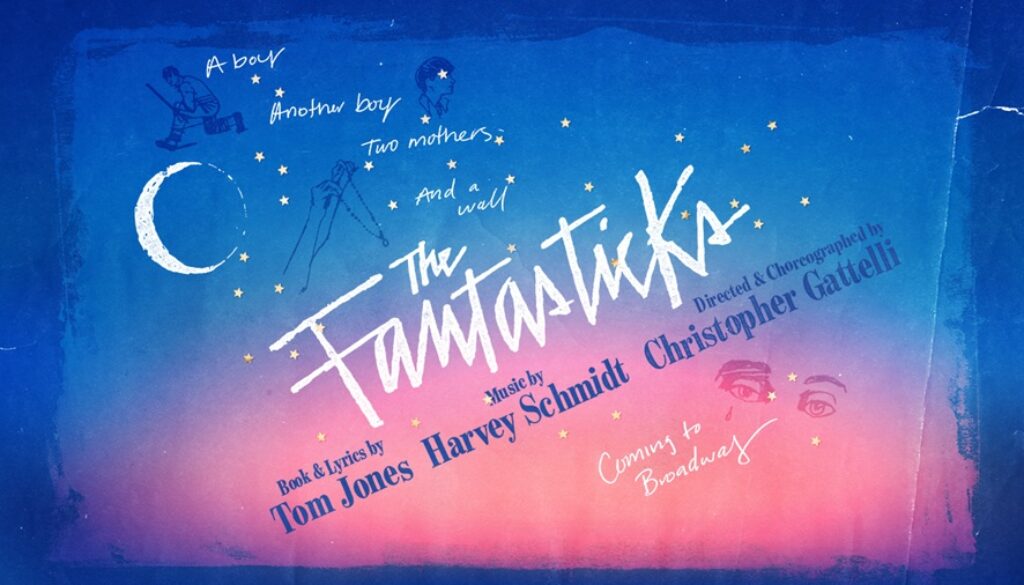
The Fantasticks Broadway Reviews: Critics Roundup for the 2026 Hayes Theater Revival
|
Theatregold · Reviews
The Fantasticks Broadway Musical: Reviews & Critics RoundupThe world’s longest-running musical finally reaches Broadway with two boys, two mothers and one lavender moon. Here is what the critics said.
Critics’ Roundup · Updated November 23, 2026
|
Opened Nov 16, 2026 |
Reviews tracked 17 |
Time Out ★★★★ |
Show-Score 82% |
Tom Jones and Harvey Schmidt’s The Fantasticks has been called many things: a fable, a parable, a bouquet, a warhorse. Until this autumn, one label was missing from its résumé: Broadway. The musical that ran for 42 years Off-Broadway and holds the title of the world’s longest-running musical has now arrived at the Hayes Theater in a Second Stage Theater production, directed and choreographed by Christopher Gattelli, and critics turned out in force when it opened on November 16, 2026.
This roundup collects what the reviewers said. It covers the headline verdicts, the performances that drew the most praise, the criticisms that came up repeatedly, and the debate at the heart of the production: whether turning the central love story into a romance between two young men is a seamless update or a half-measure. It also covers the practical details if you want to see the show for yourself, and a short look back at the original 1960 production.
What Is The Fantasticks, and What Has Changed?
The Fantasticks is a deliberately simple musical. Loosely based on Edmond Rostand’s 1894 play Les Romanesques, it tells the story of two neighbouring parents who pretend to feud so that their children will fall in love, then arrange a staged kidnapping to bring the young lovers closer. The score by Harvey Schmidt includes “Try to Remember,” “Soon It’s Gonna Rain” and “They Were You,” and Tom Jones wrote the book and lyrics.
The 2026 production makes one big change. In a revision made by Jones himself before his death in 2023, the story now centres on two sons rather than a son and a daughter. Matt falls for Lewis, and the fathers of the original become mothers, Mildred and Bessie Mae. TheaterMania notes that the updated version began at the request of a theatre in Michigan; it debuted at Flint Repertory Theatre in 2022. The adaptation comes to Broadway as part of Second Stage’s 2026–27 season, and the company has expanded the original two-player instrumentation to an eight-piece orchestra, with orchestrations by Sam Davis.
The production is staged on a restrained set by Jason Sherwood, with costumes by Linda Cho, lighting by Jen Schriever and sound by Nevin Steinberg. Several critics noted that Gattelli keeps the staging spare, which suits a show built on suggestion rather than spectacle.
The Cast at the Hayes Theater
| Role | Performer | Notes |
|---|---|---|
| Matt (The Boy) | Maxim Chlumecky | Previously Appropriate and Harry Potter and the Cursed Child on Broadway |
| Lewis (The Boy) | Nathan Levy | Previously & Juliet and Aladdin on Broadway |
| El Gallo (narrator) | Zane Phillips | The bandit-narrator |
| Mildred (Matt’s mother) | Leslie Rodriguez Kritzer | One of the two meddling mothers |
| Bessie Mae (Lewis’s mother) | Ruthie Ann Miles | Tony winner |
| The Old Actor | David Patrick Kelly | Comic pair of ancient actors |
| The Man Who Dies | Kevin del Aguila | Tony nominee |
| The Mute | Ahmad Simmons | Mime, with a tap solo noted by critics |
Cast as listed by Second Stage Theater, New York Theatre Guide and TodayTix. Roles as billed in press materials.
Critics’ Verdicts at a Glance
The table below collects fifteen of the reviews tracked by the major review aggregators. Ratings are given only where the outlet itself published one, which in this case means Time Out’s four stars. For every other outlet, the lean is our reading of the review and is labelled accordingly.
| Outlet | Critic | Rating / lean | Verdict in brief |
|---|---|---|---|
| Time Out New York | Adam Feldman | ★★★★ (firmly recommended) | Honours the show’s history while feeling fresh; calls the revival a bouquet |
| USA Today | Patrick Ryan | Very positive | Sublime, heart-tugging antidote to star-driven, overblown Broadway musicals |
| TheaterMania | David Gordon | Positive, with reservations | Loving and uncynical, but argues the gay reworking is “not gay enough” |
| Deadline | Greg Evans | Positive | Welcome Broadway debut, devoted to the original’s spirit; second act still has problems |
| The Guardian | Richard Lawson | Positive | A treat for longtime fans and an inviting entry point for newcomers, despite some corniness |
| TheWrap | Robert Hofler | Positive | Moves uptown “successfully”; praises the singing and the restrained amplification |
| Chicago Tribune / New York Daily News | Chris Jones | Positive | Fans of the original will like it; the switch to two boys feels natural |
| New York Stage Review | Melissa Rose Bernardo | Positive | The gender swap is seamless and the show’s soul remains intact |
| Culture Sauce | Thom Geier | Positive | Hard to resist; nostalgic, unembellished storytelling |
| 1 Minute Critic | Billy McEntee | Positive | Joyous staging, though the bigger stage sometimes shows why the show worked better in a small room |
| New York Theatre Guide | Joe Dziemianowicz | Positive, with caveats | More to like than not; beautifully sung, but with imperfections |
| The New York Times | Elisabeth Vincentelli | Mixed to positive | Praises its old-fashioned charm and lack of sarcasm, power belting and video tricks |
| The Wall Street Journal | Charles Isherwood | Mixed | A faithful, larger-scale replica with limited appeal; praises cast and score |
| New York Theater | Jonathan Mandell | Mixed | Finds the enlargement intrusive but values the opportunities the gender switch creates |
| New York Stage Review | David Finkle | Negative-leaning | Finds the central love story tepid; “Plant a Radish” is well sung |
Sources: Broadway World review roundup (17 reviews, 77.6% average), DidTheyLikeIt, and the reviews themselves. “Rating / lean” is Theatregold’s summary, not an outlet’s own score, except for Time Out. Broadway World’s roundup did not include Variety, The Hollywood Reporter, the New York Post, the Daily News or Newsday at the time we checked.
The Raves
Time Out New York: Adam Feldman, four stars
Feldman’s four-star review is among the warmest. He finds that Gattelli’s direction and choreography honour the musical’s history while planting it firmly in the present, and he praises the way the same-sex love story is handled with “lovely nonchalance,” with no jokes at its expense and no drama about being closeted. He calls Maxim Chlumecky and Nathan Levy fresh-faced, strong-voiced and sweet, and describes Leslie Rodriguez Kritzer and Ruthie Ann Miles as a hoot as the mothers. David Patrick Kelly and Kevin del Aguila are, in his words, deliciously hammy as the two ancient actors. His one reservation is Zane Phillips, whose rich baritone he enjoys but who he feels lacks the gravitas for El Gallo’s worldly wisdom.
USA Today: Patrick Ryan
Ryan’s review is the most enthusiastic of the major outlets. He calls the production sublime and heart-tugging, and argues that at a time when so many Broadway shows lean on star casting and vocal acrobatics, it is an antidote to an industry increasingly allergic to simple, earnest storytelling. He compares it to Gypsy and Cats: The Jellicle Ball as an example of a show that can be modern without pandering. He singles out Chlumecky for his star power, playfulness and tenderness, Levy for his voice and emotional impact, and Phillips for a sensitive take on El Gallo. His only cautions are that the second act meanders as the characters face the realities of their relationship, and that some may find the show too simple.
TheaterMania: David Gordon
Gordon’s review is warm overall, but his headline carries a pointed caveat: the production is a “gay old time” but, in his view, not gay enough. He finds the staging loving and uncynical and praises the way it keeps the show’s innocence intact. He highlights Chlumecky as a charismatic star and gifted physical comedian, the vaudevillian comedy of the two mothers, and Ahmad Simmons for his tap solo in “This Plum Is Too Ripe.” But he argues that the revisions make Lewis a boy in name and pronouns without deeply considering how a young gay man might behave, leaving him with “Louisa by another name.” He also finds that the slowed-down “Plant a Radish” does not land and that a single horn in the larger orchestra feels thin.
Deadline and Vulture
Deadline, in a review by Greg Evans, called the production a welcome Broadway debut seven decades in the making. It praised the cast and the way the update fits the material, singling out Ruthie Ann Miles and Leslie Rodriguez Kritzer as the scheming mothers, but said the second act still has problems. Vulture argued that gender-flipping the 1960 musical into a gay love story requires almost no real changes and brings out its inherent sweetness further, while also noting that the second-act issues carry over.
The Guardian: Richard Lawson
Lawson’s review is warm. He suggests the production suits longtime fans and also offers an inviting entry point for newcomers, despite some dated corniness.
TheWrap: Robert Hofler
Hofler is enthusiastic about the staging, writing that the vintage musical “successfully” moves uptown. He praises Nevin Steinberg’s amplification for supporting the singers without flattening their voices into the loud sound design common on Broadway, and he finds Chlumecky and Levy adorable together. He calls Kelly and del Aguila an utter delight whenever they are onstage, though he admits it is not always clear what the Old Actor and his sidekick contribute. He also jokes that the production never explains its setting.
New York Daily News and Chicago Tribune: Chris Jones
Jones sees the show reborn in its own image, with the old-actor humour and gentle charm intact, and says fans of the original will like this version. In his view the switch to two boys feels natural.
The Mixed and Cooler Notices
Not every critic fell in love. The New York Times’ Elisabeth Vincentelli praised the production’s old-fashioned charm and its lack of sarcasm, power belting and video effects, but DidTheyLikeIt classes her review as lukewarm, and we have marked it mixed to positive in the table above. Charles Isherwood of The Wall Street Journal was more reserved, describing a faithful, larger-scale replica of limited appeal while praising the cast and score. At New York Theater, Jonathan Mandell found the enlargement for Broadway intrusive but credited the gender switch with giving Broadway veterans new opportunities.
The coolest review came from David Finkle at New York Stage Review, who found the boys’ love story tepid and questioned how much coddling modern audiences need, though he did call “Plant a Radish” well sung. Joe Dziemianowicz of New York Theatre Guide was positive overall, calling the show beautifully sung and fantastic, but noted imperfections: the opening stretch feels overly precious, the staged kidnapping is cringeworthy, and “Much More,” the “I want” song for Lewis, feels forced even with lyric tweaks.
A harsher assessment appeared in the NYU student paper Washington Square News, which said the staging has the air of a ragtag group of actors trying to convince the world they are more important than they are, and found the two leads’ voices thin, underamplified and too similar in timbre. It is a minority view, but it shows how divided opinion is about how the show survives the move to a larger house.
What Critics Agreed On
Across the reviews, a few themes recur.
The mothers steal the show
Almost every reviewer singled out Leslie Rodriguez Kritzer and Ruthie Ann Miles. Time Out called them a hoot, USA Today called them an infectiously delightful duo, and New York Theatre Guide named Kritzer a comic standout. Kelly and del Aguila as the ham-actor pair also drew consistent praise from Time Out, TheWrap and USA Today.
The gender switch mostly works
Critics at Time Out, Vulture, Deadline and New York Theatre Guide agreed that the story translates to two boys with little friction, with Dziemianowicz calling the characters’ acceptance of the sons’ sexuality a mark of progress. TheaterMania and a few others raised the opposite concern, that the changes do not go far enough in exploring how the characters would really behave.
The second act is the weak spot
The most common structural criticism was that the show loses momentum after intermission as the lovers confront the real world. Deadline, Vulture and USA Today all raised it.
Intimacy versus scale
The show was built for a 153-seat room in Greenwich Village. Several critics wondered whether it fits in a larger Broadway house, even though the Hayes is Second Stage’s Broadway home. 1 Minute Critic said the bigger stage at times reminds audiences why the show succeeded in more intimate ones, and New York Theater found the enlargement intrusive. On the other side, Culture Sauce and Time Out described the Hayes as still intimate.
The Audience Response
Audience reaction is more mixed than the press. New York Theatre Guide reports that the show holds an 82% approval rating on the audience aggregator Show-Score, which it describes as reflecting mixed reactions from early theatregoers. That is a healthy figure for a new show but lower than the best-reviewed productions of the season, and the figure will move as more audiences see it.
A Short History: From Sullivan Street to the Hayes
To understand why a Broadway debut is such a milestone, it helps to remember the show’s past. The Fantasticks opened on May 3, 1960, at the 153-seat Sullivan Street Playhouse in Greenwich Village, with Jerry Orbach as El Gallo, Rita Gardner as Luisa and Kenneth Nelson as Matt. It opened to mixed reviews and struggled for months, sometimes playing to a handful of patrons. But audiences found it, and it ran until January 13, 2002, for a record 17,162 performances over nearly 42 years.
A revival opened Off-Broadway in 2006 and ran until 2017, adding 4,390 performances for a combined total of 21,552 in New York, which Playbill notes is still the longest-running musical production worldwide. For a deeper look at the origins and legacy of the show, read Theatregold’s earlier piece, The Fantasticks: History, Synopsis and Legacy.
Plan Your Visit
| Detail | Information |
|---|---|
| Theatre | Hayes Theater, 240 West 44th Street |
| Producer | Second Stage Theater |
| Previews / Opening | October 22, 2026 / November 16, 2026 |
| Engagement | Limited 15-week run; listings show tickets through February 7, 2027 |
| Running time | About 2 hours 10 minutes, with one intermission (Time Out) |
| Age guidance | Recommended for ages 5 and over (New York Theatre Guide) |
| Tickets | From $61 (New York Theatre Guide) |
Details from Second Stage Theater, Time Out, New York Theatre Guide and TodayTix; schedules and prices can change.
Because the run is a limited engagement, the best advice is to book earlier rather than later. Critics’ verdicts suggest the show suits romantics, fans of the original and anyone tired of loud, overproduced musicals, while those who want a bolder or more contemporary take on queer romance may find the reservations from TheaterMania and others more persuasive.
How It Compares With the Rest of the Season
Context helps when reading a roundup. TheWrap noted that Second Stage, a nonprofit that rarely presents musicals, shows it knows how to, while USA Today placed the revival alongside Gypsy and Cats: The Jellicle Ball as modern productions that do not pander. That framing, a small, sincere show standing apart from louder musicals, appears in several of the warmer reviews. Time Out’s Feldman noted that the whimsy has never been to everyone’s taste, and that caution is worth bearing in mind: the same simplicity critics praise is exactly what the cooler reviews found precious or thin.
The Bottom Line
The Fantasticks arrives on Broadway to reviews that are warm without being universal. The cast earns near-unanimous praise, the gender-swapped love story is judged by most to be a natural fit for the material, and the second act and the move to a bigger stage are the chief sources of grumbling. With a four-star review from Time Out, a rave from USA Today and a 77.6% average on Broadway World’s roundup, it is a respectable, affectionate return for a classic that waited sixty-six years to reach Broadway.
Frequently Asked Questions
What did critics think of The Fantasticks on Broadway?
Mostly positive. Broadway World’s roundup of 17 reviews averaged 77.6%, and the site DidTheyLikeIt tallied nine thumbs-up, three mixed and no thumbs-down among 12 reviews. Time Out gave it four stars, and USA Today called it sublime.
What is different about the 2026 revival?
Lyricist and book writer Tom Jones revised the script so that the two young lovers are both boys, Matt and Lewis, and their meddling fathers become mothers. Christopher Gattelli directs and choreographs for Second Stage Theater, with an eight-piece orchestra by Sam Davis.
How long is The Fantasticks on Broadway?
Time Out lists the running time as about 2 hours 10 minutes with one intermission, though another guide gives slightly different figures, so allow a little extra time.
When does The Fantasticks close on Broadway?
It is a limited 15-week engagement at the Hayes Theater, which began previews on October 22, 2026. Ticket listings show performances through February 7, 2027, and extensions are possible.
Is The Fantasticks suitable for children?
New York Theatre Guide lists it as recommended for ages 5 and over, though some critics describe the show as aimed at adults who value its romance and sentiment.
Read the Reviews
Full reviews: Time Out New York, USA Today (via Yahoo), TheaterMania, TheWrap, New York Theatre Guide, 1 Minute Critic, Washington Square News. Aggregators: Broadway World review roundup and DidTheyLikeIt. Background: Playbill, Guinness World Records, Broadway.com and Second Stage Theater.
| #TheFantasticks #Broadway #BroadwayReviews #CriticsRoundup #HayesTheater #SecondStage #ChristopherGattelli #TryToRemember #Theatregold |
Data note: Review verdicts are paraphrased from the outlets named and from aggregator summaries as of November 23, 2026. Aggregator scores change as reviews are added. Run dates, prices and running times can change without notice.