The 20 Greatest Broadway Entertainers of the 1950s: Icons of Theatre’s Golden Age
The 20 Greatest Broadway Entertainers of the 1950s
A definitive celebration of the iconic actors, belters, dancers, and showstoppers who shaped the Golden Age of Broadway musical theatre.
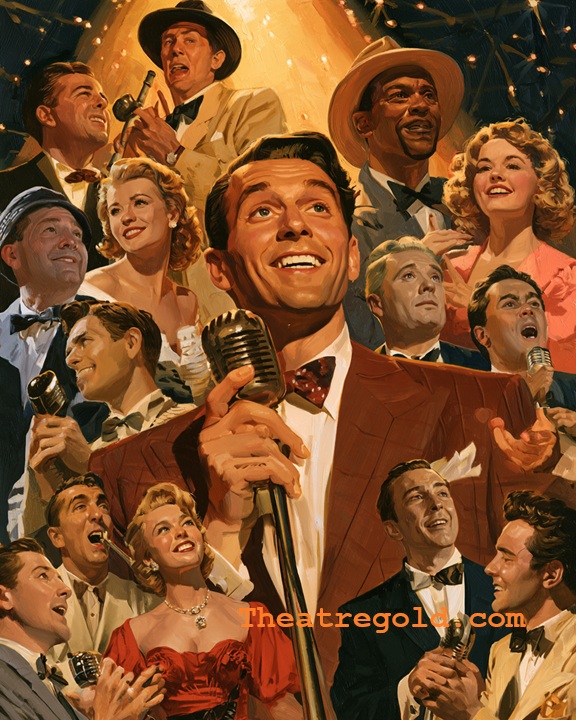
The 1950s is universally regarded as the absolute pinnacle of Broadway’s Golden Age. During this miraculous decade, Midtown Manhattan was the undisputed beating heart of global popular culture. The American musical comedy evolved from light, episodic entertainment into a mature, sophisticated, and deeply integrated art form where story, score, and dance seamlessly combined. Yet, behind every legendary score by Rodgers & Hammerstein, Frank Loesser, Leonard Bernstein, or Cole Porter stood an extraordinary troupe of stage performers whose raw vocal power, virtuosic dance skills, and magnetic stage presence turned opening nights into immortal cultural milestones.
From brassy belters who could throw their voices to the back row without amplification to versatile triple-threat dancers who redefined movement on stage, 1950s Broadway produced performers whose influence still echoes across the Great White Way today. Drawing from historical theatrical records, vintage newspaper reviews, the Internet Broadway Database (IBDB), and archival theatre scholarship, here is the definitive retrospective on the top 20 greatest Broadway entertainers of the 1950s.
1950s Broadway at a Glance
- The Era: The peak of the “Golden Age” of the American Musical Theatre.
- Key Landmark Shows: Guys and Dolls (1950), The King and I (1951), My Fair Lady (1956), West Side Story (1957), The Music Man (1957), Gypsy (1959), and The Sound of Music (1959).
- Performance Style: Acoustic, unamplified belt singing, lush orchestral scoring, and highly expressive narrative dance.
- Broadcast Revolution: Original Cast Albums and live telecasts (like Peter Pan) turned Broadway stars into nationwide household icons.
The Golden Decade of Broadway
To understand the magnitude of these 20 performers, one must understand the unique environment of 1950s Broadway. Unassisted by body microphones or digital sound mixing, actors relied strictly on physical projection, chest-voice vocal control, and crystal-clear diction to project across 1,500-seat theatres. Choreographers like Bob Fosse, Jerome Robbins, and Michael Kidd were demanding unprecedented athletic and dramatic precision from their choruses and stars. It was an era of intense artistic competition, box-office triumphs, and stars who could carry an entire show purely through the sheer force of personality.
The 20 Greatest Broadway Entertainers of the 1950s
1. Gwen Verdon
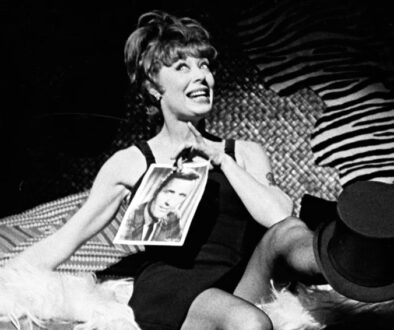
If any single performer defined the physical vocabulary and seductive joy of 1950s musical comedy, it was Gwen Verdon. Starting the decade as an assistant choreographer and ensemble dancer, Verdon achieved instant stardom in Cole Porter’s Can-Can (1953), winning her first Tony Award and literally stealing the show from its lead. She subsequently teamed up with choreographer Bob Fosse—forming one of the most legendary creative partnerships in theatre history—to star in Damn Yankees (1955) as the irresistible devil’s helper Lola. Verdon went on to win four Tony Awards in six years during the decade, including triumphs for New Girl in Town (1957) and Redhead (1959). With her distinctive fiery red hair, playful vulnerability, and unmatched dance technique, Verdon set the gold standard for Broadway triple-threats.
2. Ethel Merman
Known affectionately as “The Undisputed Queen of Broadway,” Ethel Merman was a force of nature whose booming trumpet of a voice needed no electronic amplification. Merman dominated both bookends of the 1950s. She opened the decade starring as Washington hostess Sally Adams in Irving Berlin’s smash hit Call Me Madam (1950), earning a Tony Award for Best Actress. In 1959, she delivered what is widely considered the single most famous, earth-shattering performance in musical theatre history: creating the ultimate stage mother, Rose Hovick, in Jule Styne and Stephen Sondheim’s Gypsy. Her legendary rendition of “Rose’s Turn” permanently etched her name into theatrical lore.
3. Mary Martin
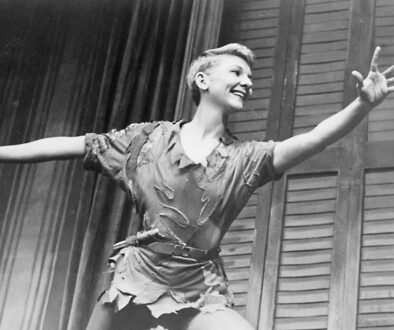
Warm, radiant, and possessing an effortless vocal purity, Mary Martin was Broadway’s undisputed darling throughout the Golden Age. Having ended the 1940s in South Pacific, Martin leaped into the 1950s by capturing the imagination of millions of children and adults alike as the title character in Peter Pan (1954). Her iconic flying sequences and performance won her a Tony Award and became a historic television broadcast viewed by over 65 million people. She closed out the decade in 1959 creating the role of Maria von Trapp in Rodgers & Hammerstein’s The Sound of Music, introducing classics like “Do-Re-Mi” and winning another Tony for Best Actress.
4. Julie Andrews
Before becoming a global cinematic icon in Mary Poppins and The Sound of Music, Julie Andrews was the absolute toast of 1950s Broadway. Arriving from England as a teenager, she made her Broadway debut in The Boy Friend (1954), winning critical raves for her sharp comic timing and crystalline soprano. In 1956, at just 20 years old, she created the immortal role of Eliza Doolittle opposite Rex Harrison in Lerner and Loewe’s record-breaking masterwork My Fair Lady. Her unforgettable performances of “Wouldn’t It Be Loverly?” and “I Could Have Danced All Night” cemented her place among theatre royalty.
5. Carol Channing
With her wide eyes, dazzling smile, distinctively gravelly voice, and impeccable comedic timing, Carol Channing became one of Broadway’s most enduring figures. She launched into stardom at the dawn of the decade creating the role of the charmingly mercenary Lorelei Lee in the 1949–1951 Broadway sensation Gentlemen Prefer Blondes. Channing stopped the show night after night introducing “Diamonds Are a Girl’s Best Friend” and “Bye Bye Baby”. Throughout the 1950s, she remained a ubiquitous presence in revues, concerts, and national tours before capping her career in 1964 with Hello, Dolly!.
6. Robert Preston
Although Robert Preston enjoyed a successful Hollywood movie career in the 1930s and 40s, his true artistic destiny was realized on the Broadway stage in 1957. Cast as the charismatic, spellbinding con man Professor Harold Hill in Meredith Willson’s The Music Man, Preston delivered a performance of breathtaking energy, rapid-fire verbal agility, and charm. Triumphing over competition like West Side Story, Preston won the 1958 Tony Award for Best Actor in a Musical, and his rhythmic performance of “Ya Got Trouble” remains a masterclass in musical theatre acting.
7. Chita Rivera
The 1950s witnessed the fiery rise of Chita Rivera, a performer whose dazzling technique, sharp intelligence, and explosive stage charisma redefined the role of the Broadway featured dancer. After making impressions in Can-Can and Seventh Heaven, Rivera landed the role of a lifetime in 1957 when director-choreographer Jerome Robbins cast her as Anita in Leonard Bernstein and Stephen Sondheim’s revolutionary West Side Story. Leading the iconic numbers “America” and “A Boy Like That,” Rivera delivered a fierce, star-making performance that set her on a path to becoming one of Broadway’s most decorated legends.
8. Alfred Drake
The preeminent leading man of Golden Age Broadway, Alfred Drake possessed a commanding theatrical baritone and an effortless, aristocratic stage presence. Having originated Curly in Oklahoma! during the 1940s, Drake achieved the peak of his career in 1953 as the suave, verse-spouting poet Hajj in Wright and Forrest’s Kismet. His sweeping rendition of “Stranger in Paradise” earned him the 1954 Tony Award for Best Actor in a Musical, reinforcing his status as the premier baritone hero of classical American operetta and musical theatre.
9. Gertrude Lawrence
Gertrude Lawrence was a British theatrical star of unparalleled elegance, theatricality, and magnetic flair. In 1951, she achieved theatrical immortality by creating the role of Anna Leonowens opposite Yul Brynner in Rodgers & Hammerstein’s masterpiece The King and I. Lawrence’s grace and warmth during numbers like “Getting to Know You” and “Shall We Dance?” won her the 1952 Tony Award for Best Actress. Though her life was tragically cut short when she passed away during the show’s run in late 1952, her historic contribution to 1950s theatre remains immortal.
10. Yul Brynner
Few actors in history have been as completely identified with a single theatrical role as Yul Brynner. When Brynner stepped onto the St. James Theatre stage in 1951 as King Mongkut of Siam in Rodgers & Hammerstein’s The King and I, his fierce charisma, regal posture, and powerful voice mesmerized audiences and critics alike. He won the Tony Award for Best Featured Actor in a Musical in 1952, initiating a lifelong association with the show that saw him perform the role over 4,600 times across four decades.
Key 1950s Tony Winners
- 1951: Ethel Merman (Call Me Madam)
- 1952: Gertrude Lawrence (The King and I)
- 1954: Gwen Verdon (Can-Can)
- 1956: Gwen Verdon (Damn Yankees)
- 1958: Robert Preston (The Music Man)
Iconic 1950s Showstoppers
- “Rose’s Turn” – Ethel Merman
- “Whatever Lola Wants” – Gwen Verdon
- “Ya Got Trouble” – Robert Preston
- “I Could Have Danced All Night” – Julie Andrews
- “America” – Chita Rivera
11. Shirley Booth
Shirley Booth was one of the most respected and versatile dramatic and comedic actresses of her generation. Booth demonstrated exceptional range across both plays and musicals in the 1950s. After winning standard acting acclaim in Come Back, Little Sheba, she turned to musical comedy and captivated audiences in Arthur Schwartz’s A Tree Grows in Brooklyn (1951) as the big-hearted Aunt Cissy. She followed this up with a Tony-winning turn as Leona Samish in Rodgers & Sondheim’s precursor musical project By the Beautiful Sea (1954).
12. John Raitt
With a booming, athletic baritone voice and rugged leading-man looks, John Raitt was the quintessential American hero of mid-century musical theatre. Having shot to fame in Carousel during the 1940s, Raitt solidified his status in 1954 by starring as factory superintendent Sid Sorokin in Adler and Ross’s smash hit The Pajama Game. His thrilling performances of “Hey There” and “7½ Cents” opposite Janis Paige showed a modern, masculine musical theatre singer at the very top of his craft.
13. Judy Holliday
Equipped with brilliant comic brilliance and a deceptively shrewd intelligence behind a “dumb blonde” persona, Judy Holliday was a beloved star of stage and screen. While she achieved Oscar fame for Born Yesterday, her ultimate stage triumph came in 1956 when she starred as telephone answering-service operator Ella Peterson in Jule Styne, Comden, and Green’s Bells Are Ringing. Holliday’s hilarious, deeply touching performance earned her the 1957 Tony Award for Best Actress over Julie Andrews in My Fair Lady.
14. Rex Harrison
Rex Harrison proved that a performer did not need a soaring singing voice to dominate the musical theatre stage. As the arrogant, phonetics professor Henry Higgins in Lerner and Loewe’s 1956 masterwork My Fair Lady, Harrison pioneered a stylized “rhythmic speech-singing” technique that fit his character perfectly. His brilliant delivery of “Why Can’t the English?” and “I’ve Grown Accustomed to Her Face” earned him the Tony Award for Best Actor in a Musical and earned him a permanent place in Broadway history.
15. Vivian Blaine
With her snappy delivery and strong belt voice, Vivian Blaine achieved theatrical immortality in 1950 when she created the role of Miss Adelaide, the eternally engaged nightclub performer suffering from a perpetual psychosomatic cold, in Frank Loesser’s masterpiece Guys and Dolls. Her unforgettable comic rendition of “Adelaide’s Lament” and “A Bushel and a Peck” made her a household name and defined one of the most celebrated archetypes in American comedy.
16. Stubby Kaye
A master of vaudeville charm, comic timing, and belting tenor vocals, Stubby Kaye was Broadway’s favorite character actor during the 1950s. In 1950, he created the role of Nicely-Nicely Johnson in Guys and Dolls, stopping the show cold every single night with the roof-raising gospel-inspired number “Sit Down, You’re Rockin’ the Boat”. Kaye proved it was no fluke in 1956 when he created Marryin’ Sam in Li’l Abner, stopping the show yet again with “Jubilation T. Cornpone”.
17. Janis Paige
Janis Paige brought vivacious glamour, sharp comic instincts, and a rich singing voice to the 1950s stage. After working in Hollywood, Paige returned to New York to originate the role of Babe Williams, the fiery labor union grievance committee leader, in 1954’s hit The Pajama Game. Her vibrant chemistry with John Raitt and her show-stopping numbers like “I’m Not at All in Love” made her one of the decade’s most acclaimed leading ladies.
18. Pearl Bailey
Unmatched in her casual charisma, sultry vocal tone, and masterful audience rapport, Pearl Bailey was a trail-blazing entertainer who captivated Broadway audiences throughout the decade. In 1954, Bailey starred as Madame Butterfly in the Harold Arlen and Truman Capote musical House of Flowers, introducing the classics “A Sleepin’ Bee” and “Don’t Like Goodbyes”. Her unique ability to blend soulful blues singing with laid-back comedic banter laid the groundwork for her triumphant return to Broadway in the all-Black cast of Hello, Dolly! in 1967.
19. Larry Kert
Larry Kert was one of the most dynamic young leading men of the late 1950s. In 1957, Kert originated the iconic role of Tony in Leonard Bernstein and Stephen Sondheim’s West Side Story. Introducing emotional, demanding tenor anthems such as “Something’s Coming” and “Maria,” Kert brought a fresh, authentic juvenile energy to the Broadway stage, bridging the gap between classical operetta singing and modern dramatic realism.
20. Carol Lawrence
Completing our list is Carol Lawrence, whose radiant soprano voice and expressive dance background brought romantic sincerity to the late 1950s stage. Lawrence created the role of Maria in the original 1957 Broadway production of West Side Story. Her touching performances of “I Feel Pretty” and her duets with Larry Kert on “Tonight” and “One Hand, One Heart” earned her critical acclaim and solidified her standing as one of Golden Age Broadway’s most beloved ingénues.
The Legacy of 1950s Broadway Entertainers
The 20 performers highlighted in this retrospective did far more than entertain audiences for a few seasons in Manhattan; they established the technique, performance style, and artistic standards for generations of musical theatre actors to come. The 1950s proved that Broadway performers had to be complete artists—capable of expressing complex psychological emotions while delivering demanding musical scores and high-energy choreography.
Today, when we listen to classic original cast recordings or watch archival video clips, the electrifying vitality of Gwen Verdon, Ethel Merman, Mary Martin, and Julie Andrews continues to inspire theatrical lovers around the globe. Their work stands as a testament to an era when Broadway was the heart of American entertainment and its stars were truly larger than life.
Reporting compiled from Musicals101, Playbill, Internet Broadway Database (IBDB), BroadwayWorld, TheatreGold Archives, Time Out New York, and the Rodgers & Hammerstein Organization.
Explore More Theatre Memorabilia & Musicals
Browse authentic memorabilia and further reading from TheatreGold’s archive: