Oh, Mary! Play Guide: Cole Escola, Mary Todd Lincoln & Broadway History
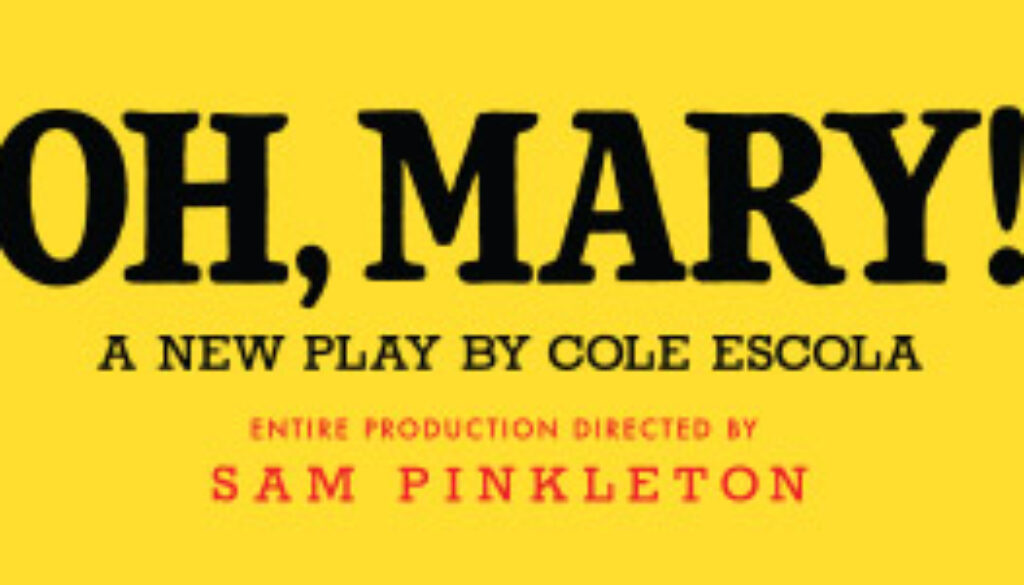
OH, MARY!
Cole Escola’s Hilarious & Absurdist Take on Mary Todd Lincoln
Introduction: The Play of the Generation
Few titles in recent theatrical memory have commanded the conversation as fiercely as **”Oh, Mary!”**. Written by and starring the incomparable **Cole Escola**, this absurdist comedy has done the impossible: translating viral comedic chaos into a legitimate, Tony Award-winning Broadway phenomenon. Originally billed as “The Greatest Play of the Generation,” the production has managed to exceed that hyperbole, offering a fresh, politically incisive, and gut-busting revisionist history of one of America’s most misunderstood First Ladies.
This 4,000-word post is the definitive guide to *Oh, Mary!*. We will perform a deep dive into the play’s full synopsis, its production history from Off-Broadway roots to the Marquis Theatre, its complex character archetypes, its sociopolitical subtext, and the critical firestorm that cemented its legacy.
Full Plot Summary: A Cockney in the White House
Act I: The Absurdist Arrival
The play immediately dispels any notion of historical accuracy. It is April 1865, just days before the assassination of President Abraham Lincoln. We meet Mary Todd Lincoln (played by Cole Escola), but this is not the refined, troubled figure of biography. Escola presents Mary as a frantic, boisterous, Cockney-accented social striver who has somehow married “Abe.” She is obsessed with the social status the presidency offers, while simultaneously resenting the scrutiny it brings.
Mary is convinced that she is the *real* star of the family and that Abe is only President because of her. She schemes, bullies, and manipulates her surroundings, causing unending frustration for the supportive, weary White House staff. The atmosphere is that of a frantic farce, establishing the play’s unique, high-energy language.
Act II: The Political Crisis
Act II shifts from purely domestic chaos to absurdist political satire. As the Civil War winds down, Abe is facing mounting pressure. Mary, entirely oblivious to the human cost of the war, is primarily concerned with planning a lavish, gaudy state dinner to secure her position as the Queen of Washington. The juxtaposition of Abe’s genuine despair over the war with Mary’s frantic concern over the centerpiece becomes the core of the play’s unique satirical language.
Mary launches into a series of misguided initiatives that cause diplomatic incidents and nearly fracture the fragile postwar alliance. Through it all, Cole Escola maintains the breakneck comedic pace, delivering monologues that are as politically biting as they are ridiculous. The chaos is unparalleled, leading to a climax that is as shocking as it is inevitably comedic.
Character Guide & Analysis
Mary Todd Lincoln: The revisionist Cockney Star
**Analysis:** This is the core of the play. Escola’s interpretation is not an insult to Mary, but a reclamation. By stripping her of her historical gravitas and presenting her as a coarse, social-climbing star of her own sitcom, Escola allows us to laugh *with* her as a resilient survivor. Mary is flawed, gaudy, and entirely self-absorbed, but she is also fiercely individualistic. She represents the chaos and resilience of American identity, forcing us to confront the nature of historical narrative itself.
“Abe”: The Long-Suffering support system
**Analysis:** The character of Abraham Lincoln is primarily defined by his relation to Mary. He is presented as a supportive, weary figure, entirely exhausted by the chaos. He is the straight man to Mary’s absurdity, but Wilson’s casting allows this weary figure to carry an emotional resonance that balances the comedy.
Production History
| Venue | Premiere Date | Notable Notes |
|---|---|---|
| World Premiere (Off-Broadway) | February 2024 | Lucille Lortel Theatre. Sold out its entire run immediately. |
| Broadway Transfer | June 26, 2024 (Previews) | Marquis Theatre. A highly-publicized, limited 12-week run. |
Critical Response & Awards
Critics were stunned. The unique fusion of viral, online comedic sensibility with rigorous theatrical structure proved to be a critical triumph. The play was universally acclaimed for its masterclass in comedic timing, its incisive language, and Cole Escola’s powerhouse performance.
Notable Awards & Nominations:
- Tony Awards (2024): Winner – Best Play (Escola)
- Tony Awards (2024): Winner – Best Actress in a Play (Escola)
- Drama Desk Awards (2024): Highly decorated winner across multiple categories.
Content Analysis: Politics and “The Greatest Play”
The Unique language of Oh, Mary!
At 4,000 words, a full content analysis must explore the play’s unique comedic language. Escola has managed to translate the chaotic, frantic energy of internet comedy (think Vine, TikTok, and meme culture) into a highly structured, rigorous theatrical language. The breaking of the fourth wall, the high-octane physical comedy, and the deliberate use of bad accents are not just gags; they are part of a unified, intellectual language that satirizes the performance of identity itself.
Political Satire for the Digital Age
Ultimately, *Oh, Mary!* is a masterclass in political satire for the digital age. By making the iconic figures of history ridiculous, the play forces us to confront the artificiality of historical narrative and political performance. Cole Escola’s achievement is not just in writing the funniest play of the season, but in writing the most intellectually stimulating.
Links
Torch Song Trilogy – Memorabilia
Cat on a Hot Tin Roof – Memorabilia
The Boys in the Band – Memorabilia