Buena Vista Social Club Broadway: 5 Tony Wins — Full Guide
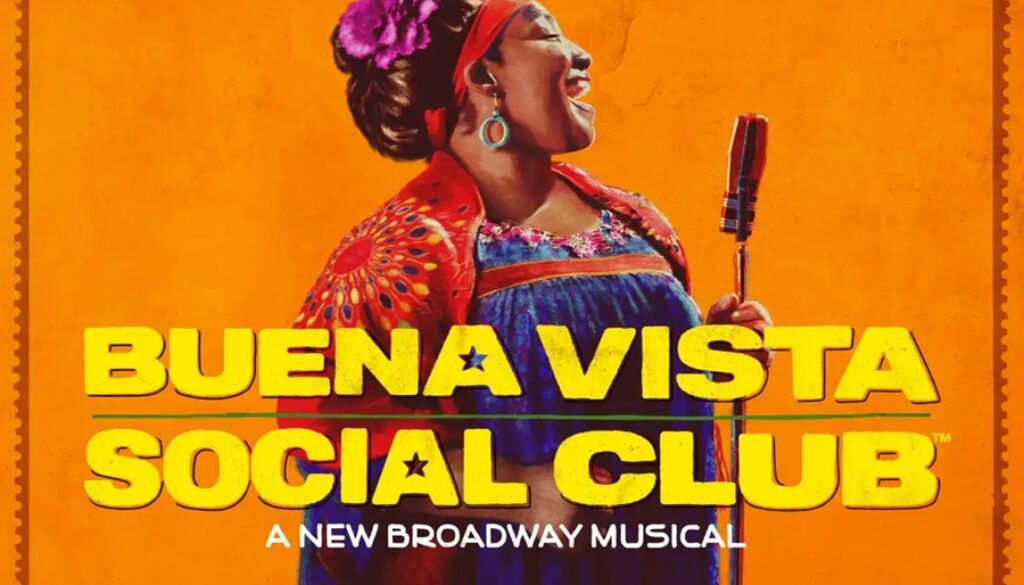
Buena Vista Social Club on Broadway: The Most Joyful Show in New York — and Five Tony Awards to Prove It
From a crumbling Havana recording studio in 1996 to a Grammy-winning album, a Wim Wenders documentary, and finally the stage of Broadway’s Gerald Schoenfeld Theatre — the story of the Buena Vista Social Club is one of the most extraordinary second-act narratives in the history of popular music. And on Broadway, it burns with the full heat of Cuba’s most glorious musical tradition.
Show at a Glance
| Full Title | Buena Vista Social Club |
| Theatre | Gerald Schoenfeld Theatre, 236 W 45th Street, New York |
| Previews began | 21 February 2025 |
| Opening night | 19 March 2025 |
| Currently running | Yes — over 455 performances as of April 2026 |
| Book | Marco Ramirez |
| Director | Saheem Ali |
| Choreographers | Patricia Delgado and Justin Peck |
| Music Supervision | David Yazbek and Dean Sharenow |
| World Premiere | Atlantic Theatre Company, Off-Broadway, November 2023 |
| Tony nominations | 10 (2025) |
| Tony wins | 5 (2025) |
| Running time | 2 hours 10 minutes, one intermission |
| Recommended age | 8 and up (children under 4 not permitted) |
The Story Behind the Music: Cuba, Ry Cooder, and the Album That Changed Everything
To understand why Buena Vista Social Club belongs on Broadway — why a Grammy-winning Cuban album from 1997 has become, nearly thirty years later, the basis for one of the most acclaimed and joyful musicals on the New York stage — you first need to understand the extraordinary circumstances from which the music emerged. It is a story about rescue and rediscovery: about music that was nearly lost to time and political isolation, that was saved by a combination of luck, vision, and the irresistible pull of authentic genius.
Cuba in the early 1990s was a country in the grip of its post-Soviet economic crisis — the “Special Period” that followed the collapse of Soviet subsidies and threw the island into severe shortages. The golden age of Cuban popular music — the era of son, danzón, bolero, and guaracha that had given Havana its reputation as one of the world’s great musical capitals — was a fading memory. The musicians who had created that music in the 1940s and 1950s were elderly, largely forgotten by younger audiences who had grown up in the revolutionary period, their records unavailable, their instruments often in disrepair.
In 1996, American guitarist Ry Cooder and Cuban musician and producer Juan de Marcos González conceived a project to record some of those surviving musicians — the veterans of Cuba’s golden musical era — before their voices and techniques were lost forever. The sessions were held at the Egrem Studios in Havana — a crumbling, beautiful recording facility that had barely changed since the 1950s — and they brought together a group of musicians whose average age was in the seventies, many of whom had not performed professionally in decades.
The results were miraculous. The musicians who gathered at Egrem Studios in the winter of 1996 were not merely technically accomplished; they were repositories of a living musical tradition that had been preserved in private, in kitchens and small rooms, through decades of revolutionary Cuba’s cultural upheaval. Ibrahim Ferrer — a singer who had been shining shoes to supplement his pension — produced vocals of heartbreaking beauty. Compay Segundo — a guitarist in his late eighties who had largely retired from music — played with the authority and precision of a much younger man. Rubén González played the piano with classical technique and extraordinary swing. And Omara Portuondo — whose career dated to the 1950s and whose voice had only deepened and enriched with age — sang with a passion and a technical mastery that left everyone in the studio awed.
The album Buena Vista Social Club, released in 1997 on World Circuit Records and Nonesuch Records, was both a critical triumph and a commercial phenomenon. It won the Grammy Award for Best Traditional Tropical Latin Album in 1998. Its success led to a concert at Carnegie Hall in New York in 1998 — where the musicians performed to a rapturous sold-out audience — and inspired Wim Wenders’ acclaimed documentary film of the same name in 1999, which was nominated for an Academy Award for Best Documentary Feature. A further documentary, Buena Vista Social Club: Adios, followed in 2017.
From Album to Stage: The Journey to Broadway
Ry Cooder and Juan de Marcos González convene Cuba’s legendary elder musicians at the crumbling Egrem Studios to record what will become one of the most celebrated albums in the history of world music. The sessions produce the foundational recordings that will eventually reach Broadway.
The Buena Vista Social Club album is released to international critical and commercial success. It wins the Grammy Award for Best Traditional Tropical Latin Album and becomes a global phenomenon, introducing Cuban son, bolero, and guaracha to audiences worldwide.
The musicians perform a sold-out concert at Carnegie Hall — their first significant American performances — bringing the music that had been recorded in Havana’s crumbling studios to one of the world’s great concert stages. The concert is filmed by Wim Wenders.
German director Wim Wenders releases his documentary Buena Vista Social Club, which follows the musicians’ journey from Havana to Amsterdam and New York. The film receives an Academy Award nomination for Best Documentary Feature and further expands the global audience for the music.
The stage musical Buena Vista Social Club — with a book by Marco Ramirez, direction by Saheem Ali, and choreography by Patricia Delgado and Justin Peck — receives its world premiere at the Atlantic Theatre Company. The Off-Broadway production introduces the creative team’s approach and a version of the cast that will largely carry over to Broadway. The response is strongly positive, with critics identifying both the material’s considerable theatrical potential and some structural challenges in the book.
The musical transfers to Broadway’s Gerald Schoenfeld Theatre, beginning previews 21 February 2025 and officially opening 19 March 2025. The Broadway version features expanded production values, a larger stage, and enhanced sound design — all of which significantly amplify the impact of the music and the choreography. The production receives ten Tony Award nominations.
At the 78th Annual Tony Awards, Buena Vista Social Club wins five Tonys from ten nominations: Best Featured Actress in a Musical (Natalie Venetia Belcon), Best Choreography, Best Orchestrations, Best Sound Design of a Musical, and a Special Tony Award for The Musicians Who Make Up the Band. The cast recording is also released and receives a Grammy nomination.
A national tour of the production is announced to launch in fall 2026, bringing the Cuban musical celebration to audiences across the United States. The tour follows a Broadway run that has now exceeded 455 performances.
The Story: What Buena Vista Social Club Is About
The musical’s book, written by Marco Ramirez — best known for The Royale, his acclaimed play about race and boxing — weaves together a dual narrative structure that mirrors the dual time periods of the real Buena Vista Social Club story.
The action moves between Cuba in the 1950s and Cuba in the 1990s. In the 1950s, the musical introduces Omara Portuondo as a young woman — a gifted singer discovering her voice in the vibrant, volatile musical culture of pre-revolutionary Havana, alongside her sister Haydee. The two sisters are talented, ambitious, and in love with the music that surrounds them — the son, the bolero, the guaracha — but their futures diverge as Cuba changes around them. The 1950s sequences give the audience the full glamour and beauty of Havana’s musical golden age, rendered through Justin Peck and Patricia Delgado’s extraordinarily physical choreography and the music of the period in its full, heady glory.
The 1990s narrative follows an older Omara — now a woman with decades of professional life behind her — as she finds her way back to the musicians and the music that defined her youth. She reconnects with Compay Segundo, the elderly guitarist whose technique and artistry have survived the long years of revolutionary Cuba; with Ibrahim Ferrer, the singer who had drifted into obscurity; and with Rubén González, the pianist whose classical training and deep swing had made him one of the most distinctive voices in Cuban music. The convergence of these lives — drawn back together by the recording sessions and the music that binds them — is the emotional heart of the second act.
The Broadway production retains the original Off-Broadway structure but streamlines several subplots — including a gun-running subplot that appeared in the Atlantic Theatre production — to keep the focus on the music and the relationships between its creators. As the New York Theatre Guide noted, the book is “unapologetically sentimental” and “slimmer” than the Off-Broadway version, but “the slender story gets the job done” in the service of a show that is, fundamentally, about music rather than narrative complexity. The scenes exist to connect the songs, and the songs — performed live, with the extraordinary on-stage Afro-Cuban band — are the real event.
What distinguishes this show from a concert with theatrical window-dressing is the genuine emotional investment that the creative team and cast bring to the specific human stories being told. Omara’s journey — from passionate young singer to older woman rediscovering what the music means to her — is the emotional spine of the evening, and Natalie Venetia Belcon‘s Tony Award-winning performance ensures that it carries genuine weight rather than merely serving as a frame for the musical numbers.
The Broadway Cast
One of the most distinctive aspects of the Buena Vista Social Club production is its approach to casting: the performers are simultaneously actors, singers, and dancers in the theatrical tradition, while the on-stage band of musicians are genuine Afro-Cuban instrumentalists who perform the music live throughout the evening. The Special Tony Award granted to “The Musicians Who Make Up the Band” recognises the extraordinary nature of this arrangement and the central role the live band plays in the production’s impact.
Creative Team
The production is directed by Saheem Ali, the associate artistic director of Roundabout Theatre Company who has built a distinguished reputation for work on Lincoln Center Theater productions and whose instinct for the specific theatrical language of non-Anglo musical traditions gives this material its particular authenticity and warmth. Choreography is by Patricia Delgado and Justin Peck — the latter the Tony-winning choreographer of Illinoise and Steven Spielberg’s West Side Story. Music supervision and arrangements are by David Yazbek (Tony winner for The Band’s Visit) and Dean Sharenow. Scenic design is by Arnulfo Maldonado, costume design by Dede Ayite, and lighting design by Jiyoun Chang. Sound design, which won the Tony Award, is by Jonathan Deans and Cody Spencer.
Producers include John Leguizamo, LaChanze, Orin Wolf, John Styles Jr., Barbara Broccoli (the James Bond producer), and Marc Platt — an unusually star-studded producing team that reflects the cultural significance of the project. Wolf has described the development process as including joint trips to Cuba with the creative team to meet the musicians whose stories they were telling — a commitment to authenticity that is evident in every aspect of the production.
The Music: Cuba’s Greatest Sounds, Performed Live Every Night
The musical fabric of Buena Vista Social Club is the album that gave it its name: a repertoire of Cuban popular music spanning the son, bolero, guajira, danzón, and rumba — the interlocking styles that constituted the popular music of Havana’s golden age between the 1930s and the 1950s. These are not simple songs. They are sophisticated, harmonically rich compositions that require both technical mastery and genuine interpretive investment to fully realise — and the on-stage band of the Broadway production provides both, night after night, in ways that have drawn both critical and audience admiration that borders on reverence.
The songs performed in the musical include the iconic “Chan Chan” — the wistful, slow-building son that opens the original album and has become one of the most recognised pieces of Cuban music in the world — as well as “El Cuarto de Tula” (a rousing rumba about a house fire, originally by Tito Junco), “Quizás, Quizás, Quizás” (the classic bolero made famous internationally by Nat King Cole), “Dos Gardenias”, “El Cigala”, and “Candela” — the fire song whose flute solo by Hery Paz drew particular critical attention. The title Candela means Fire, and it was composed in the 1940s by Faustino Oramas, who adopted the pseudonym El Guayabero after a romantic scandal with a military officer’s wife.
The music supervision by David Yazbek and Dean Sharenow has achieved something remarkable: the songs feel simultaneously like the authentic Cuban music they are — with no Broadway smoothing or compromise — and also like properly theatricalised number sequences that serve the dramatic narrative. The live band — guitars, trumpet, bass, percussion, flute, and piano — fills the Gerald Schoenfeld with the warm, resonant sound of Havana, creating an acoustic experience that no recording can fully replicate. The Special Tony Award for the musicians who make up the band is the awards community’s recognition of an achievement that goes beyond mere musical accompaniment: this is a full artistic contribution that is central to the production’s identity.
Broadway’s most fabulous party! Buena Vista Social Club explodes with brilliant, vibrant music and dancing. The interconnections between musicians, songs and a society have rarely been evoked as vividly, and as lovingly.
Audience consensus and critics, Broadway.com / Show-Score, 2025What the Critics Said: Review Roundup
The critical reception to Buena Vista Social Club on Broadway was broadly positive — scoring 80 out of 100 on Broadway Scorecard’s aggregated critic reviews — with near-universal praise for the music, the choreography, the performers, and the sound design, alongside some more measured assessments of Marco Ramirez’s book. Here is what the major outlets had to say.
The Choreography: Justin Peck and Patricia Delgado’s Tony-Winning Work
The choreography of Buena Vista Social Club is, by the consensus of critics and audiences alike, the production’s single most spectacular achievement. The Tony Award for Best Choreography — shared by Patricia Delgado and Justin Peck — recognises work that is not merely technically impressive but genuinely expressive: dance that does what theatre requires of it, which is to illuminate character, emotion, and situation through physical movement with a clarity and a beauty that words alone cannot provide.
Peck, whose Broadway credits include the choreography for Spielberg’s West Side Story and the Tony-nominated work for Illinoise, brings his characteristic combination of ballet training and vernacular physicality to the Afro-Cuban movement vocabulary of the production — a fusion that could easily have felt false but instead feels organic and deeply respectful of the tradition it honours. Delgado, whose expertise in Afro-Cuban dance forms gives her work an authenticity that grounds Peck’s more balletically influenced contributions, collaborates with him to create a gestural language that is simultaneously recognisably rooted in Cuban dance tradition and theatrically vivid in the Broadway context.
The six young dancer-actors who populate the 1950s sequences — particularly in the sequences featuring Young Omara and Young Compay — carry the full weight of the choreography’s physical demands, creating the visual impression of a Havana dance hall in full swing with a precision and a joy that audiences have consistently described as among the most electrifying physical theatre they have witnessed on Broadway. Bob Verini’s description of their work as “repeatedly echoing in movement the sainted emotions of the score” captures something essential: the choreography is not decorative but interpretive, translating the emotional content of the music into a physical language that reaches audiences for whom the Spanish lyrics are opaque.
Natalie Venetia Belcon: A Tony Winner at the Heart of the Story
Natalie Venetia Belcon‘s Tony Award for Best Featured Actress in a Musical, received at the 78th Annual Tony Awards ceremony in June 2025, was one of the most warmly received individual honours of the evening. Belcon — a veteran stage and television actress whose previous Broadway credits include The Color Purple and Avenue Q — brings to the role of the older Omara Portuondo a quality of authoritative feminine wisdom that is entirely different from, and entirely complementary to, the blazing vitality of Isa Antonetti’s younger Omara.
Her Omara is a woman who has lived — who has seen the golden age of Cuban music, survived the revolution and its consequences, lost her sister to a different path, and arrived at the twilight of her life still in possession of her voice and her dignity. Belcon communicates all of this with minimal exposition: it is in the quality of her attention to the music, in the way her body responds when she hears the old songs again, in the particular stillness that precedes her most emotionally open moments. She also won the Lucille Lortel Award for Outstanding Lead Performer in the Off-Broadway production, and was nominated for the Drama Desk Award — a full sweep of the pre-Broadway awards circuit that confirmed her as the production’s most recognised individual achievement.
In portraying a real, living person — Omara Portuondo, now in her nineties, is still alive — Belcon carries an additional responsibility: to honour the real woman’s extraordinary life without either sentimentalising it or reducing it to a theatrical type. By all critical and audience accounts, she meets this responsibility with complete grace.
What to Expect When You Go: A Practical Guide
Buena Vista Social Club is one of the relatively rare Broadway shows that works as well for audiences with no prior knowledge of its subject as it does for those who have listened to the album a hundred times. The Cuban musical tradition it celebrates is introduced with sufficient care and context that a first-time listener to Cuban son can follow the emotional arc of each song and understand its place in the characters’ lives — while a listener who knows every track on the original album will find new layers of meaning in the theatrical context.
It is worth noting that all lyrics in the show are sung in Spanish, untranslated. This is a deliberate artistic choice that reflects the creative team’s commitment to the authenticity of the music and its cultural origins. As Variety’s Frank Rizzo noted, “though all lyrics are untranslated, the essence is easily understood and deeply felt” — a testament to the power of the music and the choreography to communicate across the language barrier. The programme includes context for each song, and the emotional clarity of the performances makes the meaning accessible even without literal translation.
The production runs approximately two hours and ten minutes, including one intermission. It is recommended for audiences aged eight and above; children under four are not permitted in the theatre. Tickets start from $64. The Gerald Schoenfeld Theatre, 236 West 45th Street, is fully wheelchair accessible, with assisted listening devices available from the box office.
Dress is entirely casual — Broadway has no dress code — though audiences are advised to dress comfortably and be aware that the theatre may be cool in warmer months. The atmosphere in the theatre, consistently described by audiences as uniquely communal and celebratory, means that the experience of the show extends beyond the stage and into the audience itself. Multiple reviews note that the house is frequently filled with people who are visibly moved, energised, and transported — dancing in their seats, in several cases — by the music and the performances.
🎶 Hear the Music of Cuba Live on Broadway
Buena Vista Social Club plays at the Gerald Schoenfeld Theatre, 236 West 45th Street, New York. Currently running through 2026. Tickets from $64.
Get Tickets at Broadway.comFinal Verdict: Is Buena Vista Social Club Worth Seeing?
The answer, for almost any theatregoer, is yes. Buena Vista Social Club is not the most dramatically complex musical currently on Broadway, and critics who arrived expecting a fully integrated book musical with the narrative architecture of Ragtime or Hamilton were gently reminded that this is something different: a production in which music is not the decoration but the substance, and in which the story exists to give the music its human context rather than the other way around.
What it offers instead is something that Broadway rarely manages to deliver: a genuine encounter with a living musical tradition, performed with authentic expertise and real artistic investment by people who understand that music from the inside. The live Afro-Cuban band, the explosive choreography, Natalie Venetia Belcon’s quietly devastating performance, and the simply extraordinary quality of the songs themselves — these are not Broadway substitutes for the real thing. They are the real thing, transferred to a theatrical setting with enough skill and care that the transfer enhances rather than diminishes the original.
Five Tony Awards. A Grammy-nominated cast recording. Over 455 performances and a national tour in development. Broadway has spoken — and what it has said, unanimously, is that Cuba’s greatest musical story deserves to be told on the world’s greatest theatrical stage. If you can get to the Gerald Schoenfeld Theatre before the run ends, go. The music will find you where you live, even if you don’t understand a single word of Spanish. Perhaps especially then.
A sound like this — it tends to travel. Step into the heart of Cuba, where blazing trumpets and sizzling guitars set the dance floor on fire. Here, the real sound of Havana is born.
Marco Ramirez, from the book of Buena Vista Social Club
Links
La Cage Aux Follies – Memorabilia
Chess the Musical – Memorabilia
Little Shop of Horrors – Memorabilia
Starlight Express – Memorabilia
Dear Evan Hansen – Memorabilia
How to Succeed in Business Without Really Trying – Memorabilia
Terrence McNally – Memorabilia