Beaches Broadway Musical Closes Early: Tony Snub & Poor Ticket Sales End Run
Beaches Broadway Musical Closes Early: How a Tony Snub, Scathing Reviews, and Collapsing Ticket Sales Washed Out One of the Season’s Most Anticipated Shows
Show at a Glance
| Full Title | Beaches: A New Musical |
| Theatre | Majestic Theatre, 245 W 44th St, New York, NY |
| Previews began | 27 March 2026 |
| Opening night | 22 April 2026 |
| Original closing | 6 September 2026 |
| Actual closing | 24 May 2026 |
| Total performances | 38 regular + 28 previews |
| Tony nominations | Zero |
| Final week capacity | 44% |
| Final week gross | $441,484 |
| Running time | 2 hours 30 minutes (one intermission) |
The Closing: Broadway’s First Tony Casualty of 2026
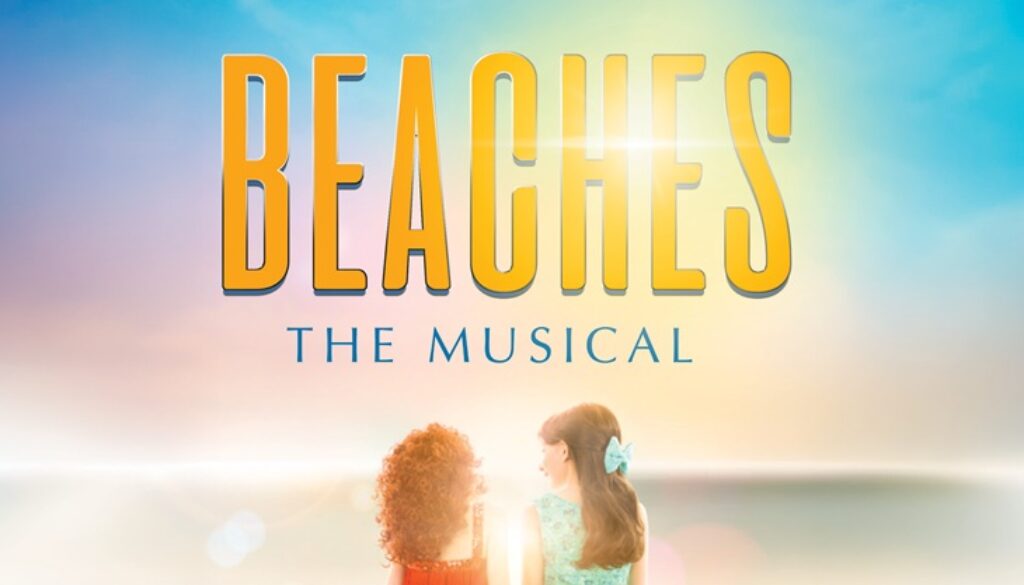
The announcement landed on the morning of 19 May 2026, and it surprised almost no one who had been watching the box office figures. Beaches: A New Musical, the long-gestating stage adaptation of Iris Rainer Dart’s beloved 1985 novel and its iconic 1988 Garry Marshall film, will close at Broadway’s Majestic Theatre on 24 May 2026, cutting its run short by three and a half months. The production had been announced to run through 6 September 2026, before embarking on a national tour.
In total, Beaches will have played just 28 previews and 38 regular performances — a run so brief that it will leave barely a footprint in the Broadway record books. By comparison, the Majestic Theatre is the home of The Phantom of the Opera, which ran at that very address for 35 years. The contrast could not be more brutal.
The show’s closure is being attributed to a damaging combination of factors: largely negative critical reviews, persistently weak ticket sales, and — perhaps most critically — a complete shut-out from the 2026 Tony Award nominations, announced on 5 May. Without a single nomination to its name, the production lost its primary mechanism for driving new interest and bookings, and producers moved quickly to cut their losses.
As Deadline reported, the show had struggled to find an audience, posting an unsustainable 44 percent of capacity in its final week and grossing just $441,484. For a production playing one of Broadway’s largest and most expensive houses — the Majestic seats over 1,800 — those numbers represent a financial haemorrhage that no amount of goodwill could stanch.
From Bestseller to Blockbuster to Broadway: The Source Material
Beaches as a cultural property has a history stretching back more than forty years. Iris Rainer Dart’s novel, published in 1985, tracks a lifelong friendship between the mild-mannered Bertie and the larger-than-life Cee Cee. The book was a New York Times bestseller, and its story of two women navigating decades of friendship, rivalry, love, and loss struck a profound chord with readers across the country.
Three years later, in 1988, director Garry Marshall translated the novel to the screen in a film that became a genuine cultural phenomenon. Starring Bette Midler as the brash, talented Cee Cee and Barbara Hershey as the quiet, principled Bertie, the film is remembered today primarily for two things: its status as one of cinema’s great tearjerkers, and its soundtrack. The show includes the Grammy Award-winning song “Wind Beneath My Wings,” written by Jeff Silbar and Larry Henley and made famous by Bette Midler in the 1988 Disney film version of the story. The song became one of the best-selling singles of that year and has remained in the popular imagination ever since.
A 2017 made-for-television remake, starring Idina Menzel and Nia Long for Lifetime, introduced the story to a new generation, though it never approached the cultural resonance of the original film. By the time the Broadway musical was announced, Beaches was a property with a passionate and largely female fan base, a well-known emotional arc, and a soundtrack challenge: how do you make a stage musical out of a story whose most famous song you didn’t actually write for that purpose?
A Decade in the Making: The Musical’s Long Development History
The road from novel and film to Broadway stage was extraordinarily long — even by the standards of an industry accustomed to protracted development cycles. The musical came to Broadway after about a ten-year development period. That journey involved multiple productions, creative overhauls, and significant changes to the musical’s score and book.
The musical’s world premiere takes place at the Signature Theatre in Arlington, Virginia, running from 8 February through 29 March. At this stage the show features music by David Austin and is directed by Eric D. Schaeffer.
The musical moves to Chicago, where it is performed at the Drury Lane Oakbrook Theatre from 2 July to 16 August, again under Schaeffer’s direction. The production refines the show’s storytelling but does not yet have the creative team that will eventually take it to Broadway.
The production that would eventually transfer to Broadway has its international premiere at Theatre Calgary in Alberta, Canada. This version — now featuring a new score by Grammy Award-winning songwriter Mike Stoller, with lyrics by Dart and a book by Dart and the late Thom Thomas — is directed by Lonny Price and Matt Cowart. The Calgary production stars Jessica Vosk and Kelli Barrett, as well as Ben Jacoby and Brent Thiessen.
It is announced that the Calgary production will transfer to Broadway for a limited run. The show is booked into the Majestic Theatre, home of The Phantom of the Opera — one of Broadway’s most storied and capacious venues. Previews are set to begin 27 March 2026, with an official opening on 22 April and a run through 6 September.
Previews begin as scheduled on 27 March 2026. The show officially opens on 22 April 2026 to a mixed-to-negative critical reception. Box office figures from the preview period are already soft, with weekly grosses struggling to approach the break-even point for a large-scale Majestic Theatre production.
The 2026 Tony Award nominations are announced. Beaches receives zero nominations across all categories — not even a nomination for Jessica Vosk‘s widely praised lead performance. TheaterMania describes the snub as stinging “like a jellyfish,” noting that the show had been performing terribly at the box office, and the producers were almost certainly holding out for a Tony nomination or two as a lifeline.
Producers announce that Beaches will play its final performance on 24 May 2026. The decision, made less than two weeks after the Tony snub, brings the Broadway run to an abrupt end. A national tour, produced by Crossroads Live, remains planned for 2027.
The Broadway Cast
One of the ironies of Beaches‘ troubled Broadway run is that critics were broadly in agreement that the cast — and particularly its lead — was not the problem. Jessica Vosk received some of the most enthusiastic notices of her career, and the ensemble was widely praised for committing fully to material that the critics found wanting. The leading quartet had all reprised their roles from the Theatre Calgary world premiere.
The ensemble also featured Sarah Bockel, Harper Burns, Eric Coles, Taylor Sage Evans, Mia Gerachis, Joelle Gully, Stephanie Martignetti, Emma Ogea, Olive Ross-Kline, Bailey Ryon, Paul Adam Schaefer, Lael Van Keuren, and Zurin Villanueva.
Creative Team
The musical featured a book by Iris Rainer Dart (the original novelist) and the late Thom Thomas, with music by Grammy Award-winner Mike Stoller (of Leiber and Stoller fame) and lyrics by Dart. The production was co-directed by Lonny Price — the Emmy Award-winning director of Lady Day at Emerson’s Bar & Grill and Sunset Boulevard with Glenn Close — and Matt Cowart. Choreography was by Jennifer Rias, with orchestrations by Tony Award-winner Charlie Rosen, scenic design by James Noone, lighting design by Ken Billington, and sound design by Kai Harada.
Producers included Jennifer Maloney-Prezioso, Ryan Bogner and Tracey McFarland for Broadway & Beyond Theatricals, Alison Spiriti and Justin Sudds for Right Angle Entertainment, and Douglas McJannet for Arden Entertainment.
What the Critics Said: A Review Roundup
The critical reception to Beaches was damaging from the outset. While virtually every review singled out Jessica Vosk for individual praise — often lavishly — the production itself, and particularly its score and book, were subjected to sustained and often withering criticism. Here is what the major outlets had to say.
A recurring theme across nearly all reviews was the sense that the musical had made a fundamental error of concept: audiences expected a show rooted in the film — complete with “Wind Beneath My Wings” and the soundtrack they knew — and instead found a show rooted in the novel, with a largely new score. As one Broadway.com audience reviewer put it: “There are some negative comments going around the internet from people that have seen it and expect it to be based on the movie. You won’t hear songs from the movie; it is based on the book.” For some, this was a worthwhile distinction. For the majority of the paying audience, it appears to have been a disappointment.
The Tony Awards Snub: The Blow That Sealed the Show’s Fate
In the economics of Broadway, a Tony Award nomination — and especially a win — can transform a struggling show’s fortunes almost overnight. Nominations generate news coverage, social media conversation, and most importantly, ticket sales from tourists and casual theatregoers who use the awards as a guide to what’s worth seeing. For a show already limping at the box office, a nomination in almost any category can serve as a financial lifeline, allowing producers to ride out a difficult patch and hope that summer tourism and word of mouth will eventually build an audience.
The producers of Beaches were almost certainly holding out for a Tony nomination or two as a lifeline. The show had been bringing in $550,000 or less per week since opening, which is far below the running costs of an average musical — and certainly far below the running costs of a large-cast show at the Majestic Theatre, one of Broadway’s most expensive venues to operate.
When the 2026 Tony nominations were announced on 5 May, Beaches received nothing. Not a single nomination — not for Best Musical, not for Best Book of a Musical, not for Best Score, not for Best Actress in a Musical for Jessica Vosk, whose performance had been the show’s one universally praised element. Beaches became the first casualty of this year’s Tony Award nominations.
Jessica Vosk had received nominations from the Drama League (Distinguished Performance) and the Outer Critics Circle (Outstanding Lead Performer in a Broadway Musical), making the Tony snub feel even more pointed. She responded to the omission with characteristic grace and self-deprecating humour in a video posted to social media.
The response was widely praised for its warmth and professionalism, and it drew a surge of public sympathy for both Vosk and the production. But sympathy, however genuine, does not sell tickets — and in the weeks that followed, the box office numbers continued their downward trajectory. By the final week, the show was posting an unsustainable 44 percent of capacity and grossing just $441,484.
Producer Jennifer Maloney-Prezioso, in a statement released alongside the closing announcement, sought to frame the closure in the most positive light possible. “Bringing a new musical to Broadway is always an enormous undertaking,” she said, “and we are deeply proud of this company who created a production filled with heart, humanity, humor, and emotional truth. We are profoundly grateful to everyone who helped bring Beaches to life at the Majestic Theatre.”
Jessica Vosk: A Star Performance in a Sinking Ship
If there is a genuine tragedy at the heart of the Beaches story, it belongs to Jessica Vosk. A celebrated musical theatre actress who built her reputation through acclaimed performances in productions including Wicked (as Elphaba), Finding Neverland, and The Flying Lovers of Vitebsk, Vosk had been widely tipped as a potential Tony Award frontrunner from the moment she was announced in the role of Cee Cee Bloom — a character originally brought to life by Bette Midler, one of the great musical performers of her generation.
The critics were, almost to a person, dazzled by what Vosk did with the role. The New York Post noted that she “gives her all to every underwhelming song.” Mashable’s Kristy Puchko, despite pan-reviewing the show itself, described Vosk as “a stunner who understands why the audience has come” and praised the way her heart soared on a high note with a broad smile, delivering Midler-like oomph in a vehicle that consistently let her down. Show-Score summarised the critical consensus with the observation that Vosk was the “principal lifeline” of the production — but that the production itself was beached.
In her own statement on the closing, Vosk struck a note of personal pride that transcended the show’s commercial disappointment. Said Vosk: “It has been my great joy to originate a role for the very first time on Broadway with Cee Cee Bloom, who I adore for her grit, her great humor, and her huge heart.” It is the statement of a performer who knows she did her job — and who knows, equally, that not everything within her control went as it should have.
Despite the Tony snub, Vosk’s performance in Beaches has clearly enhanced rather than diminished her stature in the Broadway community. It would be surprising if a performer of her calibre does not return to the Great White Way in short order — and in a vehicle more worthy of her talents.
Why Did Beaches Fail? A Post-Mortem
The failure of Beaches on Broadway is instructive, and it speaks to several of the deepest fault lines running through the contemporary Broadway business. It is worth examining each of them in turn.
1. The Book vs. Film Problem
Perhaps the most fundamental strategic error was the decision to base the stage musical primarily on Dart’s 1985 novel rather than on the 1988 Garry Marshall film. The audience for Beaches — the people who would actually buy tickets — were overwhelmingly drawn by nostalgia for the film: for Bette Midler, for Barbara Hershey, and above all for “Wind Beneath My Wings.” What they found on stage was a show rooted in the book, with a new score by Mike Stoller and Iris Rainer Dart. The expectation gap proved impossible to bridge.
2. The Score
Mike Stoller is a genuine legend of American popular music — his partnership with Jerry Leiber produced some of the defining rock and roll songs of the twentieth century, including “Hound Dog,” “Stand By Me,” and “Jailhouse Rock.” But Broadway composition is a distinct craft, and the critics were largely agreed that the score for Beaches did not meet the standard required. The New York Post described the melodies as ranging from forgettable to random, and noted lyrics that seemed to strain for rhymes in ways that a seasoned Broadway lyricist would not. Dart, the show’s lyricist, is primarily a novelist — and it showed.
3. The Majestic Theatre
Booking Beaches into the Majestic — Broadway’s largest legitimate theatre, seating over 1,800 — may have been one of the production’s most damaging decisions. A smaller house, with lower running costs and the ability to create the impression of a full house even at 60 or 70 percent capacity, might have given the show room to find its audience. At the Majestic, 44 percent capacity is not just financially unsustainable — it is visibly, psychologically deflating for the performers and the remaining audience alike.
4. The Tony Economy
Broadway’s economics are brutally dependent on the Tony Awards in ways that are unique in the theatrical world. A show that cannot generate Tony nominations — particularly in the Best Musical category — loses access to the most powerful marketing tool available. In the Broadway ecosystem, Tony nominations often serve as a vital marketing tool to drive tourism and last-minute ticket purchases; without that validation, the production lost its primary lever for growth. For a show already struggling, the Tony shut-out was simply the final blow in a sequence that had been building since opening night.
5. A Crowded and Competitive Season
The 2025-26 Broadway season has been exceptionally strong in the musical category, with productions including Schmigadoon!, Two Strangers (Carry a Cake Across New York), Ragtime, and Chess all competing for both audience attention and Tony nominations. In a season of that quality, a show with mixed-to-negative reviews and an unresolved identity crisis was always going to struggle.
What Happens Next: The National Tour and the Show’s Future
Despite the bruising Broadway experience, the story of Beaches: A New Musical is not over. Plans are currently underway for a national tour to launch in 2027, with details to be announced later this year. The tour is being produced by Crossroads Live, one of North America’s leading theatrical touring producers, suggesting a commitment to the property that extends beyond the Broadway disappointment.
There are precedents for shows that struggled on Broadway finding considerably warmer receptions on tour. Regional and touring audiences tend to be less influenced by New York critical opinion, more enthusiastic about familiar source material, and — crucially — more forgiving of a book and score that feel slight in a large Broadway house but might play more comfortably in a touring configuration. The emotional core of the Beaches story is genuinely powerful: the friendship between Cee Cee and Bertie, tracked across thirty years and ending in loss, is the kind of narrative that connects deeply with audiences when it is well-served by the staging and the performers.
Whether Jessica Vosk or Kelli Barrett will be involved in the tour remains to be announced. Both are in high demand, and the experience of originating their roles — even in a production that closed prematurely — will have sharpened their understanding of the material considerably.
For Iris Rainer Dart, now in her eighties, the Broadway disappointment must be particularly sharp. She has spent more than a decade trying to bring her most beloved creation to the musical stage, and the show’s failure to connect with Broadway audiences and critics represents the end of a long journey with an unhappy destination. The national tour offers one more chance to make it work.
Conclusion: A Cautionary Tale for Broadway in 2026
The closing of Beaches: A New Musical after just 66 days at the Majestic Theatre will be studied, discussed, and learned from in Broadway circles for years to come. It is a story with multiple moral: about the dangers of misreading audience expectations when adapting beloved source material; about the particular challenge of writing a new score when the audience already knows which songs they want to hear; about the economic risks of booking an uncertain show into one of Broadway’s largest and most expensive houses; and about the brutal efficiency with which the Tony Award nomination process can separate the season’s viable productions from its casualties.
What it is not is a story about a bad performance. Jessica Vosk gave everything she had, night after night, to a role that asked her to match one of the most iconic performances in the history of popular music. The critics saw it. The audiences who did attend saw it. The Drama League and the Outer Critics Circle saw it. The Tony nominators, for whatever reason, did not — and the consequences of that omission, in Broadway’s merciless commercial ecosystem, were swift and final.
The last performance of Beaches: A New Musical on Broadway will take place on the evening of Sunday, 24 May 2026. For those who are able to get there, it will be — in its own bittersweet way — worth seeing: a great actress doing the best she can with what she has been given, and doing it beautifully, on one of the great stages in the world. That, at least, is something worth witnessing before the tide goes out.