Taboo The Musical: The Complete Guide — Boy George’s New Romantic Stage Masterpiece | Cast & History
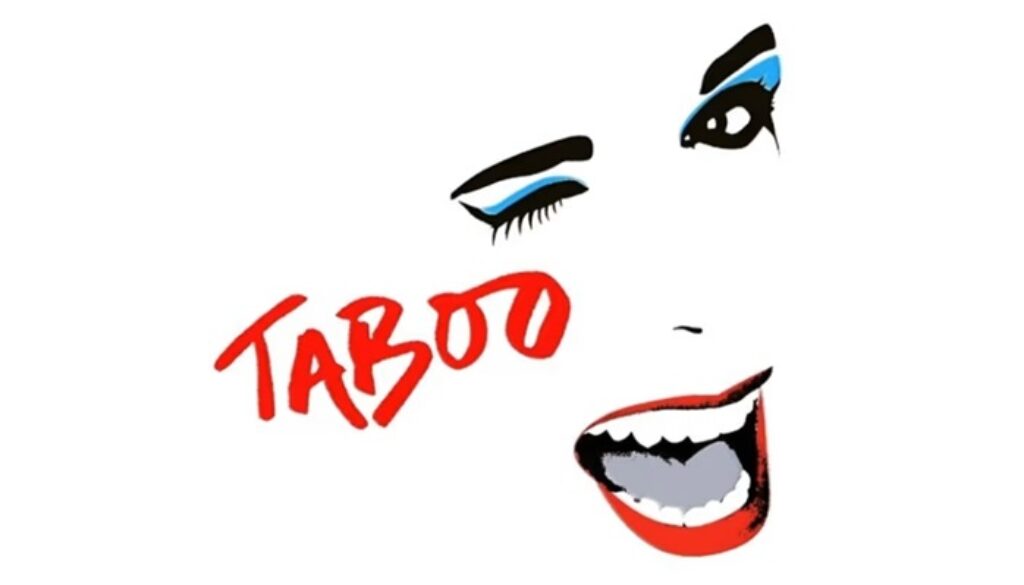
Taboo the Musical
Taboo
Original London Cast • A Musical Based on the New Romantic Era
Book by Mark Davies Markham (West End) • Revised by Charles Busch (Broadway)
Directed by Christopher Renshaw • Choreography by Les Child
Costumes by Mike Nicholls
Stranger In
This World
Taboo is a stage musical with a book by Mark Davies Markham (extensively rewritten for Broadway by Charles Busch), lyrics by Boy George, and music by George, John Themis, Richie Stevens and Kevan Frost. Set in London’s New Romantic club scene of the early 1980s, the show tells the stories of people connected to that world — some real, some fictional — culminating in the opening of the legendary Taboo club (1985–87) at the end of Act One. The creation of outrageous Australian designer and performance artist Leigh Bowery, the Taboo club was the epicentre of London’s underground arts and fashion scene.
The original West End production opened in January 2002 at The Venue, Leicester Square, and starred Euan Morton as Boy George, Matt Lucas as Leigh Bowery, Luke Evans as Billy (in his professional stage debut), and Dianne Pilkington as Kim. Critics acclaimed Morton’s performance as extraordinary — “a mesmerising performance that would literally be showstopping elsewhere” — noting he was “the spitting image of George in his youth.” The Guardian’s Michael Billington called the musical “impossible to dislike.”
Comedian and TV host Rosie O’Donnell was so taken with the show that she personally financed the Broadway transfer. Opening on 13 November 2003 at the Plymouth Theatre (now the Gerald Schoenfeld Theatre), the Broadway version featured Boy George himself playing Leigh Bowery, with Euan Morton reprising his role as George and Raúl Esparza as Philip Sallon. Hampered by mostly scathing reviews, the show closed after just 100 performances. Rosie O’Donnell reportedly lost her entire $10 million investment.
Background
& Creation
The Real World of Taboo — New Romantics & Club Kids
The musical draws on a remarkable real-world milieu: the New Romantic club scene that erupted in London in the early 1980s, centred on clubs like Blitz in Covent Garden (where Steve Strange famously served as doorman) and later the Taboo club itself. This scene produced some of the most outrageous, creative and influential figures in British popular culture: Boy George (then known as George O’Dowd), who would rise to global fame with Culture Club; Marilyn (Peter Robinson), George’s glam rival and friend; Steve Strange, lead singer of Visage; and above all, Leigh Bowery — the Australian-born designer, performance artist and club promoter whose extreme self-transformation made him one of the most extraordinary figures in 20th century art and fashion.
Leigh Bowery — The Heart of the Show
At the centre of the musical is Leigh Bowery (1961–1994) — an Australian-born designer and performance artist who arrived in London and became the creator and host of the Taboo club. Bowery’s outlandish appearance — creating increasingly extreme looks that blurred the boundary between fashion, performance art and body modification — made him an icon. He died of AIDS-related illness on New Year’s Eve 1994. He had been the subject of Lucian Freud’s paintings and was, in the words of those who knew him, simply unlike anyone else who had ever lived. The musical follows his story from his arrival in London through his death — charting his friendship with photographer Billy, his relationship with his assistant Big Sue (based on real-life Sue Tilley), and his HIV-positive status, of which he was characteristically defiant.
The Taboo Club (1985–87) — The Night That Changed Everything
The real Taboo club ran at Maximus, Leicester Square, London from 1985 to 1987. Created and hosted by Leigh Bowery, it was a club where the only rule was: there were no rules. Dress codes were enforced not to exclude the conventionally dressed but to require outrageousness — Bowery’s famous sign read “Dress as though your life depends on it, or don’t bother.” The club attracted artists, musicians, designers and performers at the extreme edge of London’s creative underground — and was simultaneously the zenith of the New Romantic era and the beginning of its end, as the AIDS crisis began to decimate the community. The show’s Act One climax — the opening of the club, in a number called “Everything Taboo” — captures the euphoria of that moment.
Boy George — Writing His Own Story
Boy George (George O’Dowd) wrote the music and lyrics for the show based on his own experiences in the New Romantic scene — a remarkable act of theatrical autobiography. The show chronicles his early life in Bromley, his move to London, his squatting with Philip Sallon, his friendship with Leigh Bowery and Marilyn, his rise to fame with Culture Club — including the recording of “Do You Really Want to Hurt Me” (which features as a moment in the show) — and his subsequent fall into drug addiction and arrest. The show includes both original songs and Culture Club classics including “Do You Really Want to Hurt Me,” “Church of the Poisoned Mind,” “Karma Chameleon” and “Bow Down Mister.”
The Story —
London,
1980s
Act One — Arrival, Scene & Celebrity
Philip Sallon introduces the audience to London’s New Romantic scene in Soho (“Ode to Attention Seekers”). In Bromley, aspiring photographer Billy fights with his Thatcher-era unemployed father Derek and decides to move to London (“Safe in the City”). In London, Billy meets Kim (an aspiring fashion designer) and George, with whom he is immediately fascinated. George kisses Billy, who runs off scared. They visit a club where Steve Strange premiers Visage’s “Fade to Grey” to an unappreciative crowd. Billy meets the outlandish Leigh Bowery in the men’s bathroom — instantly attracted to the photographer, Leigh gives him his number.
Billy and Kim fall for each other until George comes home and flirts with Billy, causing fights. George tells Marilyn he’s been asked to sing in a band — Culture Club (“Guttersnipe”). George records a demo but the producer realises the song is about another man; he substitutes a different song to please the producer (“Do You Really Want to Hurt Me”). Culture Club’s single hits Number 1. Leigh enters a talent contest and turns Billy into a New Romantic model called Spartacus (“Touched by the Hand of Cool”). Rumours spread that Billy is sleeping with Leigh, which devastates Kim. The night culminates with the opening of the Taboo club (“Everything Taboo”).
Act Two — Fame, Addiction & Loss
George, deeply affected by fame, begins taking drugs with Petal and Marilyn. Billy asks George for a job at Virgin Records as official photographer, but George has never set it up. Meanwhile Leigh stages himself behind glass in an art gallery as a work of art (“Ich Bin Kunst”) — refusing to go to hospital despite his HIV-positive status. George’s drug habit spirals out of control. Billy, believing exposure in the press will force George to seek help, gives a journalist photographs of George using drugs and the full story — taking no money. George is arrested for drug possession (“Do You Really Want to Hurt Me — Reprise”). Leigh dies of AIDS, with only his trusted friend Sue at his side (“Il Adore”).
Billy saves George from a knife attack by drug dealer Petal. George admits that Billy revealing his addiction to the press ultimately saved his life (“Pie in the Sky”). Billy travels to India to study with the Hare Krishnas, and invites George and the whole group to join him. They all go. Most return to London having found what they were looking for — but Billy decides to stay a little longer (“Bow Down Mister”). The company sings “Karma Chameleon” as they leave the stage.
The Songs —
Boy George’s
Musical World
The score combines original songs written by Boy George (with John Themis, Richie Stevens and Kevan Frost) with several Culture Club classics woven into the narrative. The West End cast album was released in 2002; the Broadway cast album in 2004.
★ = Culture Club / Boy George real songs incorporated into the narrative
The Characters
& Real People
The musical draws on a gallery of real figures from the 1980s New Romantic scene, presented as theatrical characters. Some are portrayed entirely faithfully; others are fictionalised composites.
The show’s co-protagonist — portrayed from his Bromley childhood through squatting in London, the formation of Culture Club, global fame and drug addiction. Euan Morton’s performance won universal praise as one of the finest theatrical impersonations ever seen. Boy George himself played Leigh Bowery in the Broadway production.
The show’s great comic and tragic figure — the flamboyant Australian designer whose creation of the Taboo club was the high point of the New Romantic era. Matt Lucas’s portrayal of Bowery was singled out by critics. Boy George himself played the role on Broadway, bringing an emotional authenticity to a man he had known personally. Bowery died of AIDS in 1994.
An aspiring photographer from Bromley who becomes drawn into the London underground through Philip Sallon — and who acts as the audience’s entry point into the world of the show. The role of Billy was Luke Evans’s professional stage debut, before he went on to become an internationally recognised film star. In the Broadway version, Billy became Marcus.
Based on the real Philip Sallon — a long-time figure on the London club scene and one of Boy George’s oldest friends — Philip serves as narrator and comic guide throughout the show. Paul Baker’s performance won the Olivier Award for Best Performance in a Supporting Role in a Musical. Baker also reprised the role in the 2012 Brixton revival.
An aspiring fashion designer and George’s squat-mate, who became the show’s female lead. Her arc — from insecure girl behind makeup to self-sufficient businesswoman — runs in parallel to the main storyline. Dianne Pilkington created the role with great warmth.
Based on Marilyn (Peter Robinson) — the flamboyant Jamaican-British singer who was Boy George’s great glam rival and close friend. The show charts Marilyn’s initial jealousy of George’s success and their eventual deep friendship, as both spiral into drug use together.
Based on Steve Strange (Steve Harrington), lead singer of Visage and doorman at the original Blitz club — the gatekeeper of the New Romantic scene who would famously turn away even Mick Jagger. His Visage hit “Fade to Grey” is performed in the show.
Based on Sue Tilley — Leigh Bowery’s close friend, assistant and confidante who was with him when he died on New Year’s Eve 1994. Tilley was later painted by Lucian Freud in a series of celebrated works. In the show, Big Sue is the most clear-eyed and emotionally honest figure around Leigh, serving as his conscience and carer.
Production History
Original West End Cast — The Venue, Leicester Square, 2002
| Role | Original West End Actor | Notes |
|---|---|---|
| George O’Dowd (Boy George) | Euan Morton | Olivier nominated; Theatre World Award Broadway; also reprised on Broadway |
| Leigh Bowery | Matt Lucas | Pre-Little Britain fame; pivotal role |
| Billy James | Luke Evans | Professional stage debut; later major film star |
| Kim | Dianne Pilkington | Female lead |
| Philip Sallon | Paul Baker | Olivier Award Best Supporting Role; reprised Brixton 2012 |
| Big Sue | Gail Mackinnon | Based on Sue Tilley |
| Josie James | Gemma Craven | Role written for Lyn Paul |
| Marilyn | Marc McGee | Based on Peter Robinson |
| Steve Strange | Drew Jaymson | Sings “Fade to Grey” (Visage) |
The world premiere of Taboo. Stars Euan Morton (George), Matt Lucas (Leigh Bowery), Luke Evans (Billy), Dianne Pilkington (Kim) and Paul Baker (Philip Sallon). Directed by Christopher Renshaw. Michael Billington in The Guardian: “impossible to dislike.” Paul Baker wins the Olivier Award for Best Supporting Role in a Musical. Euan Morton nominated for Best Actor.
Produced by Rosie O’Donnell at a cost of $10 million. New book by Charles Busch. Stars Boy George himself (as Leigh Bowery, credited as George O’Dowd), Euan Morton (reprising George), Raúl Esparza (Philip Sallon), Jeffrey Carlson (Marilyn). Mostly scathing reviews. Raúl Esparza wins Drama Desk Award for Outstanding Featured Actor. 3 Tony nominations. Closes 8 February 2004 after 100 performances. Rosie O’Donnell reportedly loses entire $10 million investment.
A UK tour ran concurrently with the Broadway production, bringing the show to regional theatres across the United Kingdom.
A revival of the original London production at the Brixton Club House. Directed by original director Christopher Renshaw. Stars Paul Baker reprising Philip Sallon, Sam Buttery (Leigh Bowery, from The Voice), Matthew Rowland (George), Alistair Brammer (Billy). Wins the WhatsOnStage Award for Best Off-West End Production 2013.
Awards &
Recognition
| Year | Award | Category | Nominee | Result |
|---|---|---|---|---|
| 2003 | Olivier Award ✦ | Best Performance in a Supporting Role in a Musical | Paul Baker (Philip Sallon) | Won ✦ |
| 2003 | Olivier Award | Best New Musical | Taboo | Nominated |
| 2003 | Olivier Award | Best Actor in a Musical | Euan Morton (George) | Nominated |
| 2003 | Olivier Award | Best Costume Design | Mike Nicholls | Nominated |
| 2004 | Tony Award | Best Original Score | Boy George | Nominated |
| 2004 | Tony Award | Best Leading Actor in a Musical | Euan Morton (George) | Nominated |
| 2004 | Tony Award | Best Featured Actor in a Musical | Raúl Esparza (Philip Sallon) | Nominated |
| 2004 | Tony Award | Best Costume Design | Nicholls & Pearce | Nominated |
| 2004 | Drama Desk Award ✦ | Outstanding Featured Actor in a Musical | Raúl Esparza | Won ✦ |
| 2004 | Drama Desk Award | Outstanding Actor in a Musical | Euan Morton / Jeffrey Carlson | Nominated |
| 2004 | Drama Desk Award | Outstanding Lyrics | Boy George | Nominated |
| 2004 | Theatre World Award ✦ | Outstanding Broadway Performance | Euan Morton | Won ✦ |
| 2013 | WhatsOnStage Award ✦ | Best Off-West End Production | Brixton Club House revival | Won ✦ |