La Cage aux Folles The Musical: Complete Guide – Broadway, West End & World Productions| Cast, Songs, Plot & Awards
La Cage Aux Folles - Podcast
Memorabilia Available Here
Allan Carr · Fritz Holt · Barry Brown Present
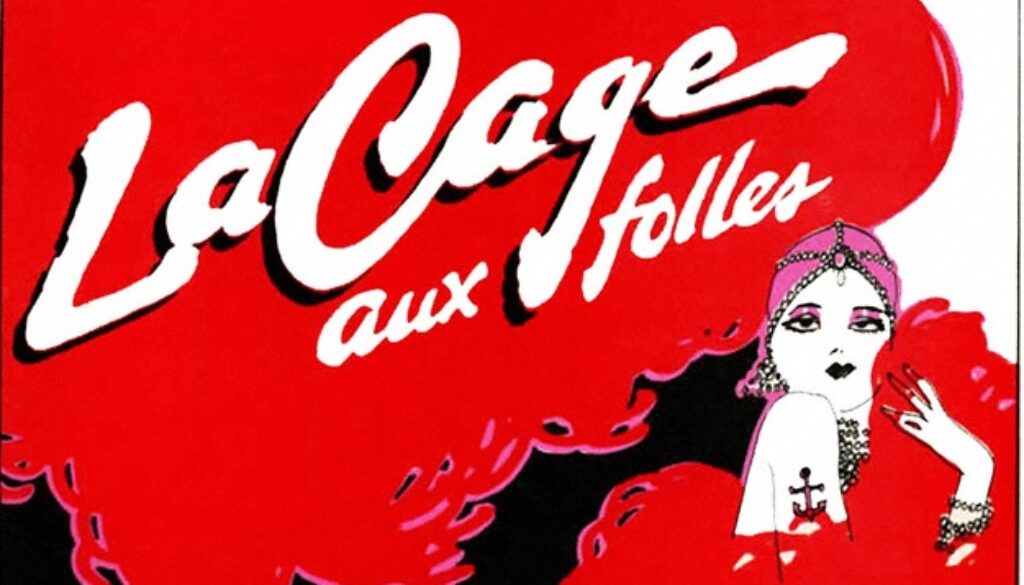
La Cage aux Folles The Musical
The Sensational Musical Comedy
Background & Historical Significance
La Cage aux Folles is a landmark musical with music and lyrics by Jerry Herman and a book by Harvey Fierstein, based on the 1973 French play of the same name by Jean Poiret. Set in the glittering, sun-drenched world of a drag nightclub in Saint-Tropez, the show tells the story of Georges and Albin — a gay couple who have lived and loved together for over twenty years — whose lives are upended by a farcical collision between their flamboyant world and the rigid hypocrisy of a far-right politician.
Opening on Broadway in 1983, La Cage aux Folles made history by becoming the first hit Broadway musical centred on a homosexual relationship. At a time when the AIDS crisis was intensifying homophobia across America and the wider world, the show’s decision to present its gay couple as loving, dignified, and fundamentally relatable was an act of quiet but profound cultural courage. Its Act One finale, “I Am What I Am,” was rapidly embraced as a gay anthem, recorded by artists from Gloria Gaynor to Shirley Bassey, and became a rallying call for the emerging Gay Pride movement worldwide.
The original Broadway production ran for more than four years, accumulating 1,761 performances and winning six Tony Awards, including Best Musical, Best Book, and Best Score. The show has since been revived on Broadway twice, each time winning the Tony for Best Revival — making it the first musical in history to win that award on two separate occasions. It has also won the Laurence Olivier Award for Best Musical Revival and been produced in dozens of countries around the world.
Creation: How La Cage Was Made
The road to the Palace Theatre was anything but straightforward. Producer Allan Carr — who had produced the enormously successful film adaptation of Grease (1978) — was eager to make his Broadway debut. He believed a musical version of the popular 1978 French film La Cage aux Folles would be the ideal vehicle, but was unable to secure the film rights and had to settle for the rights to Jean Poiret’s original stage play instead.
Carr’s first attempt at assembling a creative team ended badly. He hired Jay Presson Allen to write the book for an Americanised version called The Queen of Basin Street, set in New Orleans, with Maury Yeston composing the score, Mike Nichols set to direct, and Tommy Tune as choreographer. When Carr brought in executive producers Fritz Holt and Barry Brown, they immediately dismissed the entire creative team Carr had assembled. Legal action followed from all parties; Yeston alone prevailed and later received a modest ongoing royalty from the production.
Holt and Brown approached director Arthur Laurents — who had directed the celebrated 1974 revival of Gypsy — though Laurents was openly sceptical. He had little enthusiasm for drag entertainment and privately doubted whether investors could be found for a gay-themed project during the early years of the AIDS epidemic. He agreed primarily out of loyalty to Holt and Brown as friends, but his interest sharpened considerably when he learned that Harvey Fierstein and Jerry Herman had committed to the project.
Writing the Show
The three principal creative figures — Fierstein, Herman, and Laurents — met daily in Herman’s Manhattan townhouse to develop the musical. Working only from the Poiret play (not the film) meant they had to create the character of Jean-Michel’s birth mother from scratch and focus the story’s emotional heart on the remarkable fact that the relationship between Georges and Albin was so natural and enduring that their son could genuinely regard a man as his mother.
All three agreed that Albin needed to be as glamorous as possible, and the celebrated costume designer Theoni V. Aldredge was engaged to realise that vision. The team also agreed from the outset that rather than creating what Laurents described as “a polemic diatribe on gay rights,” they would take Herman’s instinct for warm, mainstream, emotionally generous entertainment and deliver their message through a show that, as Herman wrote in his memoir Showtune, was “a charming, colorful, great-looking musical comedy — an old-fashioned piece of entertainment.” The team’s view was that by delivering their sentiments in an entertaining rather than confrontational manner, they would reach and move a far wider audience.
The Birth of “I Am What I Am”
There are differing accounts of how the show’s most celebrated number came to be. According to Laurents, when he first met Fierstein and Herman the only musical material in existence was Herman’s song “I Am What I Am,” and Laurents immediately envisioned it as an emotional outburst closing Act One. Herman’s own account, given in interviews included with the original cast recording, credits Fierstein with arriving one day with a fiery dramatic scene he had written for the Act One finale, which contained the five words “I am what I am.” Delighted, Herman reportedly asked if he could use those words, promised a finished song by morning — and delivered it.
The Boston Try-Out
The production undertook a pre-Broadway try-out in Boston. Just before the second preview (the first had been cancelled due to mechanical set problems), Herman suffered a panic attack, fearing that the city would be too conservative to respond warmly to a gay-themed musical. In the event, Boston audiences were enthusiastic. During the try-out, the creative team grappled with whether to have Georges and Albin physically demonstrate their affection on stage. Fierstein suggested they kiss on the cheeks; Laurents, noting that French men routinely kiss each other on both cheeks as a social custom, agreed.
The other significant pre-opening challenge involved Gene Barry, who played Georges. By general consensus, Barry was considered adequate but not outstanding in the role, and there was serious discussion about replacing him before opening night. Ultimately Laurents found a directorial solution: he instructed Barry always to look directly into George Hearn’s eyes whenever both men were on stage, so the audience would feel the depth of the couple’s bond. He also gave Georges’s introductions of the nightclub acts more musical flourish. These adjustments proved transformative. Barry went on to receive a Tony nomination for Best Actor, while his co-star Hearn took the award.
The Plot: A Comedy in Two Acts
The story unfolds in and around La Cage aux Folles, a celebrated drag nightclub on the glamorous Promenade in Saint-Tropez, France, run by Georges and starring his partner Albin as the fabulous drag queen Zaza.
Georges welcomes the audience to his beloved nightclub, introducing Les Cagelles — the show’s glamorous ensemble of drag performers. We learn that Georges and Albin have lived and loved together above the club for many years, sharing their home with their flamboyant “maid” Jacob. Their domestic contentment is shattered when Georges’s 24-year-old son Jean-Michel — the product of a long-past heterosexual liaison — arrives with the news that he intends to marry Anne Dindon. The complication: Anne’s father is Edouard Dindon, a prominent ultra-conservative politician whose stated political mission is the closure of drag nightclubs like La Cage aux Folles.
Jean-Michel asks his father to pass Albin off as his uncle for the Dindons’ visit and to hide the truth about their life. When Albin learns of this plan, he is devastated. After failing to suppress his feelings of hurt, he takes the stage alone, announces who he is, and defiantly declares that he refuses to be ashamed. As Act One ends, Albin storms out, throwing his wig at Georges in fury.
Georges eventually persuades Albin to return and impersonate Jean-Michel’s respectable, pearl-wearing “mother” for the Dindons’ visit. After elaborate preparations, the dinner descends into farce: the Dindons arrive, Jacob burns the food, and the party adjourns to the restaurant Chez Jacqueline, owned by their old friend. There, Jacqueline unwittingly asks Albin to perform, and in an unguarded moment of joy and professional instinct, Albin tears off his wig and reveals himself as Zaza.
The Dindons are appalled and demand Anne leave Jean-Michel, but she refuses. Jean-Michel, ashamed of how he has treated Albin, begs his forgiveness and receives it. When the Dindons try to escape the media now gathered outside — tipped off by the arrival of the notorious anti-gay politician at a drag establishment — Georges offers them a way out through La Cage itself. In the farcical finale, the Dindons escape the photographers disguised as members of Les Cagelles, and the story ends with Georges and Albin reunited, their love as strong as ever.
Principal Characters
| Character | Voice Type | Description |
|---|---|---|
| Albin (Zaza) | Baritone | The ageing star of La Cage aux Folles, who performs as drag queen Zaza, and Georges’s devoted husband of over twenty years. The showier of the two lead roles, with most of the major musical numbers. |
| Georges | Bass | Owner and charismatic master of ceremonies of La Cage; Albin’s husband, Jean-Michel’s father. The emotional anchor of the show. |
| Jean-Michel | Tenor | Georges’s 24-year-old son from a youthful heterosexual encounter, raised by both Georges and Albin. His engagement triggers the plot. |
| Jacob | Tenor | Albin and Georges’s unconventional “maid” who secretly yearns to perform on the La Cage stage. A source of much of the show’s comedy. |
| Jacqueline | Alto | Albin and Georges’s stylish and fiercely loyal friend, owner of the elegant Chez Jacqueline restaurant. |
| Anne Dindon | Mezzo-Soprano | Jean-Michel’s fiancée; loving and ultimately unswayed by her parents’ bigotry. |
| Edouard Dindon | Bass | Anne’s ultra-conservative father and deputy leader of the Tradition, Family and Morality Party — the show’s chief comic antagonist. |
| Marie Dindon | Soprano | Anne’s mother; Edouard’s compliant but eventually compromised wife. |
| Francis | — | Stage manager of La Cage aux Folles. |
| Les Cagelles | Ensemble | The twelve drag performers who form the chorus of La Cage (reduced to six in the 2010 Broadway revival). Named: Angelique, Bitelle, Chantal, Clo-Clo, Dermah, Hanna, Lo Singh, Mercedes, Monique, Nicole, Odette, and Phaedra. |
Songs & Musical Numbers
Jerry Herman’s score moves from jubilant nightclub spectacle to tender ballads and satirical comedy, drawing on classic Broadway show-tune tradition while also achieving something genuinely timeless in its anthemic centrepiece. Below are the principal numbers:
We Are What We Are
[A Little More] Mascara
With Anne on My Arm
With You on My Arm
Song on the Sand
La Cage aux Folles
I Am What I Am (Act One Finale)
Song on the Sand (Reprise)
Masculinity
Look Over There
Dishes (Cocktail Counterpoint)
The Best of Times
Look Over There (Reprise)
La Cage aux Folles (Reprise)
Finale: With You on My Arm / La Cage aux Folles / Song on the Sand / The Best of Times
“I Am What I Am” became one of the most recorded numbers to emerge from any Broadway show, with notable versions by Gloria Gaynor, Shirley Bassey, Tony Bennett, John Barrowman and many others. It entered the cultural mainstream as a defining anthem of self-acceptance and Gay Pride. “The Best of Times” was recorded by Perry Como for his 1987 album Today, and featured memorably in the finale of Jackass 2.
Original Broadway Production (1983–1987)
Palace Theatre, New York — Opening Night: 21 August 1983
The original production opened at the Palace Theatre on 21 August 1983, directed by Arthur Laurents and choreographed by Scott Salmon. Set design was by David Mitchell, costumes by the legendary Theoni V. Aldredge, and lighting by Jules Fisher.
Original Cast
Gene Barry as Georges · George Hearn as Albin · John Weiner as Jean-Michel · Jay Garner as Edouard Dindon · Merle Louise as Mme. Dindon · Elizabeth Parrish as Jacqueline · Leslie Stevens as Anne · William Thomas Jr. as Jacob
Notable Replacements (1983–1987)
Albin: Walter Charles · Lee Roy Reams
Georges: Van Johnson · Peter Marshall · Keith Michell · Jamie Ross
Run & Legacy
The original production ran for four years and 1,761 performances, closing on 15 November 1987. It received nine Tony Award nominations, winning six — beating strong competition including Stephen Sondheim’s Sunday in the Park with George in several categories. Theatre historian John Kenrick noted that following La Cage and Big River in 1985, it would be “the first time since Oklahoma!” that a full decade would pass without a new American musical reaching 1,000 performances.
Original West End Production (1986)
Opening Night: 7 May 1986 — 301 Performances
The show had its West End premiere at the iconic London Palladium on 7 May 1986, using the same creative team as the Broadway production. George Hearn transferred from the Broadway cast as Albin — made possible through an agreement between the American and British actors’ unions, in which Hearn came to London in exchange for Robert Lindsay appearing in Me and My Girl on Broadway.
West End Cast
George Hearn as Albin · Denis Quilley as Georges · Jonathon Morris as Jean-Michel · Brian Glover as Edouard Dindon · Julia Sutton as Mme. Dindon · Phyllida Law as Jacqueline · Wendy Roe as Anne · Donald Waugh as Jacob
Reception & Closure
The London production closed after 301 performances. Its shorter-than-expected run and financial difficulties were partly attributed to the intensifying AIDS crisis, which created a climate in which mainstream producers were reluctant to publicly celebrate gay lives on stage. The show’s London failure had a chilling effect on the genre for some years.
First Broadway Revival (2004–2005)
Marquis Theatre — Opening Night: 9 December 2004
The first Broadway revival opened at the Marquis Theatre, beginning previews on 11 November 2004 and opening officially on 9 December 2004. Direction was by Jerry Zaks, choreography by Jerry Mitchell, with design by Scott Pask, Donald Holder, and costumes by William Ivey Long.
Cast
Gary Beach as Albin · Daniel Davis as Georges · Gavin Creel as Jean-Michel · Michael Mulheren as Edouard Dindon · Linda Balgord as Mme. Dindon · Ruth Williamson as Jacqueline · Angela Gaylor as Anne · Michael Benjamin Washington as Jacob
Notable Replacements: John Hillner and then Robert Goulet replaced Daniel Davis as Georges (from April 2005 until closing).
Reception & Run
The revival received mixed critical notices, with the New York Times observing it went through the motions of the material “amiably but robotically,” though it singled out Les Cagelles for particular praise. Despite winning the Tony for Best Revival, ticket sales did not improve post-award and the production had been running below 60% capacity for months before its closure on 26 June 2005.
West End Revival: Menier Chocolate Factory & Playhouse Theatre (2008–2010)
Menier Chocolate Factory (Jan–Mar 2008) → Playhouse Theatre (Oct 2008–Jan 2010)
A striking scaled-down revival, directed by Terry Johnson and choreographed by Lynne Page, opened at the intimate Menier Chocolate Factory on 8 January 2008. The production starred Philip Quast as Georges and Douglas Hodge as Albin, with Neil McDermott, Iain Mitchell, and Una Stubbs also in the cast. It received mostly positive notices, with particular praise for Hodge’s performance.
The production transferred to the Playhouse Theatre in the West End on 20 October 2008, co-produced with Sonia Friedman Productions. The transfer starred Douglas Hodge as Albin alongside Denis Lawson as Georges, with Iain Mitchell, Paula Wilcox, and Tracie Bennett as Jacqueline. What had been advertised as a strictly limited twelve-week season became an open-ended run due to its exceptional success. The production gathered rave reviews and won the Laurence Olivier Award for Best Musical Revival, with Hodge also winning Best Actor in a Musical.
Rotating Cast — West End (2008–2010)
The leads were recast every three months to sustain public interest:
Jan–May 2009: Graham Norton as Albin · Steven Pacey as Georges
May–Sep 2009: Roger Allam as Albin · Philip Quast as Georges (reprising his Menier role)
Sep–Nov 2009: John Barrowman as Albin · Simon Burke as Georges
Nov 2009–Jan 2010: Douglas Hodge & Denis Lawson returned for the final weeks
The West End production closed on 2 January 2010 ahead of its transfer to Broadway.
Second Broadway Revival (2010–2011)
Longacre Theatre — Opening Night: 18 April 2010 · 433 Performances
The acclaimed Menier/Playhouse Theatre production transferred to Broadway at the Longacre Theatre, beginning previews on 6 April 2010 and opening officially on 18 April 2010. The production was again directed by Terry Johnson and choreographed by Lynne Page, with set design by Tim Shortall, costumes by Matthew Wright, lighting by Nick Richings, and scaled-down eight-player orchestrations by Jason Carr.
Cast
Douglas Hodge as Albin · Kelsey Grammer as Georges · A.J. Shively (Broadway debut) as Jean-Michel · Robin de Jesús as Jacob · Fred Applegate as Edouard Dindon · Veanne Cox as Mme. Dindon · Christine Andreas as Jacqueline · Elena Shaddow as Anne
Les Cagelles included Nick Adams, Logan Keslar, Sean Patrick Doyle, Nicholas Cunningham, Terry Lavell, and Yurel Echezarreta.
Notable Replacements (2010–2011)
Allyce Beasley replaced Veanne Cox as Mme. Dindon (from September 2010). Jeffrey Tambor replaced Kelsey Grammer as Georges (from February 2011), but withdrew within days. Harvey Fierstein — the show’s own librettist — replaced Douglas Hodge as Albin (from February 2011). Wilson Jermaine Heredia replaced Robin de Jesús as Jacob. Christopher Sieber replaced Tambor as Georges (from March 2011).
Reception & Awards
The revival received positive reviews, with critics praising both the scaled-down intimacy of the production and the performances of Hodge and Grammer. It received 11 Tony Award nominations, winning for Best Revival, Best Actor in a Musical (Douglas Hodge), and Best Direction. The production closed on 1 May 2011 after 433 performances and 15 previews. A cast recording was released by PS Classics on 28 September 2010.
Tours & Other Major Productions
Starring Walter Charles (Albin) & Keith Michell (Georges)
The first national tour starred Walter Charles as Albin, Keith Michell as Georges, and Joseph Breen as Jean-Michel. Michell had already played Georges in the Broadway production and would go on to repeat the role in the 1985 Australian premiere.
Starring Keene Curtis (Albin) & Peter Marshall (Georges)
The second tour starred Keene Curtis as Albin and Peter Marshall as Georges, with Peter Reardon as Jean-Michel. Marshall had also played Georges as a Broadway replacement in the original production.
Starring Harvey Evans (Albin) & Larry Kert (Georges)
The third tour starred Harvey Evans as Albin and the celebrated Larry Kert — original Tony from the Broadway premiere of West Side Story — as Georges, with Dan O’Grady as Jean-Michel.
Based on the 2010 Broadway Revival — Starring Christopher Sieber & George Hamilton
A national tour modelled on the acclaimed 2010 Broadway revival began in September 2011 in Des Moines, Iowa. George Hamilton starred as Georges and Christopher Sieber as Albin, making his national tour debut. Harvey Fierstein had initially been approached to play Georges (with Sieber as Albin, inverting their Broadway roles) but declined due to his commitments writing the books for Newsies and Kinky Boots.
New Theatre Oxford & UK-wide — Opening: 5 January 2017
The first-ever UK national tour of La Cage aux Folles was produced by Bill Kenwright and opened at the New Theatre, Oxford on 5 January 2017. The cast starred John Partridge as Albin, Adrian Zmed as Georges, and Marti Webb as Jacqueline. Direction was by Martin Connor, choreography by Bill Deamer, design by Gary McCann, and musical direction by Mark Crossland.
London — 29 July to 23 September 2023
A production directed by Timothy Sheader (artistic director of the venue) starred Carl Mullaney as Albin, Billy Carter as Georges, and John Owen-Jones as Edouard Dindon. The open-air setting of Regent’s Park provided a fresh and atmospheric staging for the show.
International Productions
La Cage aux Folles has been produced in a remarkable number of countries, often adapted to reflect local cultures and languages. Below are notable international productions:
Major Casting History: 1983–2017
| Character | Broadway 1983 | West End 1986 | Broadway Revival 2004 | West End Revival 2008 | Broadway Revival 2010 | UK Tour 2017 |
|---|---|---|---|---|---|---|
| Albin (Zaza) | George Hearn | George Hearn | Gary Beach | Douglas Hodge (later Graham Norton, Roger Allam, John Barrowman) |
Douglas Hodge (later Harvey Fierstein) |
John Partridge |
| Georges | Gene Barry | Denis Quilley | Daniel Davis (later Robert Goulet) |
Denis Lawson (later Steven Pacey, Philip Quast, Simon Burke) |
Kelsey Grammer (later Jeffrey Tambor, Christopher Sieber) |
Adrian Zmed |
| Jean-Michel | John Weiner | Jonathon Morris | Gavin Creel | Stuart Neal | A.J. Shively | Dougie Carter |
| Jacob | William Thomas Jr. | Donald Waugh | Michael Benjamin Washington | Jason Pennycooke | Robin de Jesús (later Wilson Jermaine Heredia) |
Samson Ajewole |
| Jacqueline | Elizabeth Parrish | Phyllida Law | Ruth Williamson | Tracie Bennett | Christine Andreas | Marti Webb |
| Anne Dindon | Leslie Stevens | Wendy Roe | Angela Gaylor | Alicia Davies | Elena Shaddow | Alexandra Robinson |
| Edouard Dindon | Jay Garner | Brian Glover | Michael Mulheren | Iain Mitchell | Fred Applegate (later Michael McShane) |
Paul F. Monaghan |
| Mme. Dindon | Merle Louise | Julia Sutton | Linda Balgord | Paula Wilcox | Veanne Cox (later Allyce Beasley) |
Su Douglas |
US National Tours — Casting History
| Role | 1st Tour 1984–85 | 2nd Tour 1984–86 | 3rd Tour 1987–88 | 4th Tour 2011–12 |
|---|---|---|---|---|
| Albin | Walter Charles | Keene Curtis | Harvey Evans | Christopher Sieber |
| Georges | Keith Michell | Peter Marshall | Larry Kert | George Hamilton |
| Jean-Michel | Joseph Breen | Peter Reardon | Dan O’Grady | Billy Harrigan Tighe |
| Jacqueline | Carol Teitel | Le Clanché du Rand | Sheila Smith | Gay Marshall |
| Edouard Dindon | Robert Burr | Bob Carroll | Bob Carroll | Bernard Burak Sheredy |
Critical Reception & Cultural Legacy
The original 1983 production was met with widespread critical enthusiasm. The New York Times‘s Frank Rich praised the show on opening night, and the response from both critics and audiences helped make the 1983 Broadway season one of the strongest in memory. Theatre historian John Kenrick noted that La Cage and Big River together defined a high watermark for American musical theatre in the mid-1980s.
The 2008 West End revival at the Menier Chocolate Factory and subsequent Playhouse Theatre run received some of the strongest reviews of any La Cage production. The scaled-down, emotionally intimate approach was widely praised, with Michael Billington of The Guardian noting that the show had improved on its transfer from Menier to the West End. Whatsonstage.com called it “a great Broadway show reborn as a classic musical comedy with real punch and pizzazz.” Douglas Hodge’s performance as Albin was universally singled out as exceptional.
The 2010 Broadway revival also drew strong notices. Reviewers praised both the intimacy of the scaled-down production and the chemistry between Hodge and Kelsey Grammer, the latter making an unexpectedly touching impression in what had been seen as a risky piece of celebrity casting.
Beyond its critical reception, the show’s lasting cultural significance rests on two foundations: its historic role as the first hit Broadway musical to centre gay love at a time of intense social hostility; and the enduring reach of “I Am What I Am,” which entered the vocabulary of the Gay Pride movement and has been sung as an anthem of self-acceptance in contexts far beyond the theatre.
Awards & Nominations
Tony Awards — Original Broadway Production 1984
| Category | Nominee | Result |
|---|---|---|
| Best Musical | La Cage aux Folles | Won |
| Best Book of a Musical | Harvey Fierstein | Won |
| Best Original Score | Jerry Herman | Won |
| Best Leading Actor in a Musical | George Hearn | Won |
| Best Leading Actor in a Musical | Gene Barry | Nominated |
| Best Direction of a Musical | Arthur Laurents | Won |
| Best Choreography | Scott Salmon | Nominated |
| Best Costume Design | Theoni V. Aldredge | Won |
| Best Lighting Design | Jules Fisher | Nominated |
Drama Desk Awards — 1984
| Category | Nominee | Result |
|---|---|---|
| Outstanding Book of a Musical | Harvey Fierstein | Nominated |
| Outstanding Actor in a Musical | George Hearn | Won |
| Outstanding Actor in a Musical | Gene Barry | Nominated |
| Outstanding Music | Jerry Herman | Won |
| Outstanding Lyrics | Jerry Herman | Nominated |
| Outstanding Costume Design | Theoni V. Aldredge | Won |
| Outstanding Orchestrations | Jim Tyler | Nominated |
| Outstanding Lighting Design | Jules Fisher | Nominated |
Tony Awards — First Broadway Revival 2005
| Category | Nominee | Result |
|---|---|---|
| Best Revival of a Musical | La Cage aux Folles | Won |
| Best Leading Actor in a Musical | Gary Beach | Nominated |
| Best Choreography | Jerry Mitchell | Won |
| Best Costume Design | William Ivey Long | Nominated |
| Drama Desk — Outstanding Revival | La Cage aux Folles | Won |
| Drama Desk — Outstanding Choreography | Jerry Mitchell | Won |
Laurence Olivier Awards — West End Revival 2009
| Category | Nominee | Result |
|---|---|---|
| Best Musical Revival | La Cage aux Folles | Won |
| Best Actor in a Musical | Douglas Hodge | Won |
| Best Actor in a Musical | Denis Lawson | Nominated |
| Best Supporting Role in a Musical | Jason Pennycooke | Nominated |
| Best Director of a Musical | Terry Johnson | Nominated |
| Best Theatre Choreographer | Lynne Page | Nominated |
| Best Costume Design | Matthew Wright | Nominated |
Tony Awards — Second Broadway Revival 2010
| Category | Nominee | Result |
|---|---|---|
| Best Revival of a Musical | La Cage aux Folles | Won |
| Best Leading Actor in a Musical | Douglas Hodge | Won |
| Best Leading Actor in a Musical | Kelsey Grammer | Nominated |
| Best Featured Actor in a Musical | Robin de Jesús | Nominated |
| Best Direction of a Musical | Terry Johnson | Won |
| Best Choreography | Lynne Page | Nominated |
| Best Orchestrations | Jason Carr | Nominated |
| Best Scenic Design | Tim Shortall | Nominated |
| Best Costume Design | Matthew Wright | Nominated |
| Best Lighting Design | Nick Richings | Nominated |
| Best Sound Design | Jonathan Deans | Nominated |
| Drama Desk — Outstanding Revival | La Cage aux Folles | Won |
| Drama Desk — Outstanding Actor | Douglas Hodge | Won |
| Drama Desk — Outstanding Costume Design | Matthew Wright | Won |
Links
La Cage Aux Follies – Memorabilia
Chess the Musical – Memorabilia
Little Shop of Horrors – Memorabilia
Starlight Express – Memorabilia
Dear Evan Hansen – Memorabilia
How to Succeed in Business Without Really Trying – Memorabilia
Terrence McNally – Memorabilia