Luke Evans: Tony Nominated for Rocky Horror Show Broadway 2026
Luke Evans: The Boy from the Welsh Valleys Who Became Frank-N-Furter — and Earned a Tony Nomination on His Broadway Debut
From a strict Jehovah’s Witness childhood in Aberbargoed, south Wales, to a scholarship at the London Studio Centre, the West End, Hollywood blockbusters, and finally — at forty-seven — his first Broadway performance as one of theatre’s most iconic characters. This is the story of Luke Evans, and it is entirely extraordinary.
Born in the Valleys: Aberbargoed, Faith, and the Long Road to London
There are origin stories that seem designed to illustrate the power of human will and the unpredictability of destiny, and Luke Evans’s is one of them. He was born on 15 April 1979 in Pontypool, a market town in Torfaen, south Wales, and grew up in the small community of Aberbargoed — a village in the Rhymney Valley, Caerphilly, deep in the South Wales coalfields. His father, David Evans, was a bricklayer; his mother, Yvonne, a cleaner. He was an only child.
The household in which Luke Evans grew up was governed by the practices and prohibitions of the Jehovah’s Witnesses — a religious community that shaped his earliest years in ways he has written about with remarkable candour in his 2024 memoir, Boy from the Valleys: My Unexpected Journey. While other children of his age watched Saturday morning television, the young Evans dressed in a suit and tie and knocked on neighbours’ doors to spread the faith. He felt, from an early age, different from the community around him — different in his religious practice, and eventually different in his sexuality as he came to terms, gradually and painfully, with being gay.
At sixteen, he left the Jehovah’s Witnesses. At seventeen, he left home — moving to Cardiff, then to London, seeking something that his village and his faith could not provide. He had already discovered singing, first through formal lessons with a vocal coach named Louise Ryan in Cardiff, and later through the kinds of instinctive teenage musical exploration that tell you, if you’re listening carefully, what you’re actually for. In 1997, he won a scholarship to the London Studio Centre — a performing arts college in north London specialising in musical theatre — graduating in 2000 with the technical foundation that would support two decades of professional performance.
The story Evans tells in his memoir — of a queer boy from a Welsh mining valley, raised in a faith that had no place for who he was, finding his way through scholarship and stubbornness to the stages of London and eventually to the stages of the world — is one of the defining narratives of his public persona. It is also the reason that his casting as Dr. Frank-N-Furter — the ultimate symbol of joyful, defiant queer liberation in popular culture — feels not merely appropriate but genuinely resonant. Frank-N-Furter is who Luke Evans was always, in some sense, travelling toward.
Eight Years on the West End: From Ensemble to the Donmar
Luke Evans spent the eight years between his graduation from the London Studio Centre in 2000 and his film debut in 2010 building a West End and London stage career of genuine distinction. It was not an immediate, linear ascent to stardom; it was the patient, professional accumulation of experience across a range of roles and productions that equipped him for the later career he could not yet foresee. This period is often underacknowledged in profiles that prefer the Hollywood narrative, but it is the foundation of everything Evans has achieved as a performer.
His West End credits from this era are a comprehensive survey of the productions that defined London musical theatre in the early 2000s. He appeared in La Cava — a West End musical that gave him early exposure to the technical demands of professional stage production. He was in Taboo — Boy George’s autobiographical musical, which played at the Shaftesbury Theatre and introduced him to the specifically queer theatrical sensibility that would become a recurring thread in his work. He performed in Avenue Q, the irreverent puppet musical that became one of the defining Off-Broadway and West End hits of its era. He appeared in fringe productions across London and performed at the Edinburgh Festival, building range and flexibility across small and large venues.
Most significantly, he appeared in two major productions at the Donmar Warehouse — the intimate, prestigious venue in Covent Garden that has been the launchpad for some of the most distinguished careers in contemporary British theatre. The first was Small Change (2008), written and directed by Peter Gill, in which Evans played Vincent. It was a performance that drew unusual attention: film casting directors and US talent agencies noticed him, and he received a nomination for the Evening Standard Award for Outstanding Newcomer — one of British theatre’s most coveted early-career recognitions. The second Donmar production was Piaf (2008-09), in which he played Yves Montand — the legendary French actor and singer who was among Édith Piaf’s most famous lovers — opposite Elena Roger as Piaf. The role required him to embody one of the twentieth century’s great male stage presences within a production that was itself one of the West End’s most celebrated of its year.
His West End career also included the productions that most directly prefigure his Broadway debut. He played Roger in Rent (2007-08) at the Duke of York’s Theatre — Jonathan Larson’s landmark rock musical about Bohemian artists in New York confronting AIDS, love, and loss. The role of Roger is one of the great contemporary leading-man parts for a singer-actor with Evans’s combination of rock vocal range and dramatic intensity. And he appeared in Miss Saigon — both on the UK national tour (2001-03, playing Chris) and later in London productions — another piece of evidence that the productions that have shaped Evans’s theatrical identity are precisely the ones that deal most urgently with love, political conflict, and the bodies caught between them.
For his Broadway debut, Evans knows a thing or two about the famous antici…pation The Rocky Horror Show instills in its audience. The role marks a full-circle career moment: Evans first performed “Sweet Transvestite” early in his career — and now he’s performing it on Broadway for the first time.
Broadway.com Editor-in-Chief Paul Wontorek, Broadway.com interview, 2026Hollywood Calling: From Clash of the Titans to Gaston and Beyond
Evans’s transition from the West End to Hollywood began with a film audition at the age of thirty — a late start, by the standards of most actors who arrive in the film industry in their early or mid-twenties, but one that gave him an unusual advantage: a decade of professional stage experience that most of his screen contemporaries simply did not possess. His first film role was in the 2010 remake of Clash of the Titans, playing the god Apollo — a relatively small role but one that introduced him to the visual and technical vocabulary of large-scale film production and demonstrated to the industry that his stage presence translated powerfully to camera.
What followed was one of the most sustained and varied runs of franchise and prestige casting in modern Hollywood. In 2011 he appeared in Immortals, playing Zeus. He played the villainous Owen Shaw — one of the franchise’s most effective antagonists — in Fast & Furious 6 (2013), bringing exactly the kind of precise, intelligent malevolence that the role required. He played Bard the Bowman in Peter Jackson’s three-part adaptation of The Hobbit (2013-14), a rare hero role in the midst of what was predominantly a villain career. He starred in Dracula Untold (2014), playing the origin story of the most famous monster in gothic fiction. He appeared in The Three Musketeers (2011) and in The Raven (2012) alongside John Cusack.
His most globally recognisable screen role arrived with Disney’s live-action adaptation of Beauty and the Beast (2017), in which he played Gaston — the magnificently vain, magnificently muscled village hero whose romantic obsession with Belle becomes the film’s driving antagonist force. Evans’s Gaston is a performance of delicious, knowing excess: exactly the right register for a character who is himself a parody of masculine self-regard, and who provides the film’s comic relief even as he escalates toward genuine menace. The film was a global phenomenon, grossing over $1.2 billion worldwide, and cemented Evans’s status as one of the most recognisable faces in international entertainment.
His television career has been equally distinguished. He starred as John Moore in TNT’s prestige period drama The Alienist (2018-2020) alongside Daniel Brühl and Dakota Fanning — a performance that drew some of his warmest critical notices for screen work, demonstrating a sensitivity and depth that his franchise villain roles rarely asked of him. He appeared alongside Nicole Kidman in Nine Perfect Strangers (Hulu, 2021), in Apple TV+’s thriller Echo 3, and in the BBC’s The Pembrokeshire Murders. He has released two studio albums — At Last (2019) and A Song for You (2023) — on BMG Records, exploring his voice in a musical context quite different from anything his stage or screen work had required.
Throughout this remarkable screen career, Evans maintained a consistent and publicly expressed desire to return to the stage — specifically, to make his Broadway debut. As he told Broadway.com, playing Frank-N-Furter represents a full-circle career moment: he had performed “Sweet Transvestite” early in his career, and the chance to do it on Broadway was the realisation of a long-held aspiration. “I’m giddy to crack this untamable classic open with the razor-sharp Luke Evans at the center,” director Sam Pinkleton said — words that Evans has described as capturing exactly why he said yes.
The Rocky Horror Show: The Cult Classic That Changed Everything
The Rocky Horror Show is one of the most remarkable artefacts in the history of popular culture. Written and composed by Richard O’Brien — the British actor, writer, and performer best known for his role as Riff Raff in the original production — the show premiered at the Royal Court Theatre Upstairs in London in June 1973, during a period when glam rock was transforming British popular music and queer sensibilities were beginning to find expression in mainstream entertainment for the first time.
The story follows Brad Majors and Janet Weiss — a newly engaged, thoroughly conventional young American couple whose car breaks down on a stormy night, forcing them to seek shelter at a mysterious castle. Inside, they encounter the flamboyant, sexually omnivorous Dr. Frank-N-Furter, a self-described “sweet transvestite from Transsexual, Transylvania,” who has just completed his greatest scientific achievement: the creation of Rocky, a physically perfect human being designed solely for Frank’s pleasure. Over the course of one extraordinary night, Brad and Janet’s tidy assumptions about themselves and the world are systematically dismantled, as Frank seduces both of them separately and introduces them to a world in which desire is not constrained by gender, convention, or common sense.
The original production transferred to the King’s Road Theatre before moving to the Roxy on the Los Angeles Sunset Strip — where it became a phenomenon, drawing the glitterati of 1970s Hollywood and launching the production toward the Broadway stage. A 1975 film adaptation, The Rocky Horror Picture Show, starred Tim Curry as Frank-N-Furter in a performance so indelible that it has defined the role ever since — creating both the standard against which every subsequent Frank is measured and the shadow that every subsequent actor must step out of.
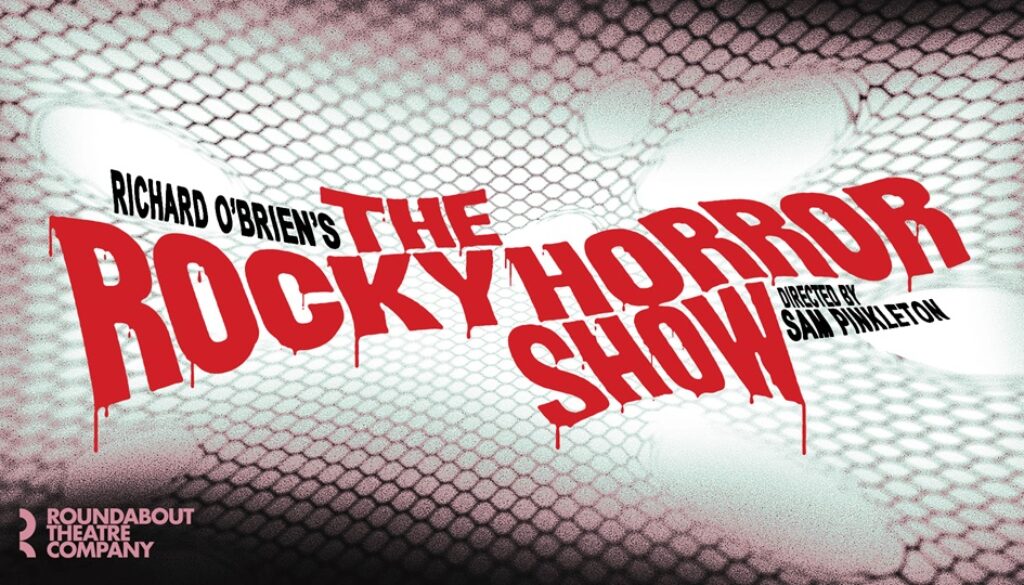
The show reached Broadway in 1975, but failed commercially, closing quickly. It returned with enormous success in 2000, running for 437 performances at Studio 54 — the same venue that now hosts the 2026 revival. The 2026 production, presented by Roundabout Theatre Company, is the third Broadway production of the show and the first since that 2000 run. As the New York Theatre Guide notes, “The Rocky Horror Show rocks Broadway about every 25 years, so the upcoming revival of Richard O’Brien’s 1975 cult-favorite musical arrives on cue.”
The 2026 production is directed by Sam Pinkleton — Tony Award-winner for Oh, Mary! — and features choreography by Ani Taj, music supervision by Kris Kukul, scenic design by dots, costume design by David I. Reynoso, and lighting design by Jane Cox. Beyond Evans, the stellar cast includes Rachel Dratch as the Narrator, Stephanie Hsu as Janet, Andrew Durand as Brad, Amber Gray as Riff Raff, Harvey Guillén as Eddie and Dr. Scott, Juliette Lewis as Magenta, Josh Rivera as Rocky, and Michaela Jaé Rodriguez as Columbia. Evans, Guillén, Lewis, Rivera, and Rodriguez are all making their Broadway debuts. The original film’s actress Susan Sarandon attended opening night, alongside Anna Wintour and Marc Jacobs.
Evans as Frank-N-Furter: Stepping Into Seven-Inch Heels
The challenge of playing Frank-N-Furter in 2026 is, to put it simply, Tim Curry. Curry’s 1975 film performance is one of the most culturally pervasive in cinema history — a performance so complete in its combination of danger, sexuality, wit, and vulnerability that it has become practically inseparable from the character. Every actor who takes on Frank must, in some fundamental sense, answer the question: what can you bring to this role that Curry’s version doesn’t already contain?
Evans’s answer — physical, vocal, and interpretive — begins with his own extraordinary combination of attributes. He stands six feet two inches, with the physical build of a man who has played both Greek gods and action villains. He possesses a rich baritone voice trained across eight years of West End production and further developed across two studio albums. And he brings to the role something that is specifically his: the autobiographical weight of a gay man from a Welsh mining village who spent his childhood being told that who he was didn’t fit, and who has spent his adult career building a public identity of pride, openness, and self-determination.
Frank-N-Furter is, above all, a figure of liberation — someone who has decided, with absolute conviction, that the only constraint on pleasure is imagination. Evans has spoken about how the role makes him feel powerful in ways that connect directly to his own experience. In his New York Theatre Guide interview, he described how stepping into Frank’s corset, heels, and fishnets every night gives him a confidence and freedom that translates into the performance: the character is not a costume but an expression of something genuine. When Evans sings “Sweet Transvestite” on the stage of Studio 54, there is a biographical resonance beneath the theatrical artifice that audiences can feel even if they cannot articulate it.
He has also spoken, in his PBS Stagebound feature — which followed him through the preparation for opening night, including learning to do his own stage makeup — about what the specific technical demands of the role required. Doing his own makeup eight times a week is itself a significant commitment; it also, he has suggested, helps him inhabit Frank’s particular relationship with his own appearance. Frank-N-Furter is someone for whom self-presentation is not performance but truth — and applying the foundation, the eyeliner, and the lipstick is, for Evans, a ritual of becoming rather than merely a practical preparation.
What the Critics Said: Review Roundup
The critical response to the 2026 Rocky Horror Show revival was warmly positive, with the production receiving a New York Times Critics’ Pick and near-universal praise for Evans’s performance as the centrepiece of an unusually well-cast revival. Here is what the major outlets had to say.
Opening night guests, including the original film’s Susan Sarandon, contributed to the celebratory atmosphere that surrounded the production’s launch. The cast’s appearance on The Tonight Show with Jimmy Fallon — performing “Sweet Transvestite” — generated significant additional media coverage and introduced Evans’s Broadway Frank to a national television audience. Audience response has been overwhelmingly enthusiastic throughout the run, with the production’s cult energy generating exactly the participatory atmosphere that Rocky Horror uniquely produces.
Tony Nominated: Best Actor in a Leading Role in a Musical — Broadway Debut
Luke Evans’s first-ever Tony nomination arrives for his Broadway debut performance as Dr. Frank-N-Furter — a role that connects his entire career, from his West End origins to his Hollywood fame to his return to the stage. The production received nine Tony nominations in total, the second highest for a musical this season.
Full Best Actor in a Musical category nominees:
- Nicholas Christopher — Chess
- Luke Evans — Richard O’Brien’s The Rocky Horror Show
- Joshua Henry — Ragtime
- Sam Tutty — Two Strangers (Carry a Cake Across New York)
- Brandon Uranowitz — Ragtime
A Career in Full: Selected Stage and Screen Credits
Wins a scholarship to the London Studio Centre at seventeen, leaving Aberbargoed and the Jehovah’s Witnesses behind to pursue his vocation as a performer. Graduates in 2000 with the technical foundations for a West End career.
Plays Chris — the American soldier whose love for Kim drives the central tragedy of Boublil and Schönberg’s musical — in the UK national tour. His first major professional stage engagement and the beginning of a long relationship with large-scale musical theatre.
Appears in the irreverent puppet musical’s West End run, adding comic range and ensemble experience to a growing professional résumé.
Appears in West End productions including Boy George’s autobiographical musical Taboo — his first significant engagement with the queer theatrical tradition that will resurface throughout his career.
Plays Roger — Jonathan Larson’s rock musician protagonist — in the West End production of Rent. The role requires the combination of raw rock vocal power and dramatic emotional intensity that defines Evans’s vocal identity. Also performs “Sweet Transvestite” during this period — a full-circle moment that will complete itself eighteen years later on Broadway.
Plays Vincent in Peter Gill’s play at the Donmar Warehouse. Nominated for the Evening Standard Award for Outstanding Newcomer. The performance attracts the attention of Hollywood casting directors and US talent agencies — the pivot point at which his screen career begins.
Plays the legendary French actor and singer Yves Montand in the Donmar Warehouse’s celebrated production of Piaf, opposite Elena Roger. His second Donmar engagement in a year confirms his place at the top tier of London musical theatre performance.
Makes his film debut at thirty, as Apollo in the remake of Clash of the Titans. The late start belies the quality of the preparation — eight years of West End experience equip him for the screen transition in ways that more youth-focused film debuts rarely can match.
Two major franchise roles in the same year establish him as a globally recognised screen presence. Owen Shaw brings him to the international box office audience; Bard the Bowman gives him a heroic leading role alongside Martin Freeman, Ian McKellen, and Richard Armitage.
Plays Gaston in Disney’s live-action adaptation — his most widely seen screen role and the performance that makes him a household name to audiences worldwide. The film grosses over $1.2 billion globally. His singing in “Gaston” demonstrates the vocal quality that will later earn a Tony nomination.
Stars as Dr. John Moore in TNT’s prestige period drama alongside Daniel Brühl and Dakota Fanning. His most nuanced screen performance to date, earning critical recognition for sensitivity and depth.
Releases two studio albums on BMG Records, demonstrating the depth of his musical range beyond theatrical performance and connecting him to a global fanbase through his vocal artistry.
Makes his Broadway debut as Dr. Frank-N-Furter in Roundabout Theatre Company’s revival. NYT Critics’ Pick, four stars from Time Out. Tony nomination for Best Actor in a Leading Role in a Musical. The production earns nine Tony nominations in total and is extended from its original June closing through July 2026.
Absolute Pleasure: What Luke Evans Means to Broadway
There is a sentence in Sam Pinkleton’s statement about casting Evans as Frank-N-Furter that deserves to be quoted again: “I hope to do at Studio 54 what The Rocky Horror Show has done for people around the world for decades — open a dimension to another possible reality.” It is a description of what the show aspires to. It is also, with characteristic precision, a description of what Luke Evans’s life has been: a sustained effort to open dimensions to other possible realities — beyond the Rhymney Valley, beyond the Jehovah’s Witnesses, beyond the expectations attached to being a working-class boy from rural Wales.
That Evans has arrived at his Broadway debut at forty-seven — seventeen years after his film debut, twenty-six years after graduating from the London Studio Centre — and has done so with a Tony nomination in his first-ever Broadway performance is a testament to a career built with unusual patience and unusual conviction. He did not hurry to Broadway. He went to Hollywood first, became famous there, and returned to the stage on his own terms and in his own time, choosing a role that connects his personal history to his professional identity with a completeness that few performers ever achieve.
Frank-N-Furter’s central injunction — “give yourself over to absolute pleasure” — is, in a sense, the advice that Luke Evans has been following since he walked out of Aberbargoed at seventeen with a scholarship and a dream. Broadway, in welcoming him at last, is simply confirming what the rest of the world already knew.
Luke Evans gives a commanding performance and you simply can’t take your eyes off of him. He manages to capture the character’s scintillating combination of dangerous sexuality and emotional vulnerability, all while adding his own devilish spin.
Entertainment Weekly, reviewing The Rocky Horror Show, April 2026
Links
La Cage Aux Follies – Memorabilia
Chess the Musical – Memorabilia
Little Shop of Horrors – Memorabilia
Starlight Express – Memorabilia
Dear Evan Hansen – Memorabilia
How to Succeed in Business Without Really Trying – Memorabilia
Terrence McNally – Memorabilia